How We Build Legacy System Integration for Humboldt Park
The first task is understanding the legacy system itself: what it does, what data it holds, how it was built, and what access points it provides for external connections. Some legacy systems have undocumented APIs or export capabilities that were never used. Others require custom extraction scripts that read directly from the database. Others require working with the software vendor to obtain export files in a usable format. We do the forensic work to understand what is possible before committing to an approach.
Data mapping follows. The data structures inside legacy systems rarely match the data structures of modern platforms. Field names, data types, encoding formats, and relational structures all need to be reconciled before data can flow between systems. For organizations serving Humboldt Park's bilingual community, this often reveals encoding issues with Spanish-language text fields that were stored using older character sets. We clean and normalize data as part of the integration work, not after.
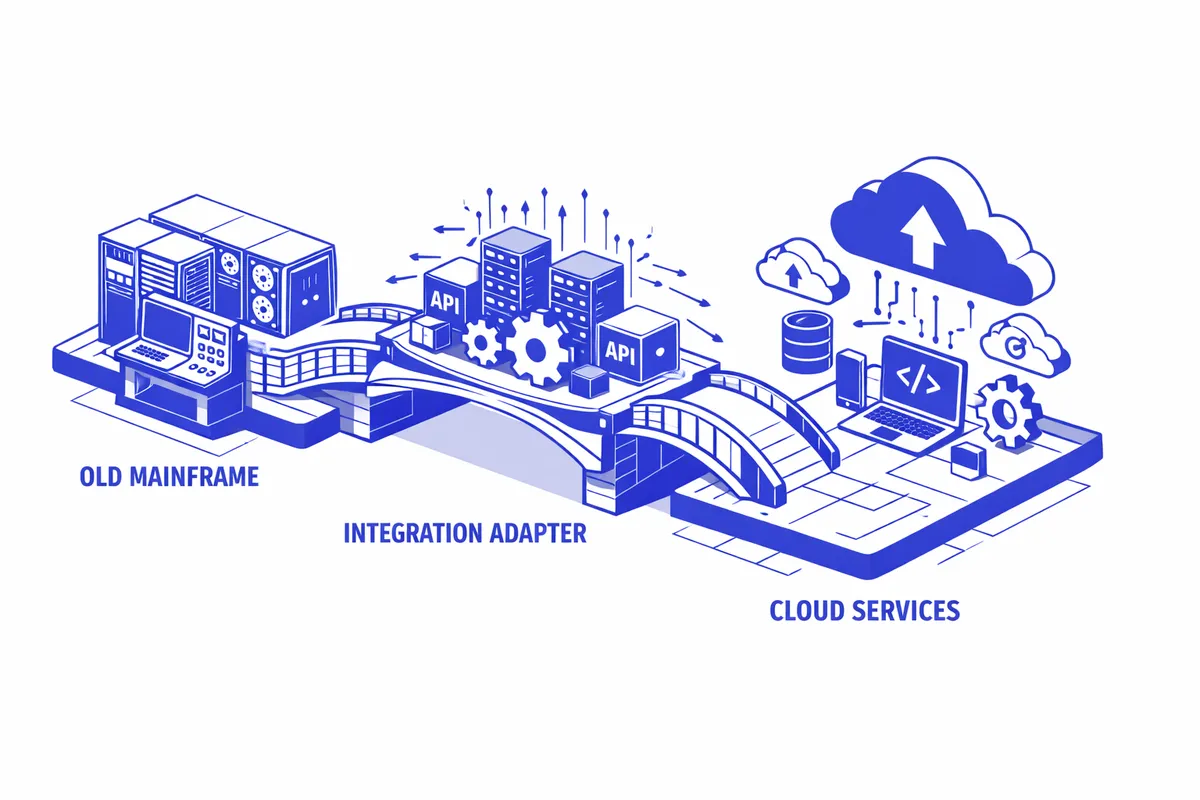
The integration architecture depends on what the legacy system can support. Where real-time API connections are possible, we build them. Where the system can only produce scheduled exports, we build automated pipelines that process those exports and push the data to modern systems on a regular schedule. Where neither is possible, we build interfaces that wrap the legacy system and expose its data through modern standards that other tools can consume. The goal is always a state where staff do not have to touch the legacy system for routine work, even if it remains the system of record.
Industries We Serve in Humboldt Park
Community health centers and social service agencies on North Avenue often operate legacy electronic health records or case management systems that are required for compliance but incompatible with the grant reporting tools that funders now require. Integrating legacy clinical systems with modern reporting infrastructure eliminates the manual data extraction that consumes staff time and introduces transcription errors into compliance documentation.
Cultural nonprofits and arts organizations near the National Museum of Puerto Rican Arts and Culture may have donor and membership databases implemented in FileMaker, Access, or early-generation nonprofit CRM platforms that have not been updated in a decade. We connect those systems to modern email platforms, event management tools, and financial software so the organization can use contemporary tools without abandoning the data history it has built.
Community advocacy organizations operating near Roberto Clemente Community Academy maintain constituent databases and action-tracking records in systems that predate cloud software. Extracting that data and building integrations to modern organizing tools like EveryAction or Action Network preserves the historical record while giving staff the workflow capabilities that current advocacy work requires.
Puerto Rican family businesses and restaurants along Division Street and Western Avenue sometimes operate POS and inventory systems that have been running continuously for a decade or more. The owner knows the system. The data in it represents years of sales history. Connecting that system to a modern reporting platform or replacing it without losing the historical data requires careful integration work rather than a blunt migration.
Small grocers and food importers along California Avenue may use legacy accounting platforms that do not connect to modern inventory management tools. The cost to replace the accounting platform is prohibitive and carries operational risk. Integration that lets the legacy accounting system continue as the financial system of record while connecting it to modern inventory and e-commerce tools is the proportional solution.
Independent social service organizations near Humboldt Park that coordinate services across multiple partner organizations often have legacy data exchange requirements baked into funding agreements: specific file formats, specific reporting intervals, specific field names that go back to early implementations. We build integrations that produce those required outputs from modern data sources so staff are not generating legacy-format reports by hand.
What to Expect Working With Us
1. Legacy system audit and access mapping. We document the legacy system's capabilities: available APIs, export file formats, database access options, and vendor-supported integration paths. For systems with limited documentation, this phase involves hands-on investigation. The output is a clear picture of what integration is technically feasible and what approach best fits the organization's operational needs.
2. Data model reconciliation and quality assessment. Before building the integration, we map the data structures on both sides and assess data quality in the legacy system. Duplicate records, encoding issues, and incomplete fields all need to be addressed as part of the integration rather than allowed to propagate into the modern system. This is the phase that prevents the "we moved everything and now nothing is clean" outcome.
3. Incremental integration with validation at each stage. We build integrations in testable segments, validating data integrity at each stage before moving to the next. For organizations on North Avenue that cannot afford disruption to operational data during clinical or service delivery, we test in parallel environments and schedule cutovers during low-traffic windows.
4. Documentation and knowledge transfer. We document the integration architecture, the data flow, and the maintenance procedures for every component. Organizations running critical infrastructure on legacy integrations need to understand what they own and how to manage it. We do not build black boxes that only we can maintain.