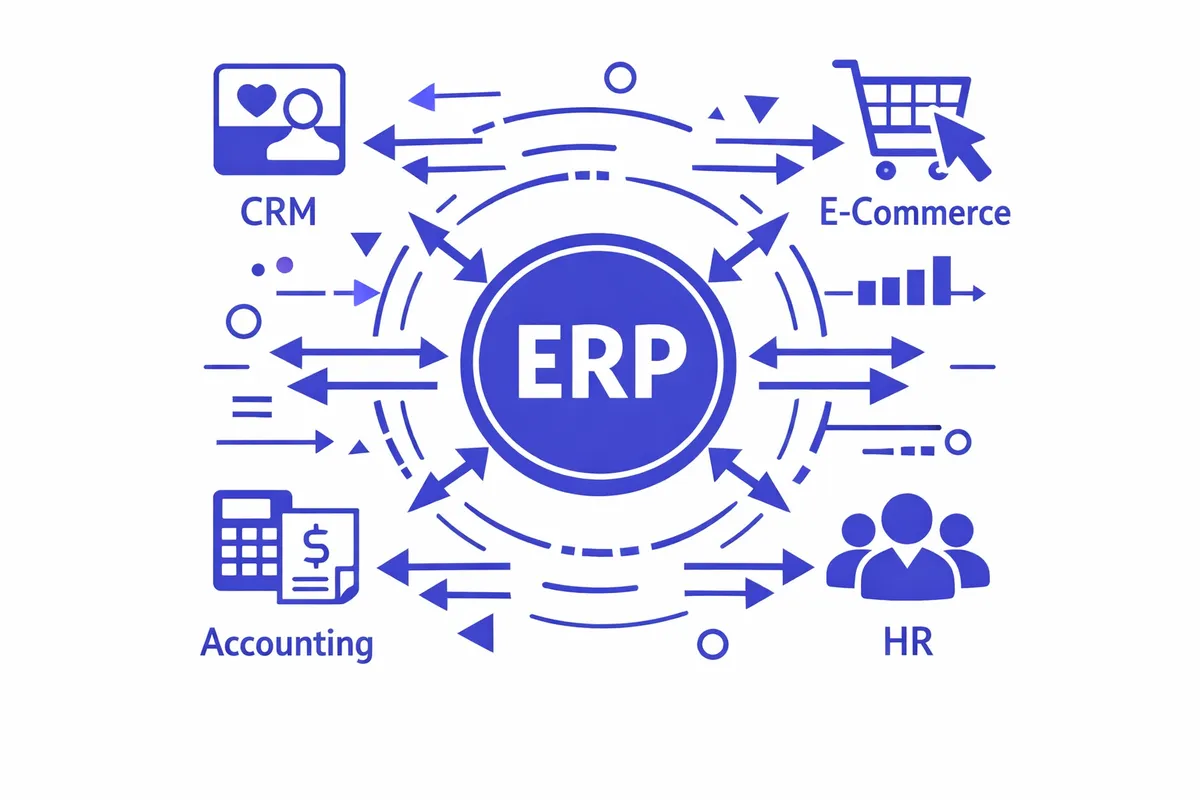
How We Build ERP Integration for Humboldt Park
We start with a full audit of your systems, on site. Before connecting anything, we map every tool you run, every place data moves between them, and every point where a person is moving it by hand. For a grocer on California Avenue that often means tracing one sale from the register through to the books and naming each manual hop in between.
From the audit we design the integration architecture. We decide which system holds the authoritative copy of each data type, how often things sync, and what happens when records do not match. A cultural organization near the National Museum of Puerto Rican Arts and Culture has different timing and reporting needs than a restaurant on Division Street, and the architecture is built to those needs specifically.
Then we build, with error handling and monitoring included from the start rather than added after the first break. Integrations fail when a platform changes on its end, and a brittle one fails quietly, feeding bad data into the books for weeks before anyone catches it. We build yours to detect a change, alert someone, and fail safely, so a problem near California Avenue stays small and visible instead of compounding.
We close with reconciliation and documentation. We run your integration through a stabilization period, watch the error rates closely, and resolve whatever the live data surfaces. Then we hand you full documentation of the architecture, the data flows, the field mappings, and the troubleshooting steps. A Humboldt Park organization should understand the system it relies on, especially when that system feeds the reports its funders read, and the documentation is what turns dependence into genuine ownership.
Industries We Serve in Humboldt Park
Puerto Rican restaurants and food businesses along Paseo Boricua run purchasing, point-of-sale, payroll, and cost reporting in separate tools. ERP integration connects them so vendor invoices, sales, and labor costs land in the accounting platform automatically, and a kitchen near Division Street stops re-keying numbers after close.
Cultural organizations and community nonprofits near the National Museum of Puerto Rican Arts and Culture carry grant-reporting obligations that demand traceable financials. ERP integration ties program spending, payroll, and accounting together, so the records funders request are produced automatically instead of assembled under deadline.
Community health centers and clinics around La Casita manage billing, scheduling, and clinical data across systems that rarely connect. Integration links those flows so financial and operational records stay accurate together, which matters for both reimbursement and the grant funding many Humboldt Park health organizations depend on.
Small grocers and family-run shops near California Avenue and North Avenue built their standing on having the right product on the shelf. ERP integration synchronizes inventory between the point-of-sale, any online ordering, and the books, ending the month-end drift between what the register says and what the accounting platform shows.
Independent coffee roasters and cafes in Humboldt Park track green coffee inventory, production, wholesale orders, and retail sales across disconnected tools. Integration unifies that data so a roaster has one accurate picture of cost and revenue rather than a quarterly reconciliation puzzle.
Bike shops and independent retailers along North Avenue manage parts inventory, service revenue, and retail sales separately, with sharp seasonal swings. ERP integration connects those flows so inventory and financials stay current through the riding season's peaks without manual compilation.
What to Expect Working With Us
1. A full read of your stack, on site. We map every system, every data handoff, and every manual workaround before proposing anything. The picture of where your operation actually loses time is often more useful than the integration plan that follows it.
2. Architecture built to your reporting. We decide together which system owns which data and how often it syncs. For Humboldt Park nonprofits and health centers, we design with funder-ready reporting as an explicit goal, not an afterthought.
3. Built to survive platform changes. Error handling, monitoring, and safe-failure behavior go in from the start. When a vendor updates their software, your integration flags it instead of quietly breaking, so a problem near Paseo Boricua never reaches your customers or your funders.
4. Stabilized, documented, supported. We watch error rates through a defined stabilization window, then hand you complete documentation of the architecture and data flows. Maintenance retainers are available, because integrations need upkeep as platforms evolve and we build yours to be maintainable.