How We Build Custom CRM for Humboldt Park
The starting point is relationship mapping, not feature selection. We sit down with the team that manages contacts, whether that is a development director at a cultural nonprofit, a front desk coordinator at a health clinic, or an owner-operator at a restaurant on Western Avenue, and we map every type of relationship the organization manages. Who are the contacts? What is the organization's history with each one? What actions does the organization take with different contact types? What does the team need to know at a glance when someone walks in the door or calls on the phone?
From that mapping we define the data model: the contact types, fields, relationships between records, and the workflows that create or update records automatically versus those that require manual input. For a bilingual organization serving Humboldt Park's Spanish-speaking community, the data model includes language preference as a first-class field that governs how every automated communication is generated. This is not a dropdown field added as an afterthought. It is a fundamental attribute of every contact record.
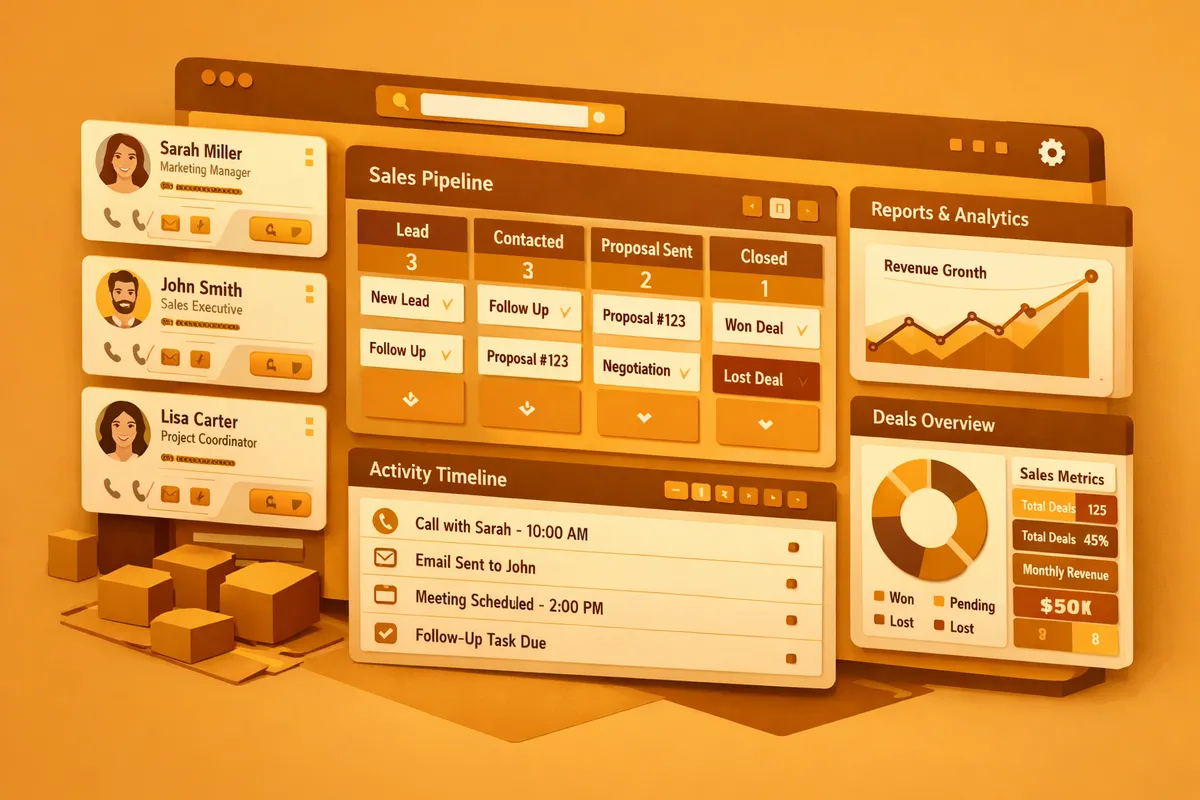
We build on modern, maintainable foundations, typically using a structured database with a web interface tailored to your team's actual workflows. The interface is designed for the person who will use it every day, not for a CRM administrator. A volunteer coordinator should be able to find everyone who volunteered at the last three Paseo Boricua events in two clicks. A development director should be able to pull a donor report for grant documentation without calling a developer. The system we build works at the speed of the organization, not at the speed of someone who was trained on enterprise software.
Industries We Serve in Humboldt Park
Cultural nonprofits and community organizations near the National Museum of Puerto Rican Arts and Culture manage overlapping contact types across a single relationship history. The same person may be a member, a past donor, a current volunteer, and a grant contact. A custom CRM with a unified contact record that surfaces all relationship dimensions simultaneously lets development and program staff see the full picture before every interaction.
Community health centers and clinics on North Avenue need patient relationship infrastructure that is separate from but coordinated with their clinical records system. Appointment follow-up sequences, care coordination outreach, health education communications, and community health worker case notes all benefit from a CRM structure that connects them without conflating them with protected health information. We build with the appropriate data separation to satisfy both operational and compliance needs.
Puerto Rican restaurants and catering operations on Division Street build genuine repeat-customer relationships over years of service. A custom CRM that tracks event catering history, dietary preferences, anniversary dates, and communication preferences turns institutional knowledge from the owner's head into a system that survives staff turnover. A new front-of-house manager can see the history with a regular customer before they arrive.
Independent coffee roasters and specialty retailers near Pulaski Road who have cultivated a loyal neighborhood following benefit from CRM that tracks purchase history, loyalty status, product preferences, and communication opt-ins. This data powers personalized outreach around new product launches and events without requiring the owner to remember every detail about every customer manually.
Community advocacy organizations operating near Roberto Clemente Community Academy track constituent relationships across a cycle of outreach, advocacy actions, event participation, and policy wins. A custom CRM built for advocacy work captures action history, contact with elected officials, and volunteer engagement in a unified record that makes follow-up faster and reporting to funders more accurate.
Small grocers and food importers along California Avenue have wholesale and retail contact bases that generic CRM conflates. A custom system built for their dual-channel business tracks wholesale buyer purchase history, retail loyalty, and supplier relationships in a data model that reflects how the business actually operates rather than forcing it into a sales pipeline template.
What to Expect Working With Us
1. Relationship mapping workshop before any design begins. We facilitate a two-hour session with the team members who manage the most contacts in your organization. We map contact types, relationship dimensions, workflow triggers, and reporting needs. This session produces the specification for the CRM design and prevents the common outcome where a custom system is built but does not match how the team actually works.
2. Data model and interface design for review before development. We present the proposed data model and interface wireframes before writing a line of code. This is the moment to catch mismatches between what we understood from the workshop and what the team actually needs. For bilingual organizations, both language versions of the interface are reviewed at this stage.
3. Phased build with the highest-priority workflows first. We build core contact management and the three to five most critical workflows first, get those in front of real users, and iterate before adding complexity. Organizations that try to build the full CRM in one pass often end up with something technically complete that the team does not use. We build for adoption, not for completion.
4. Migration from your existing data and team training. We import contact records from spreadsheets, previous CRM platforms, or email lists into the new system with data cleaning included. Training covers everyday operations for end users and administrative tasks for whoever will manage the system. For community organizations on Division Street with high volunteer turnover, we build training documentation that onboards new users without requiring a full workshop every time.