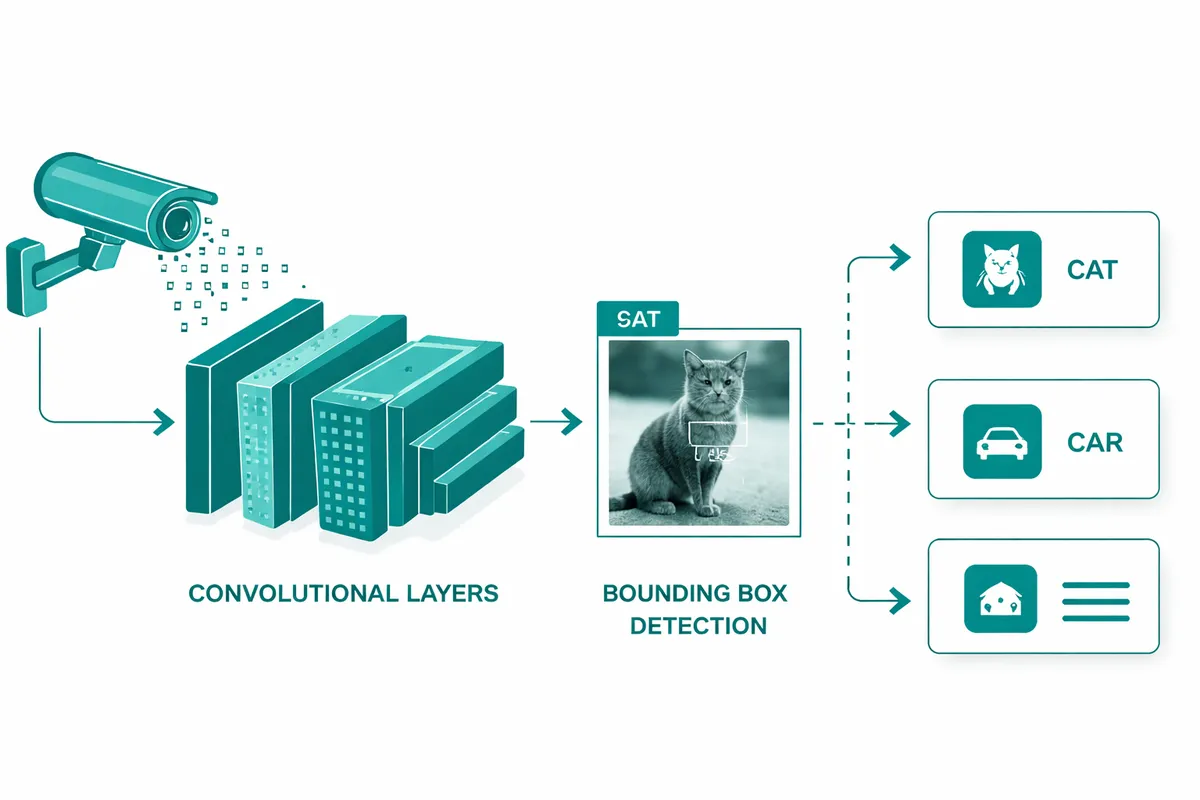
How We Build Computer Vision in Humboldt Park
We identify the visual tasks that consume the most time or create the most risk in your operations, then deploy the right solution for each. For grocery stores near the Humboldt Park Boathouse, that might be produce freshness detection and shelf monitoring that alerts staff when items need restocking. For restaurants on Division Street, foot traffic counting that feeds into real-time staffing recommendations during service. For auto repair shops on Western Avenue, automated damage documentation that creates visual records during vehicle intake. We connect to existing cameras wherever possible and install additional sensors only where needed. Every deployment includes a dashboard where you see the data in real time and alerts configured to trigger only when your staff needs to act.
Industries We Serve in Humboldt Park
Food businesses along Division Street and Chicago Avenue use computer vision for portion consistency, food prep monitoring, and customer flow analysis. During high-volume periods like Fiesta Boricua weekend, the system tracks how many people enter, how long they wait, and where bottlenecks form. One restaurant used foot traffic data to rearrange their ordering queue, cutting average wait times by four minutes during peak service. Portion monitoring ensures that the generous portions your regulars expect are consistent whether the busiest server or the newest cook is plating the dish.
Retail and grocery stores near Sacramento Boulevard and California Avenue deploy shelf monitoring that tracks inventory levels visually. The system alerts staff when items drop below threshold quantities before customers notice empty shelves. For produce sections, freshness detection flags items that need to be pulled or discounted, reducing waste and maintaining the quality standards that keep community members shopping locally rather than driving to a suburban grocery.
Auto service and repair shops on Western Avenue use computer vision for intake documentation and quality inspection. The system photographs vehicles automatically at check-in, creating a timestamped visual record that protects both the shop and the customer. Quality inspection cameras verify work completion against standards, catching issues before the vehicle leaves the bay and preventing the costly customer service problems that follow a vehicle returned with unfinished work.
What to Expect Working With Us
1. Operations assessment: We identify the visual tasks consuming the most staff time and creating the most operational risk. For most Humboldt Park businesses, the highest priorities are inventory monitoring, quality control consistency, and in the case of auto shops, intake documentation. We design the deployment around those priorities.
2. Camera infrastructure review: We assess what cameras you already have in place and design the computer vision deployment to maximize their use. Produce freshness detection, for example, can often use existing store cameras with AI models added, avoiding significant new hardware costs.
3. Environment-specific model training: We train AI models on your actual products, portions, or vehicle types. A freshness detection model trained on the specific produce items your store carries will be significantly more accurate than a generic produce monitoring model. Specificity is what makes these systems reliable enough to act on.
4. Live deployment and refinement: We go live with the system, monitor performance closely for the first two weeks, and refine models based on real-world accuracy. Monthly reviews in the first quarter ensure the system is delivering the outcomes we designed it for.