How We Build Automation for Humboldt Park
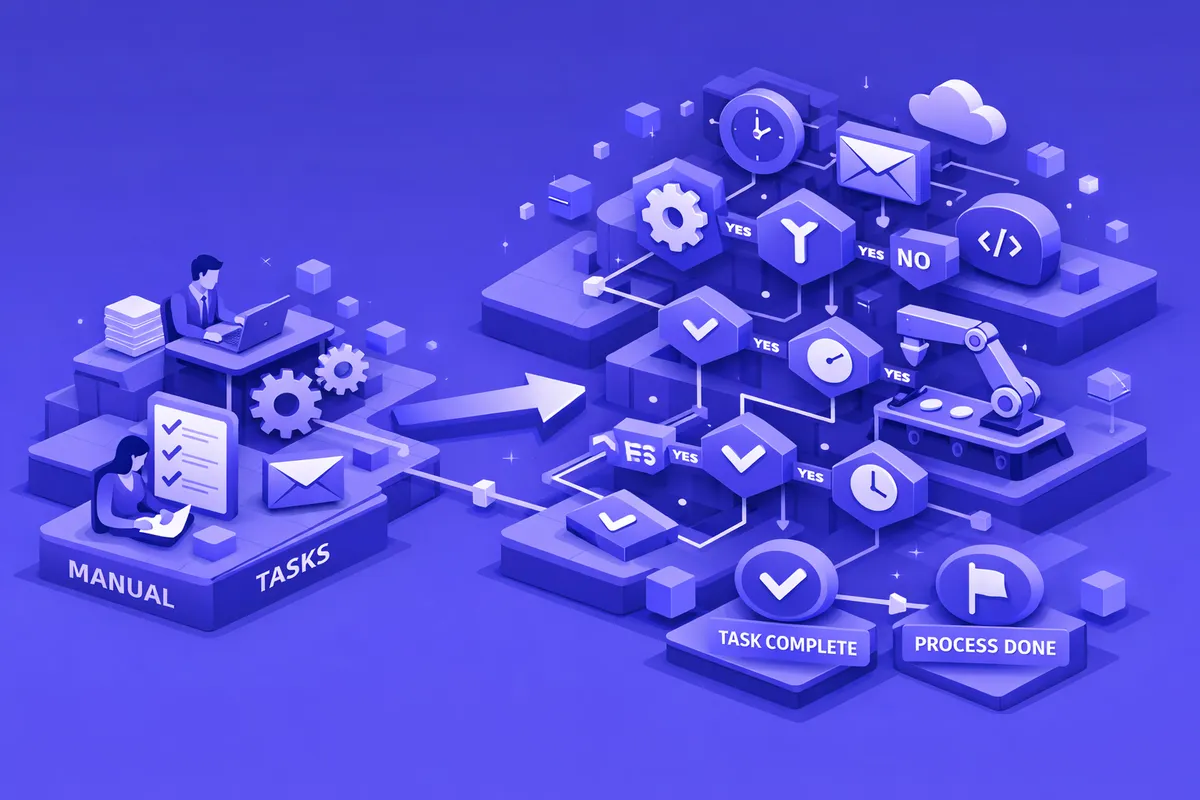
The first step is a process audit. We work with your team to map every recurring task that happens in a predictable sequence: what triggers it, what data it requires, what the output is, and how long it takes manually. For a nonprofit on North Avenue, that might surface six automatable workflows in a single afternoon. For a restaurant on Western Avenue, the same exercise might reveal that three separate manual tasks connect to a single trigger they had not thought of as a single process.
From that map we identify which workflows are ready to automate with minimal configuration using no-code tools like Zapier, Make, or Airtable Automations, and which require custom-built logic because the platforms involved do not have native integration support. We prioritize ruthlessly: the workflows that consume the most staff hours and generate the most errors come first. We do not automate things because they are technically interesting. We automate the ones that give your team back meaningful time.
Implementation is phased. Each automation is built, tested with real data, and validated by the team member who currently does the task manually before it goes live. For organizations serving bilingual communities, we build automation that handles Spanish-language inputs and outputs correctly rather than assuming all form submissions will arrive in English. After launch, we monitor error rates and edge cases for the first 30 days and refine based on real operational data.
Industries We Serve in Humboldt Park
Community health centers and social service organizations near North Avenue and Roberto Clemente Community Academy process high volumes of patient or client intake, appointment scheduling, and grant reporting. Automating the intake-to-scheduling flow, sending appointment reminders without staff involvement, and generating grant compliance reports from case management data reduces administrative burden and reduces error rates in documentation that affects funding.
Cultural organizations and nonprofits near the National Museum of Puerto Rican Arts and Culture manage event registrations, membership renewals, donation acknowledgment letters, and volunteer coordination through processes that are mostly manual. Automating confirmation emails, renewal reminders, donor receipts, and volunteer scheduling notifications transforms these into reliable background processes that run without staff attention.
Puerto Rican restaurants and catering businesses on Division Street field catering inquiries, generate quotes, send contracts, and follow up on deposits through a sequence that is almost entirely automatable. An automated catering inquiry workflow that collects event details, generates a preliminary quote, and schedules a follow-up call turns a 45-minute manual process into a 3-minute one.
Independent grocers and food retailers along Pulaski Road and California Avenue reconcile physical inventory against online orders daily. Automating inventory sync between the POS and the e-commerce platform, triggering low-stock reorder notifications, and generating end-of-day sales summaries without manual report generation saves meaningful time at the margins of every operating day.
Bike shops and specialty retailers on the neighborhood's commercial corridors use automation to manage service appointment scheduling, parts order notifications to customers, and follow-up surveys after repairs. These are high-frequency, low-complexity communications that build customer relationships when they run reliably and damage them when they are forgotten.
Community advocacy organizations operating near La Casita coordinate volunteers, track advocacy actions, and follow up with elected officials and community members through workflows that benefit from automation. Automated follow-up sequences after petition signatures, event attendance, or advocacy calls keep supporters engaged without requiring a staff member to manually track and respond to every action.
What to Expect Working With Us
1. Process audit and automation priority map. We spend two to three hours with your team mapping recurring tasks, estimating the time each consumes, and identifying automation candidates. The output is a prioritized list of workflows sorted by time-savings potential and implementation complexity. For a community organization on Division Street, this session often surfaces four to six high-value automations that can be built and launched within a month.
2. Platform-appropriate builds that match your existing tools. We build automation using the platforms you already subscribe to wherever possible. If your nonprofit already uses Mailchimp, Airtable, and a Google Forms intake process, we connect those before recommending new software. Adding tools adds cost and training burden. We work with what you have until there is a clear case for something new.
3. Validation with your team before each automation goes live. Every workflow is tested using real data from your actual operations and reviewed by the person who currently does the task manually. This catches edge cases that a developer working without context would miss and ensures the team trusts the automation before they stop monitoring it manually.
4. Documentation and handoff so you own the workflows. Each automation is documented in plain language: what triggers it, what it does, and how to modify it if your process changes. Staff turnover should not break your operations. The documentation we provide means a new team member can understand and manage your automation stack without needing to call us.