How We Build APIs for Humboldt Park
Discovery starts with mapping your current software stack. We document every platform you use, every manual process that connects them, and every place where data has to be entered more than once. For a community health center, that might mean cataloging patient management software, scheduling tools, insurance billing platforms, and the EHR system they are required to use for grant reporting. For a restaurant or food business, it might mean mapping the POS, the online ordering platform, the delivery aggregator, and the inventory management system.
From that map we identify which connections can be built using existing APIs provided by those platforms, which require custom middleware, and which would be better served by replacing one of the tools entirely with something that already integrates with the rest. We present that analysis plainly: here is what we can connect, here is what it will take, here is what you will gain. For nonprofits near the National Museum of Puerto Rican Arts and Culture that operate on grant funding cycles, we scope work that fits within realistic budget windows rather than proposing a single large build.
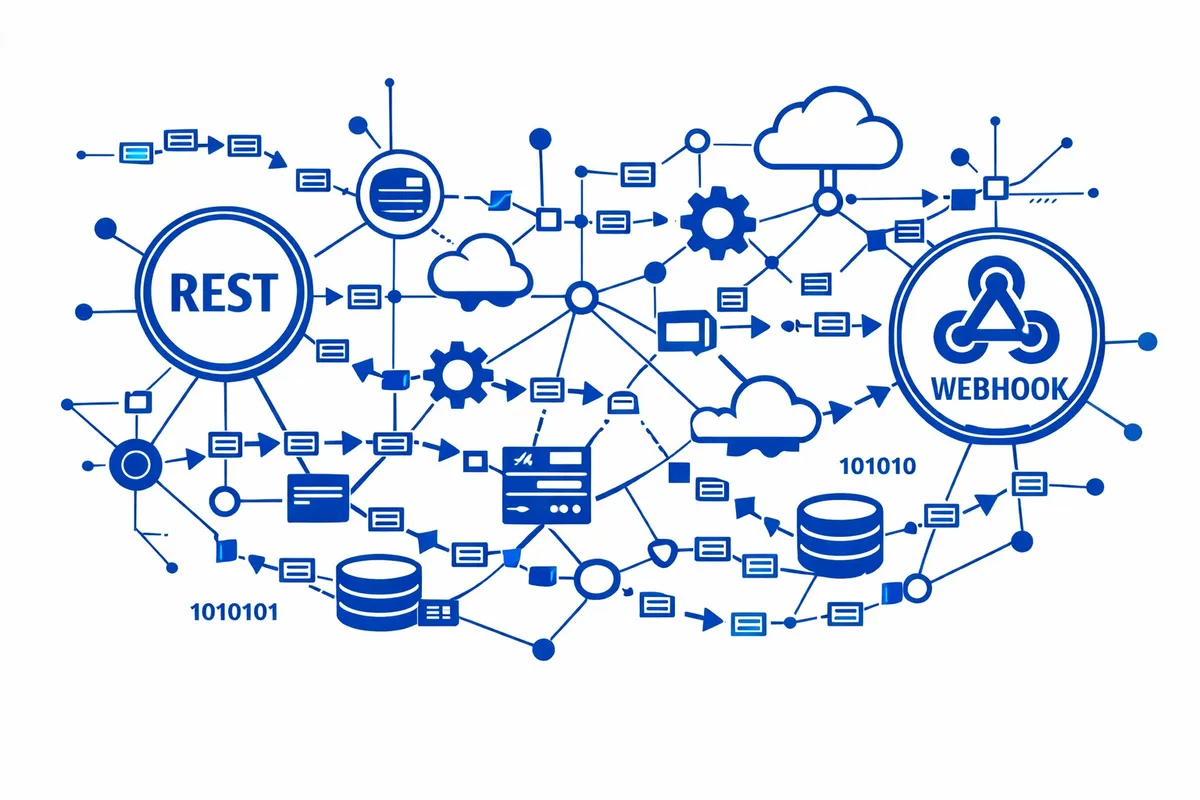
The development process follows that scoped plan. We build REST or GraphQL APIs, webhooks, and middleware layers using modern standards that are documented and maintainable. Code is written as if it will be handed off to another developer someday, because it will be. Humboldt Park organizations should own their integrations, not depend on one vendor's proprietary black box to keep their operations running.
Industries We Serve in Humboldt Park
Community health centers and clinics along North Avenue operate across multiple mandated systems and benefit enormously from integration work. Connecting patient intake forms to the EHR, syncing appointment data with billing systems, and automating grant reporting extracts from patient data reduces the manual burden on clinical staff and reduces errors in both billing and compliance reporting. We have built these integrations in HIPAA-compliant environments.
Cultural nonprofits and community organizations near La Casita and the National Museum of Puerto Rican Arts and Culture manage complex operational data: membership records, event registrations, donor histories, volunteer schedules, and grant tracking. API integrations that connect CRM, email marketing, event management, and accounting platforms eliminate redundant data entry and give leadership a unified view of organizational health.
Puerto Rican restaurants and food businesses on Division Street and Western Avenue increasingly operate across multiple channels: dine-in POS, online ordering, delivery aggregators, and catering request systems. Each channel generates data that needs to flow into a central inventory and revenue tracking system. We build the middleware that keeps those channels synchronized so kitchen operations respond to accurate real-time data.
Independent grocers and food importers along California Avenue managing inventory across a physical store and an online channel need those systems to share a single inventory count. Overselling online because the POS and the e-commerce platform are not connected costs both money and customer trust. We build the sync layer that eliminates that class of error.
Community advocacy and social service organizations operating near Roberto Clemente Community Academy often use grant management platforms, case management software, and public-facing intake forms that are each built on separate data models. API work that connects intake to case management and case management to grant reporting eliminates the manual steps that cost staff hours every week.
Bike shops and specialty retailers on the neighborhood's commercial corridors that have grown into multi-channel operations often need custom integrations between their POS, e-commerce platform, and supplier ordering systems. Automated reorder triggers, inventory sync, and order status webhooks reduce the operational overhead of running retail across more than one channel.
What to Expect Working With Us
1. Systems map and integration analysis. Before writing a line of code, we document every platform in your stack, every manual data transfer between them, and the cost of those manual steps in staff time and error rate. We present three or four integration options ordered by ROI: which connections eliminate the most pain for the least development cost. This analysis takes one to two weeks and saves organizations from building expensive integrations that solve the wrong problem.
2. Scoped builds with milestone checkpoints. We build in stages with working deliverables at each milestone so you see progress and can redirect before the full budget is spent. For a nonprofit on Division Street working within a grant timeline, this structure ensures the most critical integration is functional before the grant period closes.
3. Documentation written for your team, not just for developers. Every API we build is documented in plain language alongside technical specs. Your staff should be able to understand what the integration does, what happens when it breaks, and how to report errors. We write documentation at both levels so the technical team and the operations staff have what they need.
4. Post-launch support and iteration. Integrations break when the platforms they connect release updates. We monitor the connections we build and address failures quickly. Most integrations need adjustment in the first 90 days as real-world data patterns reveal edge cases the development environment did not surface. We stay engaged through that period.