How We Build AI Integrations for Humboldt Park
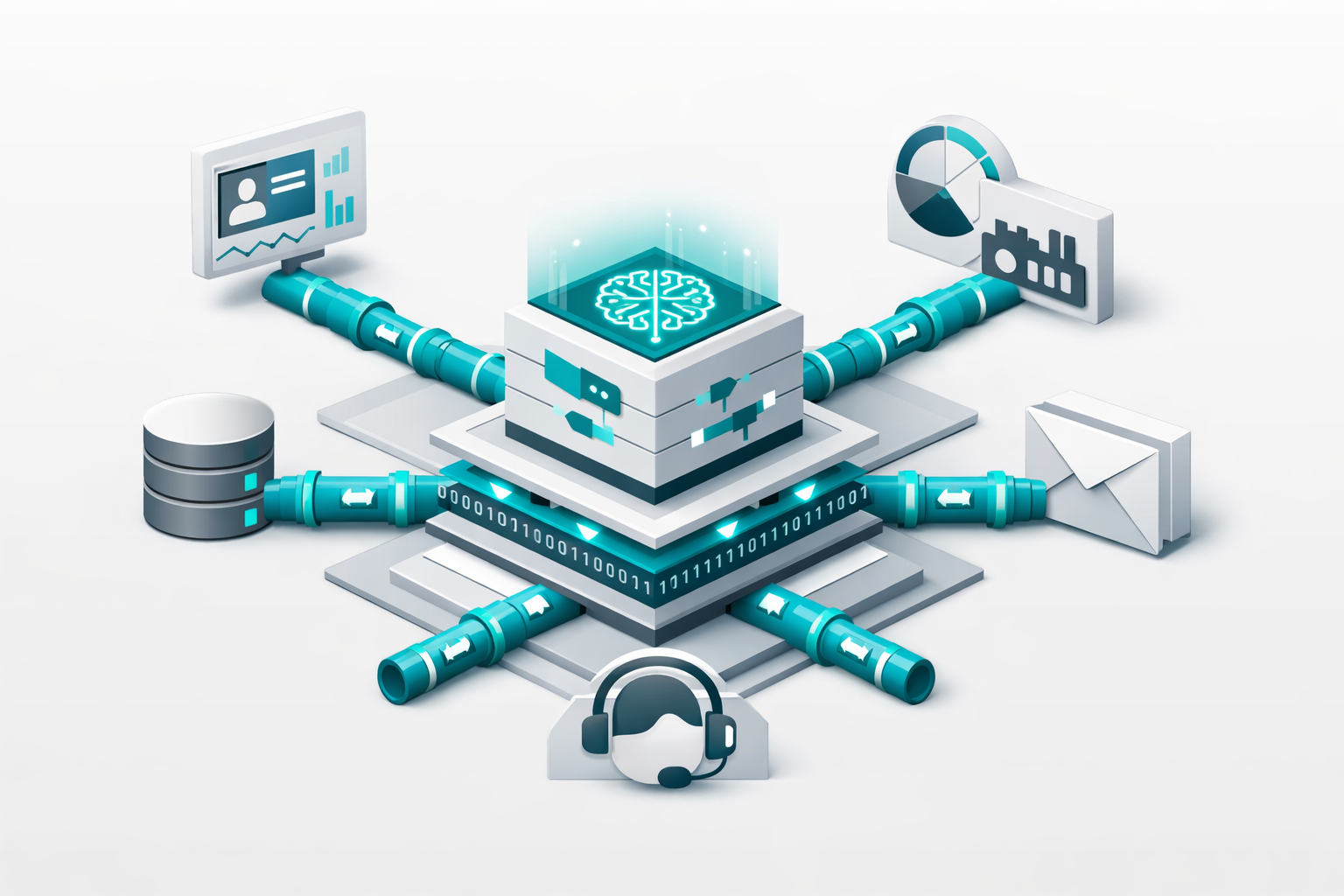
We build integrations for Humboldt Park businesses using the specific tools each business already uses as the foundation. We do not ask businesses to switch to new platforms. We connect the platforms they have already invested in learning. Our integration work uses direct API connections, middleware platforms like Zapier and Make, and custom integration code where needed for systems that do not have standard connectors.
For bilingual businesses serving Humboldt Park's Spanish-speaking community, integrations carry language preference data across all connected systems. A customer's preferred language is captured once, in whichever system first records it, and flows automatically to every connected platform. Email sends in the right language. SMS messages arrive in Spanish for Spanish-speaking customers. Staff notes are flagged with language preference. The integration ensures that language context is not lost when information moves between systems.
We design integrations around the specific operational workflows that matter most for each Humboldt Park business: the new customer onboarding sequence that should trigger when a first purchase is made at a Division Street shop, the appointment reminder workflow that should run for a salon near Pulaski Road, the grant reporting data pull that should happen automatically for a nonprofit near La Casita de Don Pedro.
Industries We Serve in Humboldt Park
Restaurants and food businesses on Division Street and North Avenue benefit most from POS-to-marketing integrations that turn transaction data into actionable customer information. When a customer makes a purchase, that event flows to the email platform, the loyalty program, and the customer record simultaneously. No manual data transfer required.
Health clinics and community health organizations on California Avenue need integrations between appointment systems, EHR platforms, billing tools, and patient communication channels. Connecting these systems reduces administrative overhead and ensures that patient information is current across all clinical touchpoints.
Salons and personal service businesses near California Avenue and Division Street run their operations across appointment software, payment processors, and marketing tools. Integrating these platforms means customer history is always visible, follow-up happens automatically, and marketing lists update in real time based on actual service activity.
Community nonprofits near the National Museum of Puerto Rican Arts and Culture need integrations between donor management, program tracking, and grant reporting systems. AI integration reduces the manual reconciliation that nonprofit staff currently perform between these siloed databases.
Retail businesses on Pulaski Road and Western Avenue benefit from inventory-to-sales integrations that keep stock levels visible in real time and trigger reorder alerts before items run out. Customer purchase history flowing to marketing tools enables personalized promotion for products each customer has shown interest in.
Auto and trade service businesses on Pulaski Road connect service management, parts ordering, and customer communication through integrations that keep every part of the shop operation synchronized without manual record management.
What to Expect Working With Us
1. System audit and integration mapping. We document every tool your business uses and map the data flows that would create the most operational value. For Humboldt Park businesses, we specifically map where language preference data is captured and where it needs to flow.
2. Integration design and build. We design and build the connections between your systems using direct APIs, middleware, or custom code as the specific tools require. We prioritize integrations with the highest operational impact first.
3. Testing and validation. We test every integration through real transaction scenarios before deploying in your production environment. For bilingual integrations, we specifically test Spanish-language data handling to confirm language context is preserved accurately.
4. Documentation and ongoing support. We document every integration we build so you understand what connects to what and why. Ongoing support covers API changes, system updates, and new integrations as your business adds tools.