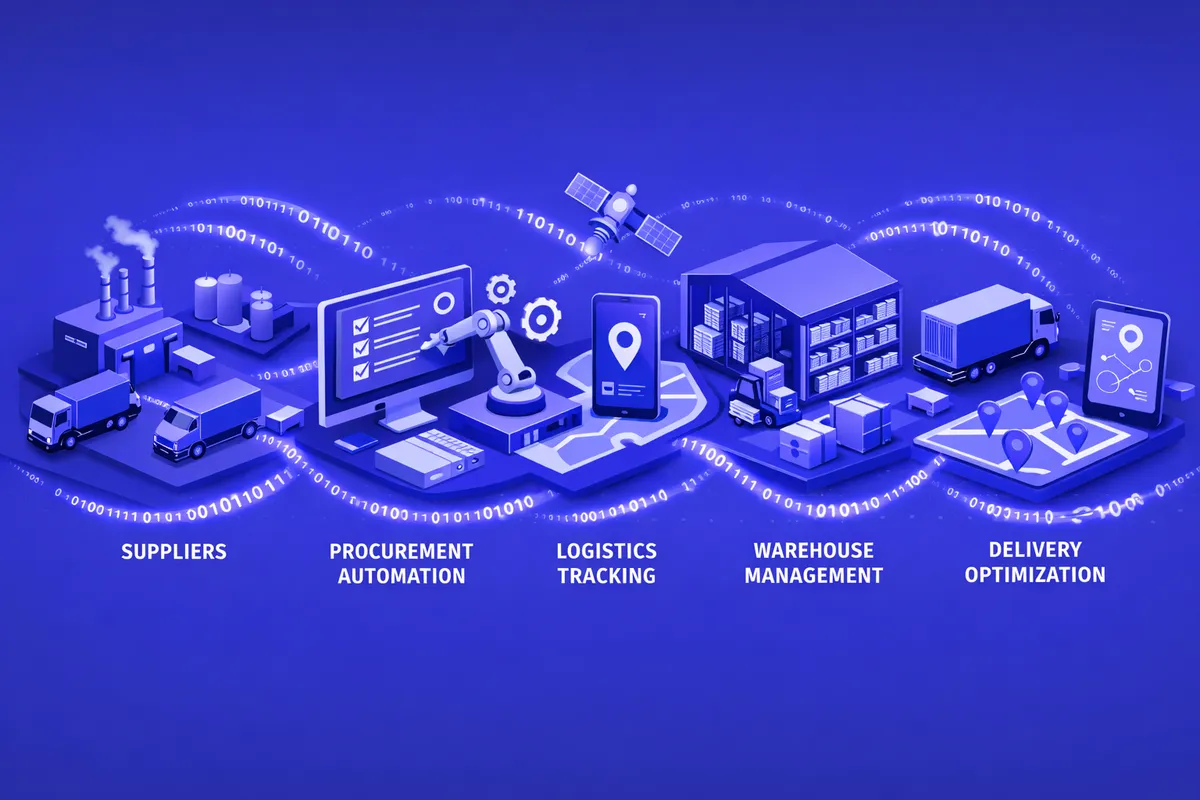
How We Build Supply Chain Automation for Hermosa
Every Hermosa engagement begins with a supply chain process audit: mapping your current purchasing workflows, identifying where manual steps create the most cost or risk, and building a prioritized automation roadmap. For food businesses, this audit specifically addresses freshness management, supplier lead time variability, and the cultural and seasonal demand patterns that drive purchase planning in Hermosa's food economy.
Integration architecture is designed around the platforms Hermosa businesses already use. Many family restaurants and panaderias use Square or Toast for POS. Auto shops use industry-specific management platforms alongside QuickBooks. Our automation layer connects your existing tools rather than replacing them, adding the monitoring logic and workflow triggers that convert manual purchasing into an automated, exception-driven process.
We implement highest-impact automations first. For food businesses, that typically means automated inventory monitoring and reorder triggering for high-turnover specialty ingredients. For auto repair shops, it means automated parts inventory management and multi-supplier procurement workflows. Later phases add demand forecasting for seasonal peaks, supplier performance reporting, and the reporting layer that provides supply chain visibility across all vendor relationships.
Industries We Serve in Hermosa
Taquerias and Mexican Restaurants: Family-run taquerias and restaurants along Armitage Avenue and Fullerton Avenue manage daily ordering cycles, multiple local and specialty supplier relationships, and perishable inventory with tight freshness windows. Automated purchasing triggered by inventory depletion, delivery confirmation workflows, and FIFO management reduce waste and eliminate the ordering errors that accumulate across a high-volume food service operation.
Panaderias and Specialty Bakeries: Panaderias near Kelvyn Park managing specialty ingredient inventory for traditional Mexican baked goods and seasonal holiday items need automation that accounts for lead times on specialty imports, triggers reorders ahead of cultural holiday demand spikes, and maintains the ingredient accuracy that traditional recipes require.
Auto Repair Shops: Auto repair shops along Pulaski Road managing parts inventory across multiple supplier programs need automation that monitors availability by part category, triggers replenishment based on service demand, and tracks inbound shipments without manual follow-up. Parts availability directly affects service throughput and customer satisfaction, making inventory automation a direct revenue driver.
Small Grocery Stores: Neighborhood grocers serving Hermosa's Latino community manage product catalogs that include mainstream packaged goods and specialty Latin American and Mexican imports, each with different supplier relationships and reorder cadences. Automated inventory monitoring and demand-triggered reordering keep specialty items stocked without excess inventory accumulation on slower-moving products.
Family Medical Practices: Medical practices near Pulaski Avondale Medical and along Hermosa's commercial corridors manage clinical supply, office supply, and equipment maintenance procurement across multiple vendor relationships. Automated reordering, vendor communication workflows, and purchase order tracking keep supply costs visible and eliminate stockout risks that affect patient care.
Salons and Beauty Supply Operators: Salons along Armitage Avenue and North Avenue managing professional beauty supply inventory across multiple distributors need automation that monitors product levels, triggers reorders before stockouts occur, and tracks delivery status without manual follow-up across multiple supply accounts.
What to Expect Working With Us
1. Supply Chain Audit. We map your current purchasing and inventory workflows, identify the highest-cost manual touchpoints, and produce a prioritized automation roadmap. For Hermosa food businesses, this includes assessment of cultural and seasonal demand patterns, specialty ingredient lead times, and the freshness management requirements that define food supply chain quality.
2. Integration Architecture. We design the connections between your existing platforms and the automated workflows. For family restaurants and panaderias using POS systems, we map the data flow from sales depletion to reorder trigger to purchase order generation. You approve the architecture before any development begins.
3. Phased Implementation. Highest-impact automations go live first. Each phase is tested against your actual supply chain scenarios, including the cultural holiday demand patterns and specialty ingredient lead time variability that define Hermosa's food supply chains.
4. Monitoring and Reporting. Post-launch monitoring tracks purchasing cycle times, fill rates, waste rates, and vendor delivery performance. We establish baseline metrics during the audit and report improvement against those baselines throughout the engagement.