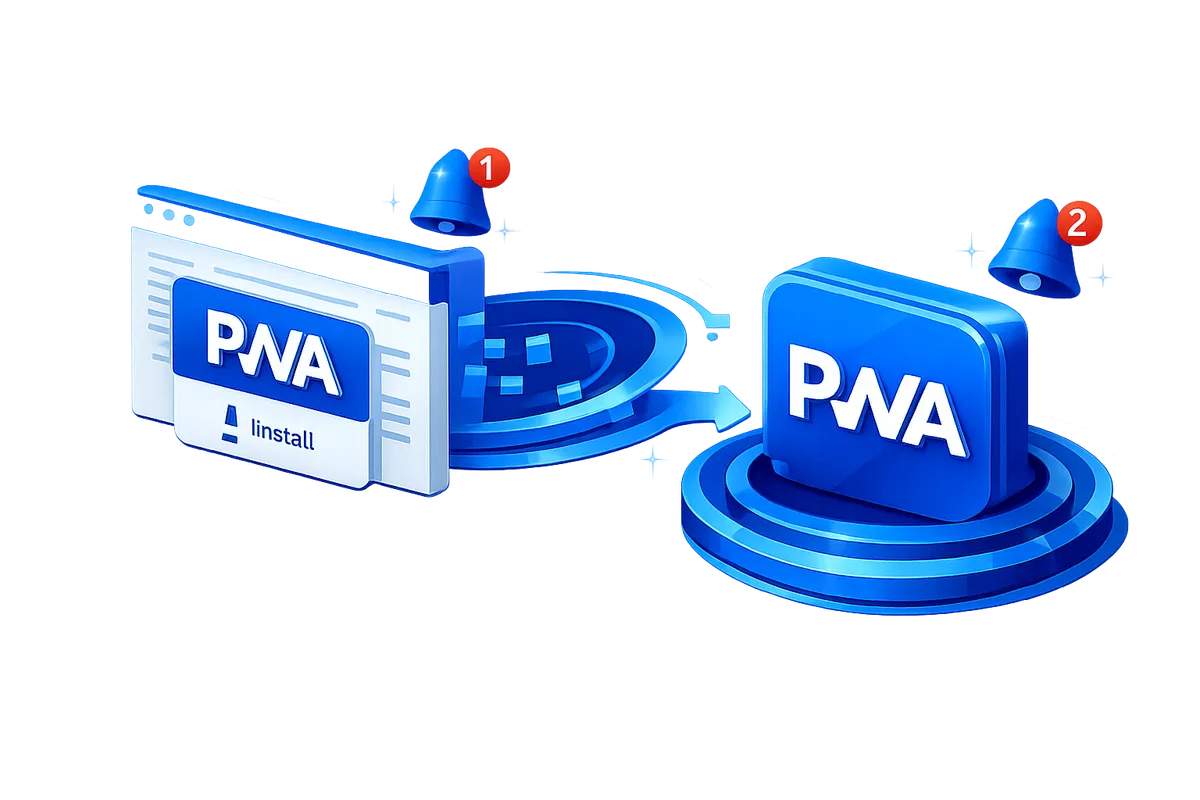
How We Build Progressive Web Apps for Hermosa
Hermosa businesses typically have lean operations. There is rarely a separate IT function, and the owner is usually the one making technology decisions between shifts. We scope PWA projects around that reality: clear deliverables, no unnecessary complexity, and a result that the business can manage without ongoing technical support for routine functions.
We start by understanding the single most important thing the PWA needs to do. For most Hermosa small businesses, it is one of three things: take orders or reservations, manage appointments, or build a loyal customer contact list. The PWA is built to do that one thing exceptionally well before we add secondary features.
Bilingual support is not an add-on. We build Spanish and English language handling into the application from the start, with content management that lets the business owner update menu items, service descriptions, and promotional text in both languages without needing a developer. Push notifications go out in the customer's preferred language. The installation prompt appears in the right language. For a Hermosa business serving a mixed-language customer base, language is a design decision, not an afterthought.
Performance targets account for the real device distribution in the neighborhood. We test on mid-range Android devices on cellular connections, not just the fastest hardware on fiber. A customer trying to place a pickup order from the Hermosa branch library parking lot on a 4G signal should have the same experience as a customer on a home wifi connection.
Industries We Serve in Hermosa
Taquerias and panaderias along Armitage Avenue use PWA-based ordering and loyalty tools to move customers off third-party delivery platforms that charge commissions and own the customer relationship. A Hermosa taqueria that builds its own installed customer base sends order-ready push notifications, runs its own loyalty program, and keeps its margin without splitting revenue with a platform that has no loyalty to the neighborhood.
Auto repair shops on North Avenue use scheduling and status PWAs to give customers a better experience at no additional labor cost. A customer who drops off a vehicle near Kelvyn Park does not want to call to ask if it is ready. A PWA that sends a push notification when the repair is complete, shows an itemized service summary, and allows payment confirmation from the phone improves the customer's day and reduces the number of calls the shop has to handle.
Salons and barbershops on Kostner Avenue use appointment booking PWAs to fill their calendar without relying on third-party booking platforms that charge monthly fees and send customers to competitors. A Hermosa salon with a loyal client base can build a PWA that handles booking, sends appointment reminders in the client's preferred language, and allows easy rescheduling without requiring a phone call during business hours.
Family medical practices near Pulaski Avondale Medical use patient-facing PWAs to reduce no-shows and improve follow-up care. An appointment reminder push notification sent 24 hours before a visit, in Spanish for Spanish-speaking patients, is more effective than an automated call that goes to voicemail. A PWA that handles intake forms before the visit reduces lobby paperwork and wait time for patients coming from around the Hermosa neighborhood.
Small grocery stores and bodegas near Kelvyn Park use PWA-based catalog and pickup tools to compete with the convenience of delivery apps while keeping their customer relationships intact. A neighborhood grocer that lets customers browse weekly specials, pre-order staples, and pick up at a specific time builds a routine connection with its customer base that drives consistent foot traffic, not just impulse visits.
Churches and community organizations near Our Lady of Grace Parish use PWAs for event registration, volunteer coordination, and community announcements. A Hermosa parish that serves several hundred families can use a PWA to send push notifications about services, events, and community needs to members who have opted in, reaching them more reliably than email and without the cost of printed bulletins for every communication.
What to Expect Working With Us
1. Scoping for your actual business. We begin by understanding the one or two things that would genuinely change your business if customers could do them easily from their phones. For a Hermosa small business, this conversation is practical and specific. We do not sell you a feature list. We build the thing that solves the real problem.
2. Bilingual design and content setup. We design the application in both Spanish and English and set up a content management workflow that lets you update text in both languages without developer involvement. You review the design in both languages before we build, and we revise until it accurately represents your business.
3. Build, test, and launch. We build the PWA, test it on the devices and connection types your customers actually use, and launch with a soft rollout to make sure everything works under real conditions before you promote it to your full customer base.
4. Ongoing support and simple management. After launch, we are available for issues and updates. We set up analytics so you can see how many customers have installed the PWA and how often they use it. For a Hermosa business, knowing that 200 customers have your app on their home screen is the kind of metric that changes how you think about your marketing.