How We Build Logo Design for Hermosa
We do not start with stock icons and typography combinations. We start with questions: What does this business stand for? Who are its best customers? What do those customers see when they look at this mark on a receipt, a storefront sign, a business card, or a phone screen? What are the businesses that come to mind when the owner describes what they want to be known for?
From those conversations, we build a creative brief that defines the visual direction before any design work begins. The brief covers the core personality dimensions (warm versus professional, traditional versus modern, family versus individual), the color territory, the language choices for the wordmark, and any reference points the owner has identified as relevant. For a Hermosa salon on Armitage Avenue with a young female clientele drawn from across the Northwest Side, the brief looks completely different from one for an auto shop on Pulaski Road serving multigenerational family customers.
We then produce three distinct logo concepts, each developed to a level of detail that allows honest evaluation. Not thumbnails or mood boards, but finished concepts showing the mark in relevant applications: storefront signage, a paper bag, a business card, a phone app icon. Seeing the mark in context reveals design decisions that are invisible in isolation.
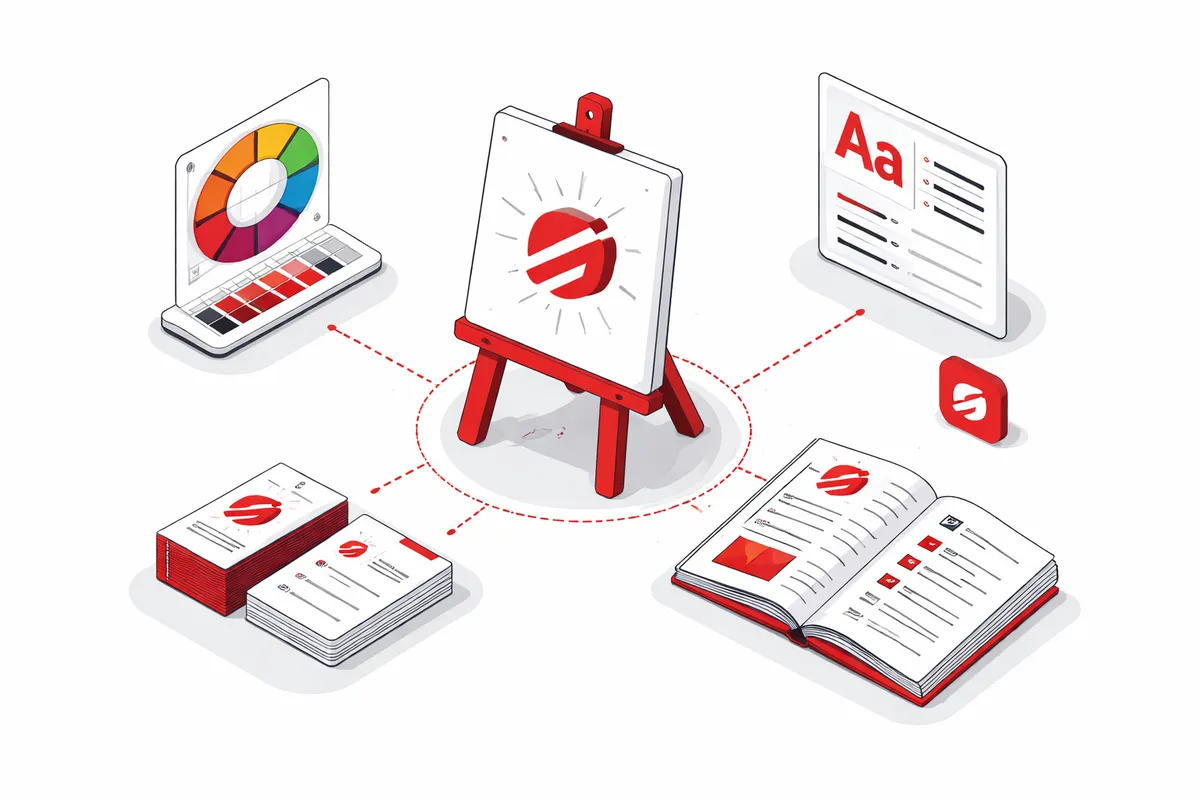
After the client selects and refines a direction, we produce the complete logo package: primary mark, secondary mark variants, horizontal lockup, stacked lockup, icon-only version, Spanish-language variant if required, color versions, and black-and-white versions. Every file format the business might need for print, web, embroidery, or signage is included.
Industries We Serve in Hermosa
Taquerias and family restaurants along Fullerton Avenue have specific logo needs: legibility at large scale for interior signage, warmth in the color palette, and usually a mark that works in both English and Spanish. Logos for these businesses need to stand out against the visual noise of a commercial corridor while feeling familiar enough that new customers sense the community connection immediately.
Salons and beauty businesses concentrated around Armitage Avenue and Kelvyn Park serve a clientele where visual identity matters intensely. The logo on the salon's awning, business card, and Instagram profile is a direct signal about the quality of work inside. We design salon logos that communicate precision and care without sacrificing the warmth that keeps clients loyal across years.
Auto repair shops on Pulaski Road need logos that communicate competence, reliability, and longevity. The visual vocabulary for auto service businesses in Hermosa leans toward marks that feel solid: strong typography, geometric marks that hold up at small sizes on a keychain tag or an appointment card, and color choices that signal professionalism rather than discounting.
Small grocery stores and tiendas serving the residential blocks near Kostner Avenue benefit from logos that communicate variety, freshness, and community belonging. These are businesses where the logo appears on bags, receipts, awnings, and refrigerator magnets. Versatility across formats, and legibility in both the English and Spanish signage the store uses, are primary design requirements.
Family medical and dental practices near Pulaski Avondale Medical require logos that balance warmth and clinical credibility. Patients choosing a family practice in Hermosa are looking for a provider who is professional enough to trust with their children's health and approachable enough to call when they have questions. The logo communicates both.
Churches and community organizations near Our Lady of Grace Parish need visual identities that carry heritage and contemporary relevance simultaneously. Faith community logos in Hermosa often incorporate traditional iconographic references alongside modern typographic treatments, communicating continuity with the community's Catholic heritage and accessibility to newer, younger members.
What to Expect Working With Us
1. Discovery and creative brief. We spend an hour with the business owner going through the discovery questions that shape the design direction. We also review the competitive landscape: what do other businesses in this category look like on Armitage Avenue and Fullerton Avenue, and what visual territory is available for this business to own distinctively?
2. Three initial concepts. We present three fully developed logo directions, each shown in context. The presentation includes a brief rationale for each concept explaining the design choices. We want the owner to understand why each mark says what it says, not just to react to aesthetics in isolation.
3. Refinement and file production. After the owner selects a direction and we align on any refinements, we produce the complete logo system. For bilingual businesses, this includes both English and Spanish wordmark variants. The complete file package is delivered in every format needed for print, web, and production applications.
4. Brand standards summary. Every logo delivery includes a one-page brand standards summary specifying the correct colors (with print and screen color codes), the approved typefaces that pair with the logo, and the minimum size and clear space requirements that protect the mark from being reproduced poorly. This document is what the owner hands to every vendor who touches their brand going forward.