How We Build HR Automation for Hermosa
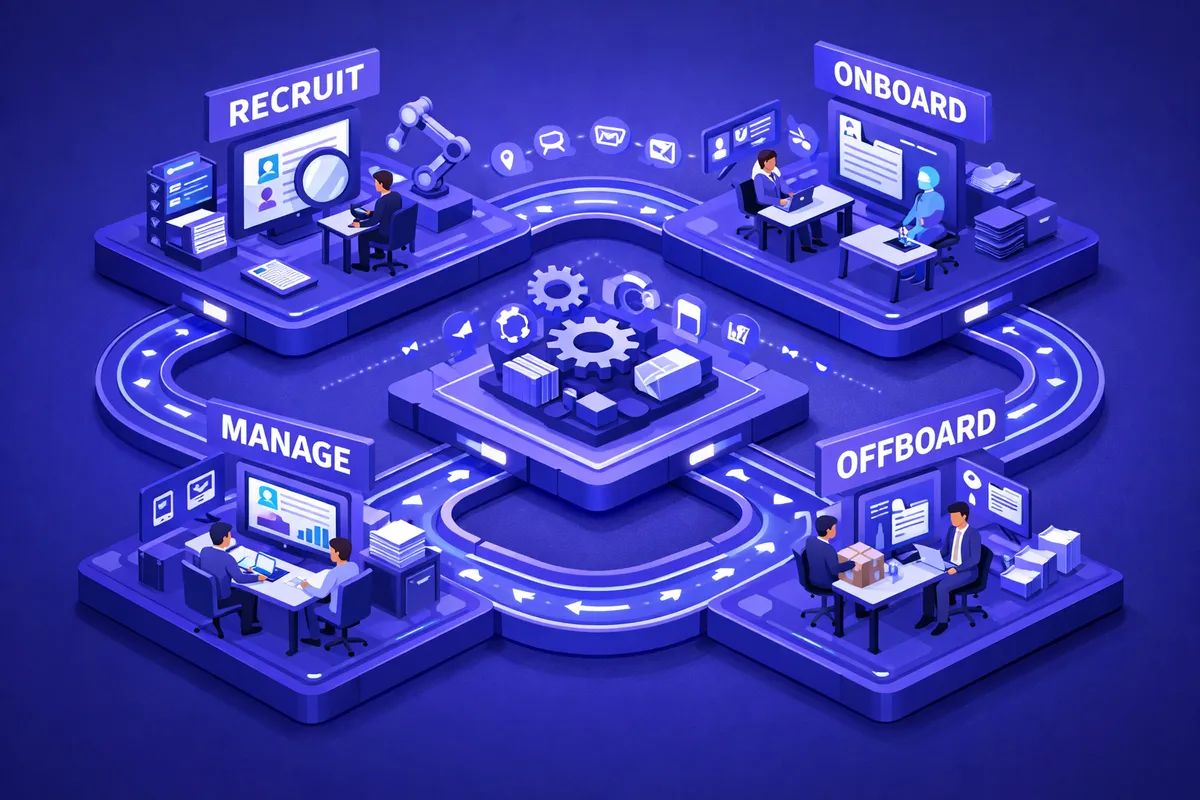
We start by understanding the full people-management workflow: how the business currently posts jobs, collects applications, onboards new hires, creates schedules, tracks time, and processes payroll. For most Hermosa small businesses, some of these steps happen through a platform and some happen on paper or by text message. The goal of the first session is a complete picture of where time is being spent and where errors are occurring.
From that picture, we identify the highest-impact automation opportunities. For a business that currently builds schedules manually, scheduling automation is the starting point: a system where employees submit availability, the business sets its coverage requirements, and the schedule is generated automatically as a starting draft that the owner reviews and adjusts. For a business where new hire onboarding means handing a folder of forms across the counter, digital onboarding automation is the priority.
We build on platforms that can grow with the business. For most Hermosa small businesses with fewer than 15 employees, we work within tools like Gusto, Homebase, or similar platforms that have strong automation capabilities and reasonable costs. For businesses with more complex needs, including multi-location operations or specialized classification requirements, we evaluate more capable platforms or build custom automation bridges between systems.
The bilingual context of Hermosa employment matters at every step. Job postings need to reach Spanish-speaking applicants who may be searching on different platforms than English-language postings reach. Onboarding documents need to be provided in Spanish for employees who prefer it under Illinois law. We build the HR automation with these requirements addressed, not as an afterthought.
Industries We Serve in Hermosa
Taquerias and food service operators along Fullerton Avenue manage rotating kitchen and counter staff across multiple shifts with varying availability and skill levels. Scheduling automation that accounts for position requirements (cook versus cashier), employee availability, and labor cost targets eliminates the 2 to 3 hours the owner currently spends building the weekly schedule from scratch.
Salons and beauty businesses on Armitage Avenue operate a mix of employee stylists and booth-renters, each with different administrative requirements. HR automation handles employee payroll and scheduling on one track while managing booth rental invoicing and occupancy tracking on another, giving the salon owner a complete picture of their people costs without maintaining two separate systems.
Auto repair shops on Pulaski Road typically employ a mix of mechanics, service advisors, and lot staff with different pay structures, benefit eligibilities, and scheduling patterns. HR automation standardizes the time tracking, overtime calculation, and payroll processing across all of these roles, reducing payroll errors and ensuring compliance with Illinois overtime rules that manual calculation frequently misses.
Small grocery stores serving the dense residential blocks near Kostner Avenue often employ family members alongside non-family staff, which creates administrative complexity around payroll equity and documentation. HR automation creates consistent records for every employee regardless of family relationship, which protects the business in the event of an audit.
Family medical and dental practices near Pulaski Avondale Medical need HR systems that handle healthcare-specific requirements: staff credentialing records, HIPAA training completion tracking, and state licensing renewal reminders alongside standard payroll and scheduling. We build HR automation that addresses these practice-specific needs alongside the general HR functions.
Community organizations affiliated with Our Lady of Grace Parish often manage a mix of paid staff and volunteers with different administrative needs. HR automation separates paid employee management from volunteer coordination clearly, ensuring that the organization's records reflect accurate employment classifications and that volunteer time is tracked appropriately for grant reporting purposes.
What to Expect Working With Us
1. HR workflow audit. We spend the first week documenting every step of your current people management process, from the moment a position opens to the moment an employee receives their final paycheck. We note which steps are happening in tools and which are happening manually, where errors typically occur, and where the most time is being spent on administrative work.
2. Platform selection and configuration. Based on the audit, we recommend a platform or combination of tools, configure it for the specific employment types and compliance requirements of the business, and load the current employee roster. For a Hermosa business with employees who primarily speak Spanish, we configure the platform with Spanish-language interfaces where available.
3. Automation build and testing. We configure the scheduling automation, onboarding workflows, and payroll processing rules, then run them through test scenarios based on real business patterns: a week with a holiday, a payroll period with overtime, a new hire who starts mid-pay-period. Testing against these edge cases prevents the errors that would otherwise appear in the first month of live operation.
4. Team training and compliance review. We train the owner and any staff who interact with the HR system, review Illinois labor law compliance for the specific business model, and document the audit trail the system generates. The compliance review alone often surfaces issues in the existing manual process that the automation will correct going forward.