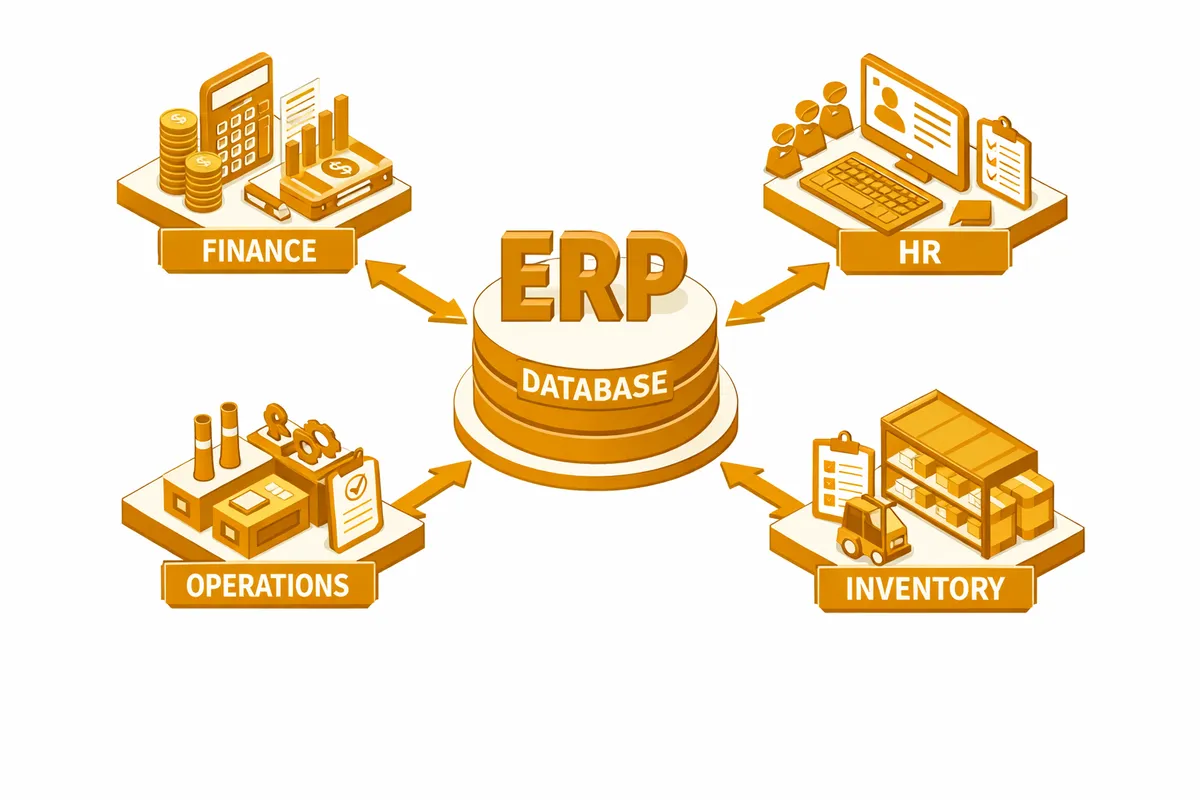
How We Build Custom ERP for Hermosa
Discovery for a Hermosa business engagement starts with the owner and the people who run day-to-day operations. We conduct structured interviews in Spanish or English depending on preference, mapping every workflow, every data requirement, and every integration point across the business. For a Hermosa panaderia expanding into wholesale, this means understanding the production schedule, the relationship between ingredient purchasing and production volume, the separate billing process for wholesale accounts versus retail walk-in, and the labor tracking differences between production staff and counter staff.
From that discovery, we design a module structure that reflects the actual operational model. A Hermosa auto repair ERP might include customer vehicle history, repair order management, parts inventory with automatic reorder triggers, technician labor and commission tracking, insurance claim management, and cash flow reporting tied to the real payment cycles of insurance reimbursements and retail customers. The module structure is designed together with the owner before any development begins.
Implementation is phased, delivering the highest-impact functionality first. Hermosa businesses typically see the first working modules within fourteen to eighteen weeks. Subsequent phases add capabilities without disrupting the operational foundation already built.
Industries We Serve in Hermosa
Taquerias and panaderias along Fullerton Avenue and Armitage Avenue that have expanded into catering or wholesale need ERP that tracks production volume against ingredient purchasing, manages separate billing processes for retail versus wholesale accounts, and gives owners a real view of margin across every revenue channel without manual reconciliation.
Auto repair shops on Pulaski Road managing multiple technicians need ERP that connects parts inventory to repair orders, tracks labor hours and technician commissions, manages customer vehicle histories across repeat visits, and integrates insurance claim management into cash flow reporting.
Salons and personal care businesses on Armitage Avenue and Kostner Avenue with multiple stylists and retail product lines need ERP that manages appointment scheduling, tracks stylist commission structures, monitors retail inventory levels, and produces financial reporting that reflects the real economics of the business.
Family medical practices near Pulaski Avondale Medical managing patient scheduling, billing, and staff across a small clinical team need ERP that connects clinical scheduling to billing workflows, tracks insurance reimbursement cycles, and gives practice owners a unified view of operational and financial performance.
Small grocery stores and bodegas serving the Hermosa community need ERP that manages inventory across multiple product categories, tracks vendor relationships and purchasing cycles, and provides the financial reporting needed to manage tight margins without full-time accounting staff.
Churches and community organizations on Hermosa's residential streets managing programs, staff, volunteers, and donor relationships need ERP that connects program scheduling to budget management, tracks donor history and giving patterns, and gives organizational leadership the reporting needed to manage operations without a dedicated administrative team.
What to Expect Working With Us
1. Discovery and scope. Two to three weeks of structured interviews with your ownership and operational team, conducted in the language that works best for you. We map every workflow, every data requirement, and every system you currently use before designing anything.
2. Module design and approval. We design the module structure, data model, integration architecture, and phased delivery plan. You review and approve before any development begins. No surprises in what gets built.
3. Phased implementation. Your highest-impact modules go live first, typically within fourteen to eighteen weeks. Subsequent phases add capabilities without disrupting the operational foundation already in place.
4. Launch support and ongoing maintenance. Post-launch monitoring, operational validation, and a warranty period for any issues. Optional maintenance retainers cover feature additions and integration updates as the business grows.