How We Build Business Intelligence for Hermosa
We begin by connecting to every data source the business has. For most Hermosa small businesses, that means the POS system, a scheduling or booking platform if one exists, any inventory system, and the accounting software. We pull historical data from each source, standardize the formats, and load everything into a single data store. This step alone is illuminating: most business owners see their complete transaction history organized clearly for the first time.
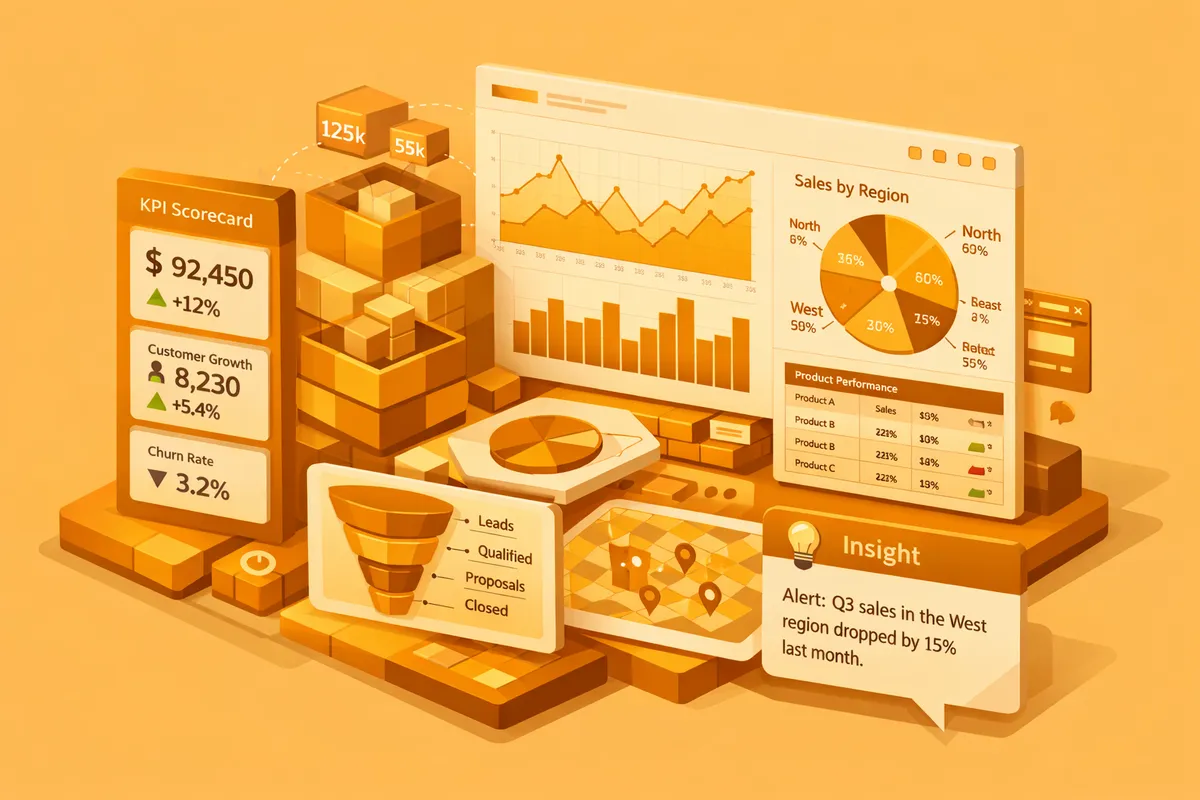
The dashboard we build on top of that data is calibrated to the questions this specific business needs to answer. We do not deploy a generic analytics template. A Kelvyn Park-area salon wants to see booking utilization by stylist, revenue per client, and product attachment rate alongside appointment revenue. An auto repair shop on Pulaski Road wants to see repair order volume by job type, average ticket, return customer rate, and parts cost trend. Different businesses, different dashboards.
We build for business owners, not data analysts. Every metric on the dashboard has a plain-language label, and the default view answers the most important questions without requiring the user to build their own reports. For Hermosa business owners who are managing operations in two languages and handling everything from customer service to vendor relationships, the last thing we want to add is a tool that requires a training course to use.
Refresh rates and data connections are configured based on what the business actually needs. A daily sales dashboard needs to update overnight at minimum. A live kitchen-display-style view for a busy taqueria on Fullerton Avenue during a Friday service might need near-real-time data. We configure accordingly.
Industries We Serve in Hermosa
Taquerias and full-service restaurants along Fullerton Avenue generate dense transaction data that rarely gets analyzed. Business intelligence surfaces the patterns that change how the business is run: the hour when dine-in check average peaks, the menu items that drive return visits versus one-time orders, and the gap between lunch and dinner revenue that might support a focused daily special to fill.
Salons and beauty businesses on Armitage Avenue can track service mix, stylist performance, retail attachment, and client retention through a single dashboard that pulls from their booking and POS systems. Owners who previously guessed at whether a new service offering was growing can see the actual trajectory within weeks of launch, and adjust pricing, promotion, or capacity accordingly.
Auto repair shops on Pulaski Road benefit from dashboards that track job type revenue mix over time, parts cost as a percentage of repair order, average days from estimate to approval, and return customer rate by service category. These metrics turn the shop's transaction history into a map of where margin is being made and where it is being lost.
Small grocery stores serving the residential blocks near Kostner Avenue use business intelligence to track sell-through rates by category, identify the products that drive basket size versus the ones that move independently, and compare week-over-week revenue against the prior year to separate normal seasonality from a genuine shift in customer behavior.
Family medical and dental practices near Pulaski Avondale Medical generate scheduling, billing, and patient retention data that is typically locked inside practice management software. Business intelligence pulls that data out and surfaces the metrics that matter for practice growth: new patient acquisition rate, appointment utilization by provider, revenue per visit by insurance type, and no-show rate by appointment category.
Churches and nonprofit organizations connected to Our Lady of Grace Parish manage program participation, donation revenue, and operational expenses that benefit from organized reporting. A simple dashboard that tracks donation trends by month, program costs against budget, and event attendance over time gives board members the visibility to make better decisions without relying on the treasurer to produce a new spreadsheet for every meeting.
What to Expect Working With Us
1. Data audit and source connection. We inventory every system the business uses that generates data, assess what is available historically, and build the data pipeline that pulls it into a central location. For most Hermosa businesses, this takes 1 to 2 weeks and produces the first clear view of complete historical transaction data.
2. Dashboard design with the owner. Before we build anything, we sit with the owner and work through the 5 to 7 questions they wish they could answer about their business today. Those questions become the dashboard. We prototype the layout and confirm that the metrics are calculated the way the owner expects them before we finalize the build.
3. Launch and initial reading. When the dashboard goes live, we walk through it together. Not a technical walkthrough, but an actual reading of the data: here is what your numbers show for the last 12 months, here are the patterns worth paying attention to, here are the questions the data raises that you should investigate further. This session is often the most valuable part of the entire engagement.
4. Quarterly reviews for the first year. Data is most valuable when it informs decisions consistently, not just at launch. We schedule quarterly reviews for the first year to help the owner read the updated numbers, identify whether earlier decisions produced the expected results, and adjust the dashboard as the business evolves. By the end of the year, most business owners are reading their own data without needing us to facilitate.