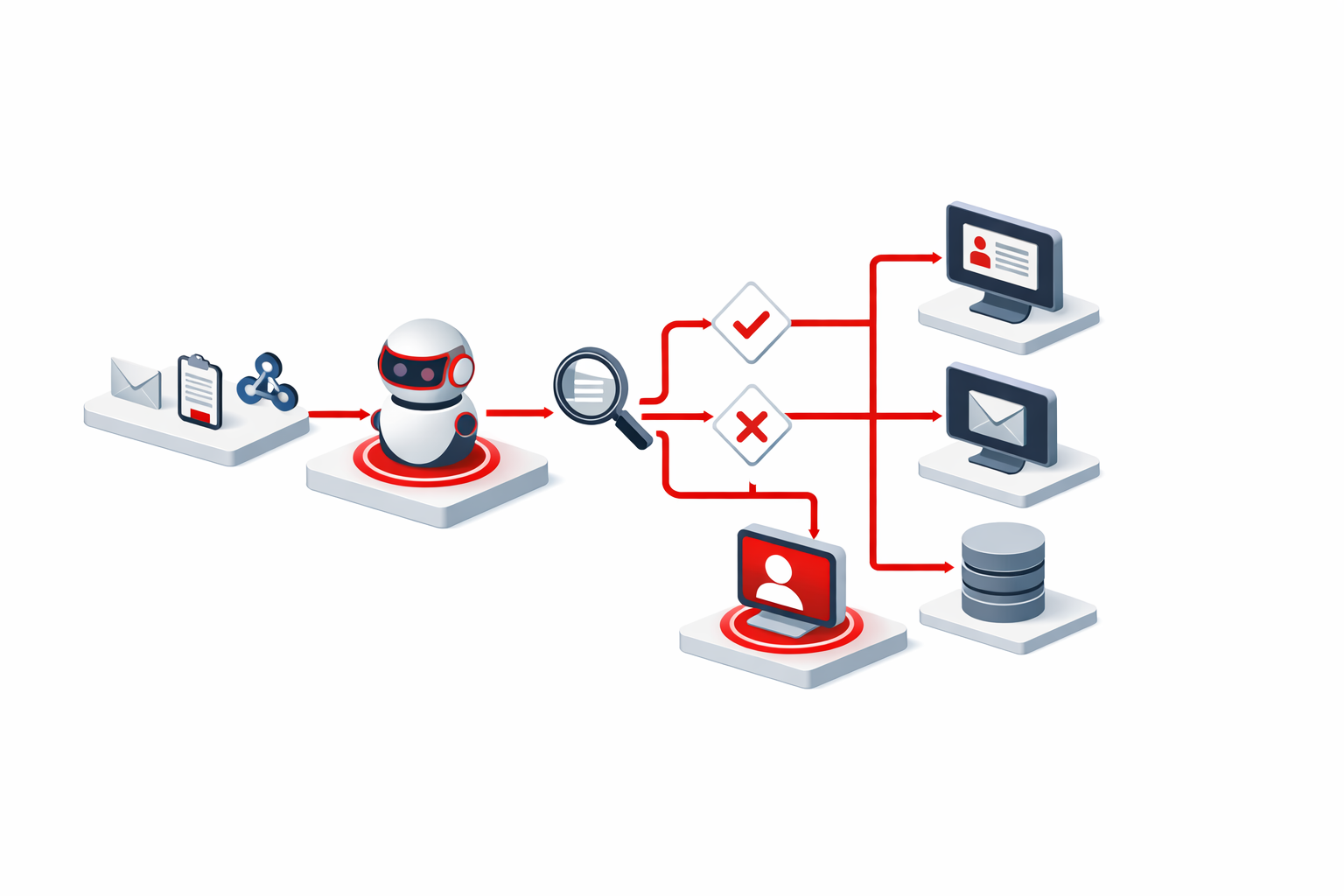
How We Build Autonomous Workflow Agents for Hermosa
We start by mapping the workflows with the highest impact when they run consistently and the highest cost when they are skipped. For a salon on Kostner Avenue, that means appointment reminders, post-service follow-up messages, and reactivation campaigns for clients who have not returned in 90 days. For an auto shop on Pulaski Road, it means service completion notifications, upcoming maintenance reminders tied to each vehicle's service history, and review request messages sent 48 hours after pickup. For a restaurant on Armitage Avenue, it means weekly specials communication to regular customers and reservation confirmation messages with directions and parking details.
We document the specific logic for each workflow before building anything. Appointment reminders for the salon go out 48 hours before the appointment in the customer's preferred language, and a second reminder goes out the morning of. The reminder includes the stylist name, the service booked, and the cancellation policy. If the customer cancels within 24 hours, a rebooking workflow triggers automatically. That level of specificity prevents communications from feeling generic, which is particularly important in Hermosa where customer relationships are personal and residents notice when something reads like a mass-market template.
We build agents using automation tools that connect to the business's existing systems. We do not introduce new software platforms that create another login to manage. A salon using Square Appointments gets an agent that reads Square's booking data and sends messages through whatever communication platform the salon already uses, whether that is email, SMS, or WhatsApp Business. A carniceria using a POS-linked WhatsApp Business list gets an agent that draws specials content from the weekly promotional plan and distributes it to the list on the scheduled day without manual broadcast work.
Testing runs against real business scenarios before deployment. We simulate a full week of the business's operation to confirm each agent fires correctly, communicates in the right language for each customer, and handles edge cases like last-minute cancellations or unusual booking patterns without creating errors or sending duplicate messages.
Industries We Serve in Hermosa
Auto repair and mechanic shops on Pulaski Road and Kostner Avenue benefit from agents that send service completion texts with payment links, trigger 12-month maintenance reminders based on each vehicle's service date, and request Google reviews from customers 72 hours after pickup. These three workflows alone typically recover a significant share of customers who would otherwise drift to competitors between service visits when no contact is maintained.
Salons and beauty businesses use agents for appointment confirmation sequences, 48-hour reminder messages, same-day morning reminders, no-show follow-up rebooking offers, and 60-day reactivation campaigns for clients who have not returned. Salons running these workflows report measurable reductions in no-show rates and higher rebooking rates from clients who might otherwise let too much time pass and drift to a competitor.
Taquerias and Mexican restaurants use agents for wholesale customer order deadline reminders, loyalty program communication, special event reservation follow-up, and weekly specials distribution to WhatsApp customer lists. The restaurant's most loyal customers receive consistent communication in their preferred language without the owner manually drafting messages during the hours when the kitchen is busiest.
Family medical practices near Pulaski Avondale Medical and along the Kelvyn Park area use agents for appointment reminders at multiple intervals, overdue preventive care reminders for established patients, and post-visit follow-up communications. These workflows are configured to meet HIPAA communication requirements for the patient data they handle, with appropriate consent documentation built into the initial setup.
Small grocers and carnicerias use agents for weekly promotional announcement sequences to WhatsApp Business customer lists, low-stock alerts to regular wholesale customers, and reactivation messages to customers who have not visited in 30 days. The weekly specials workflow alone saves these businesses significant time each week compared to manually drafting and distributing the same type of message every Thursday or Friday.
Community organizations and parish-connected groups near Our Lady of Grace Parish use agents for event registration confirmations, volunteer scheduling reminders, program deadline communications, and community newsletter distribution. Organizations with high volunteer turnover find that automated communication maintains consistency even when the human coordinator changes mid-cycle.
What to Expect Working With Us
1. Workflow audit and prioritization. We spend time with the business owner identifying the three to five workflows with the highest combined impact on revenue and customer retention. We document the current state of each process, the desired behavior, and the specific logic governing timing, language routing, and escalation for each workflow. For Hermosa businesses with Spanish-dominant customer bases, language routing is documented in the first session.
2. Agent design and system mapping. We map each workflow to the business's existing tools, determine integration pathways without requiring new platform subscriptions, and design the full communication sequence including timing, content, and rules for edge cases like cancellations, language mismatches, or duplicate records.
3. Build, test, and deploy. We build the agents, run simulation tests against real business scenarios drawn from the business's actual operating patterns, correct any issues, and deploy with the owner's approval. Deployment requires no customer-facing changes and no staff training beyond a brief orientation on what the agent is doing and how to pause it if needed.
4. 30-day monitoring and optimization. We monitor agent performance for the first 30 days, reviewing delivery rates, open rates, and any error patterns. We refine communication timing and template language based on actual response data before transferring full operational control to the business owner.