How We Build AI Strategy for Hermosa
Our AI strategy engagements for Hermosa businesses start with an operational assessment rather than a technology conversation. We want to understand the business before we recommend any tools: how it operates, who its customers are, what language those customers primarily speak, what the current operational bottlenecks are, and which problems, if solved, would most improve the business's ability to serve the community and operate profitably.
From this operational understanding, we identify the highest-value AI opportunities for the specific business. For most Hermosa small businesses, these are in a small number of categories: customer communication automation, appointment management, marketing outreach, document processing, and analytics. We evaluate the specific tools available in each category against the requirements of the Hermosa business context: bilingual capability, appropriate pricing, integration with tools the business already uses, and ease of adoption for owners without technical backgrounds.
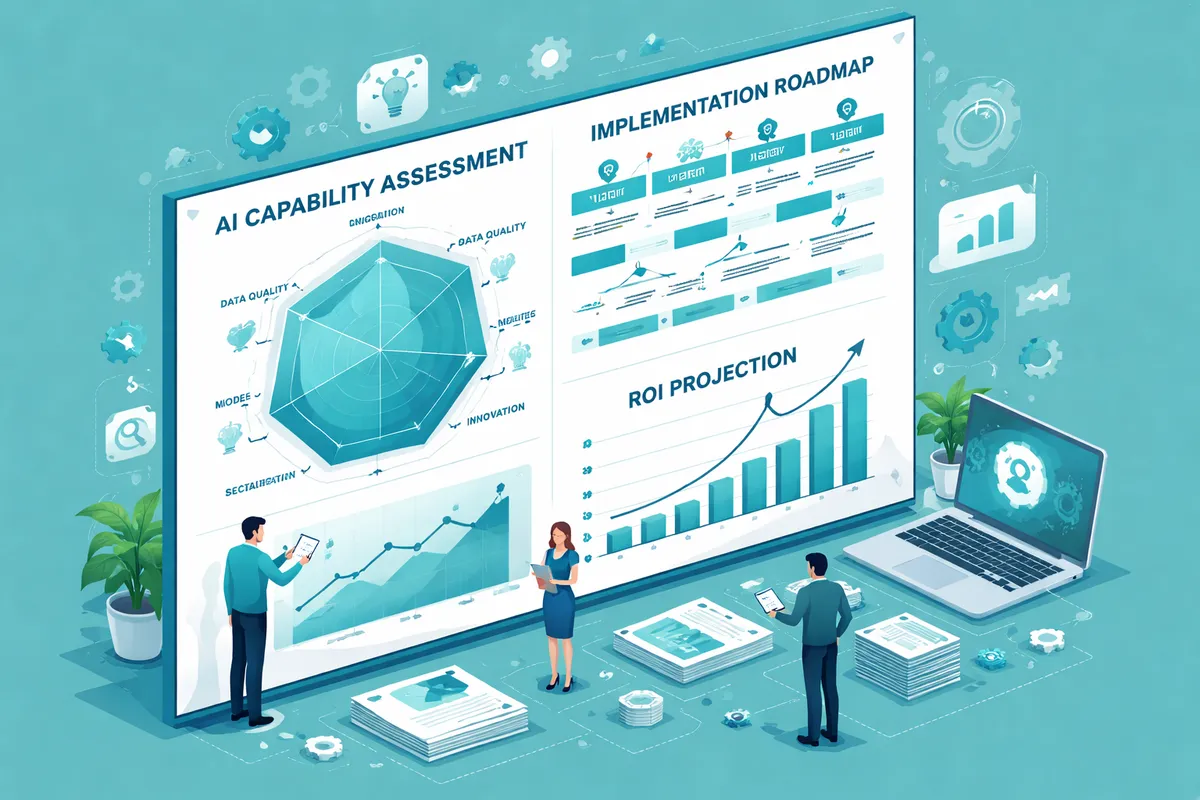
We produce a prioritized roadmap that the business owner can implement sequentially. The roadmap specifies which tool to adopt first, how to implement it, what to expect in terms of time investment and return, and when to move to the next phase. For Hermosa businesses with limited time and budget, the sequencing of the roadmap is as important as the recommendations themselves.
Industries We Serve in Hermosa
Panaderias and food businesses on Armitage Avenue receive AI strategy focused on the highest-return opportunities for a neighborhood bakery: customer communication automation, social media content production, and demand forecasting for production planning. Tools are evaluated specifically for Spanish-language capability and neighborhood-level community commerce appropriateness.
Auto repair shops near Pulaski Road receive strategy focused on customer communication, appointment management, maintenance reminder automation, and reputation management. The strategy accounts for the specific trust dynamics of auto service in a working-class community where a new customer's first experience is also their trust test.
Family medical practices near the Pulaski Avondale Medical area receive strategy that addresses both operational efficiency and regulatory compliance: which AI tools meet HIPAA requirements, which patient communication tools work in Spanish, and what the implementation sequence is for a medical practice adopting AI without a dedicated IT staff.
Salons and personal service businesses throughout Hermosa receive strategy focused on appointment automation, client retention, and social media content production. Tools are evaluated for the specific booking platforms and payment systems salons in Hermosa already use.
Retail businesses on Armitage Avenue and Kostner Avenue receive strategy for inventory management, customer communication, and digital marketing AI. The evaluation specifically addresses which tools work for a working-class Latino retail market rather than assuming a generic retail context.
Local service businesses serving Hermosa families receive practical strategy for the AI tools most immediately useful for trade and home service businesses: customer communication, scheduling, and reputation management.
What to Expect Working With Us
1. Operational assessment and community alignment review. We conduct a discovery engagement that covers your business operations, customer base, language dynamics, and the community service standards that AI tools must maintain rather than erode.
2. AI opportunity analysis and tool evaluation. We identify the highest-value AI opportunities for your specific Hermosa business and evaluate available tools against bilingual capability, cost, integration, and ease of adoption criteria.
3. Prioritized roadmap development. We produce a written AI adoption roadmap with specific tool recommendations, implementation sequence, estimated costs, and expected outcomes.
4. Implementation support. We support the first phase of roadmap implementation, helping with tool selection, vendor evaluation, and initial configuration so that adoption begins efficiently.