How We Build Employee Portals for Gold Coast
We start where the work actually happens. For a Gold Coast portal that means sitting with the floor manager during a slow hour on State Street, watching how a shift swap really gets approved, and learning which questions the office manager answers ten times a week. We map every manual HR workflow before we design anything, because a boutique team's real process is rarely the one written down.
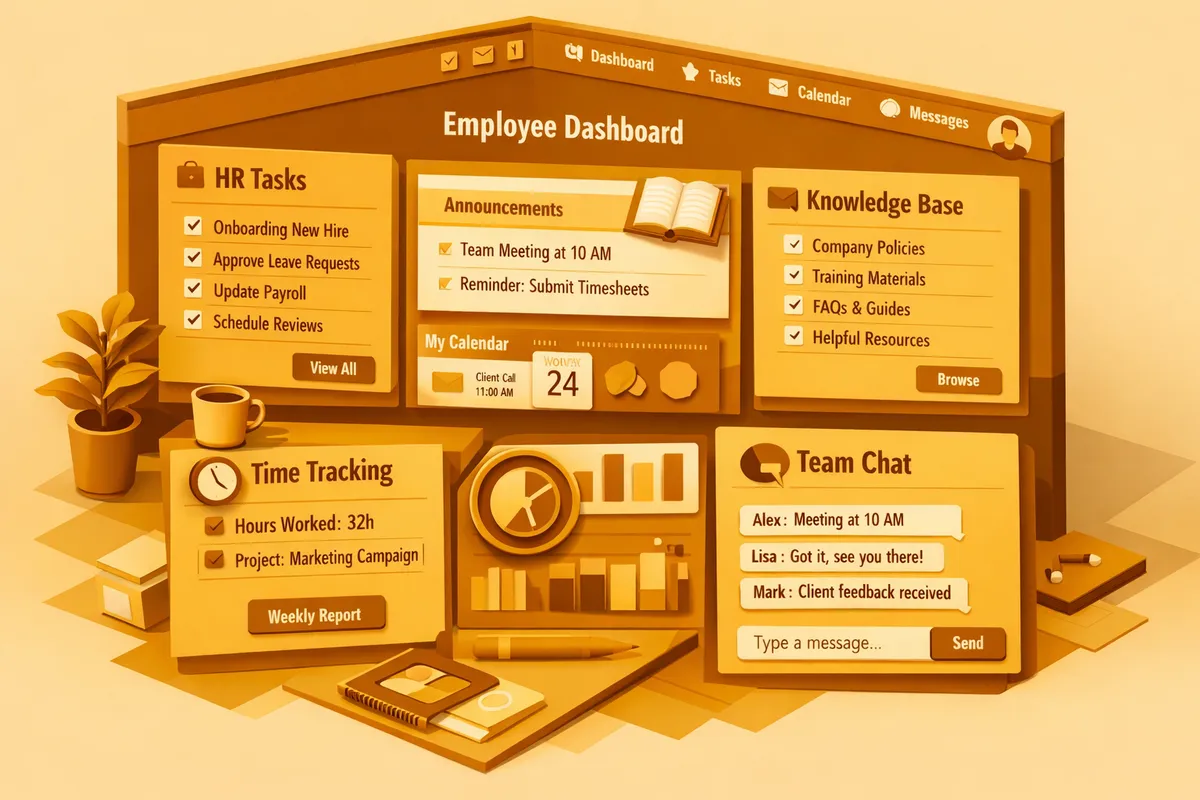
From that map we design the portal around roles, not org charts. A licensed esthetician at an Oak Street spa, a seasonal sales associate, a salaried client-service lead, and the owner each need a different view. The esthetician needs her schedule, her certifications, and her tip records. The seasonal hire needs onboarding and the handbook. The owner needs approvals and an audit trail. We build those distinctions in so the portal feels personal rather than generic.
Because Gold Coast staff are mobile, the portal is built mobile-first and kiosk-friendly. Someone clocking in at a Dearborn Street practice or checking a schedule between clients should not need a laptop. We also integrate with the payroll and scheduling tools these businesses already run, commonly Gusto, ADP, or a boutique scheduling app, so data moves without re-entry. Launch includes hands-on training for whoever administers the portal and 30 days of support, and we are not done until the swap requests, the onboarding flow, and the document library are running without you in the loop.
Industries We Serve in Gold Coast
Luxury retail boutiques along Oak Street and inside the 900 North Michigan Shops use employee portals to manage seasonal hiring waves, floor-coverage schedules, commission visibility, and the brand-standard training that keeps service consistent across every associate. When a trunk show adds weekend shifts, staff pick up and swap through the portal instead of a frantic group text the night before.
Spas, salons, and beauty practices on Rush Street rely on portals to track cosmetology and esthetician license renewals, publish treatment-room schedules, document tip records, and onboard practitioners with the certification paperwork collected before their first client. A portal turns license-deadline tracking into a system rather than a sticky note on the back office monitor.
Private wealth and financial advisory offices near the Newberry Library and Astor Street use employee portals to give client-service teams one place for compliance acknowledgments, continuing-education tracking, PTO requests, and the policy library that a regulated practice has to keep current and signed.
Concierge and specialty medical practices on Dearborn Street deploy portals so clinical and front-desk staff can complete HIPAA training, log credential renewals, view schedules across a small multi-provider roster, and access the practice handbook without routing every question through the practice manager.
High-end restaurants and hospitality venues near Division Street use portals to coordinate front-of-house and kitchen schedules, run tip-pool documentation, onboard seasonal staff for gala-season private events, and push shift updates to a team that is never near a shared computer.
Interior design and architecture studios near the Charnley-Persky House manage a mix of permanent designers, project-based staff, and contractors through a portal that handles onboarding, document collection, expense submission, and the contract-to-hire transitions that come with project-driven staffing.
What to Expect Working With Us
1. Floor-level discovery. We observe how your team actually works a shift on Oak Street or Rush Street and interview the people who run HR informally today. We surface the workflows that cost the most time and the questions that get asked most often, because those define the portal.
2. Role-based design you approve first. We design distinct portal views for owners, managers, salaried staff, hourly practitioners, and seasonal hires, then walk you through wireframes before any build starts. Gold Coast businesses see and sign off on the experience before clients or staff ever do.
3. Mobile build and system integration. We build the portal mobile-first and kiosk-ready, then connect it to the payroll and scheduling platforms you already use so schedules, pay, and documents stay current without manual entry.
4. Seasonal-ready launch and training. We time launch and training so your team is comfortable before a high-volume stretch like holiday retail or gala season. You get 30 days of post-launch support and a plain-language runbook for routine changes.