How We Build AI Integration Services for Gold Coast
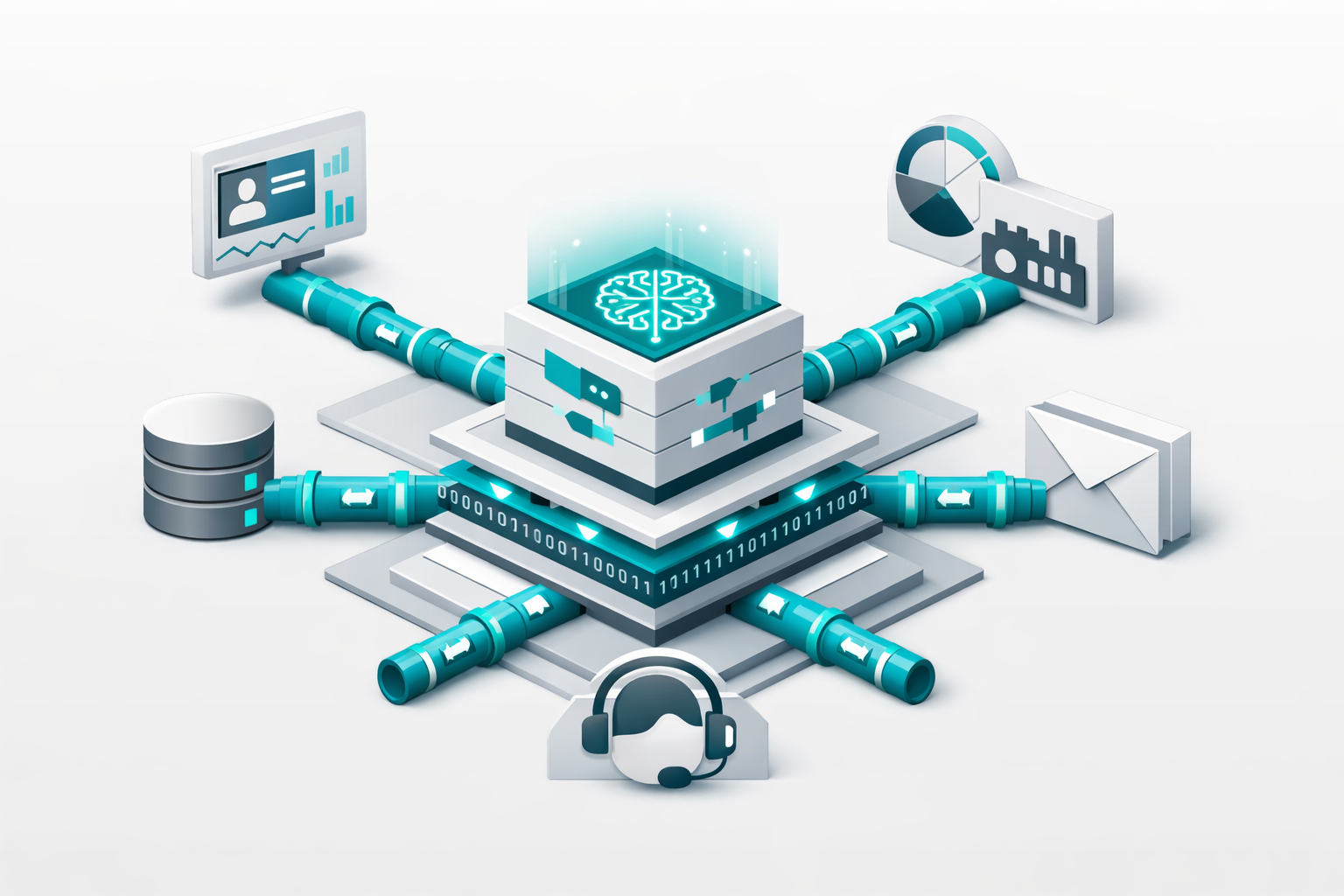
AI integration design begins with a systems audit: documenting every platform the business currently uses, the data each contains, the APIs each exposes, and the workflows that connect them. This audit identifies the integration points where AI capabilities create the most value and the technical architecture required to build those connections reliably.
We then design the integration architecture for each target AI capability. For a wealth management firm on Rush Street, this might mean an integration between the portfolio management system and an AI analysis layer that generates meeting preparation summaries, with output delivered into the advisor's calendar application or CRM. For a medical practice, this might mean an integration between the EHR and an AI documentation assistant that processes clinical notes and supports coding. For a legal firm on Dearborn Street, this might mean an integration between the document management system and an AI contract review layer that flags specific clause types and extracts key obligations.
API design for Gold Coast professional practices requires attention to the security and compliance requirements of the practice category. Wealth management data flowing through AI integration needs to meet SEC and FINRA standards. Patient data flowing through medical practice AI integration needs to meet HIPAA requirements. Legal data needs to meet privilege and confidentiality standards. We build the security controls, audit logging, and access restrictions into the integration architecture, not as an afterthought.
Testing for AI integrations in professional practice environments requires more than functional verification. We test against representative samples of real data, not synthetic data, because the edge cases that cause failures in professional practice contexts often do not appear in synthetic test sets. We test failure modes as well as success paths, because integration failures in professional practice systems need to fail gracefully rather than silently losing data.
Industries We Serve in Gold Coast
Private wealth management and financial advisory firms on Rush Street and State Street benefit from AI integrations that connect portfolio management systems, CRM platforms, and compliance tools to AI analysis and content generation capabilities: automated meeting preparation summaries, AI-assisted client communication drafting, compliance documentation generation, and portfolio analysis that surfaces patterns across client holdings.
Medical and cosmetic specialist practices near the Cathedral of the Holy Name and Washington Square Park benefit from AI integrations that connect EHR platforms, scheduling systems, and billing applications to AI documentation, coding support, and patient communication capabilities: AI-assisted clinical note processing, automated billing code suggestion, prior authorization preparation automation, and patient communication generation from clinical templates.
Legal and professional service firms on Dearborn Street benefit from AI integrations that connect practice management systems and document management platforms to AI review, analysis, and generation capabilities: contract clause extraction and risk flagging, discovery document classification, regulatory filing preparation assistance, and standard document generation from matter management data.
Insurance professionals and financial services firms on State Street benefit from AI integrations that connect policy management systems, CRM platforms, and compliance tools to AI analysis and document processing capabilities: policy comparison analysis, renewal documentation preparation, client communication personalization, and the regulatory filing assistance that insurance compliance requires.
Luxury retailers and boutique brands on Oak Street and near the 900 North Michigan Shops benefit from AI integrations that connect commerce platforms, inventory systems, and clienteling CRM tools to AI recommendation, personalization, and analysis capabilities: personalized product recommendation engines, AI-assisted clienteling outreach generation, inventory optimization analysis, and purchase pattern insights that support buying decisions.
Real estate and property management firms serving Gold Coast's Astor Street and Lake Shore Drive luxury residential corridor benefit from AI integrations that connect property management platforms, transaction management systems, and client CRM tools to AI analysis, document processing, and communication generation capabilities.
What to Expect Working With Us
1. Systems audit and integration opportunity mapping. We document the systems your Gold Coast practice operates, assess the APIs and data access each provides, and map the AI integration opportunities that would deliver the most value for your specific operational requirements. This audit produces a prioritized integration roadmap rather than a theoretical list of all possible connections.
2. Integration architecture and security design. We design the integration architecture for the highest-priority connections, including the security controls, authentication mechanisms, audit logging, and error handling appropriate to the sensitivity of the data flowing through the integration. For Gold Coast professional practices, security design is not a secondary consideration: it is built into the architecture from the first design session.
3. Development, testing, and deployment. We build the integrations against the design specification, test against representative samples of your actual data and workflows, and deploy with monitoring in place. We use a staged deployment approach that validates each integration in a limited production environment before full rollout, reducing the risk of disruption to practice operations.
4. Monitoring, maintenance, and expansion. We monitor integration health after deployment and address failures before they affect business operations. When integrated platforms update their APIs, we update the integration components. As the integration roadmap progresses, we build subsequent integrations on the architecture established for the initial ones, which reduces implementation time and cost for later phases.