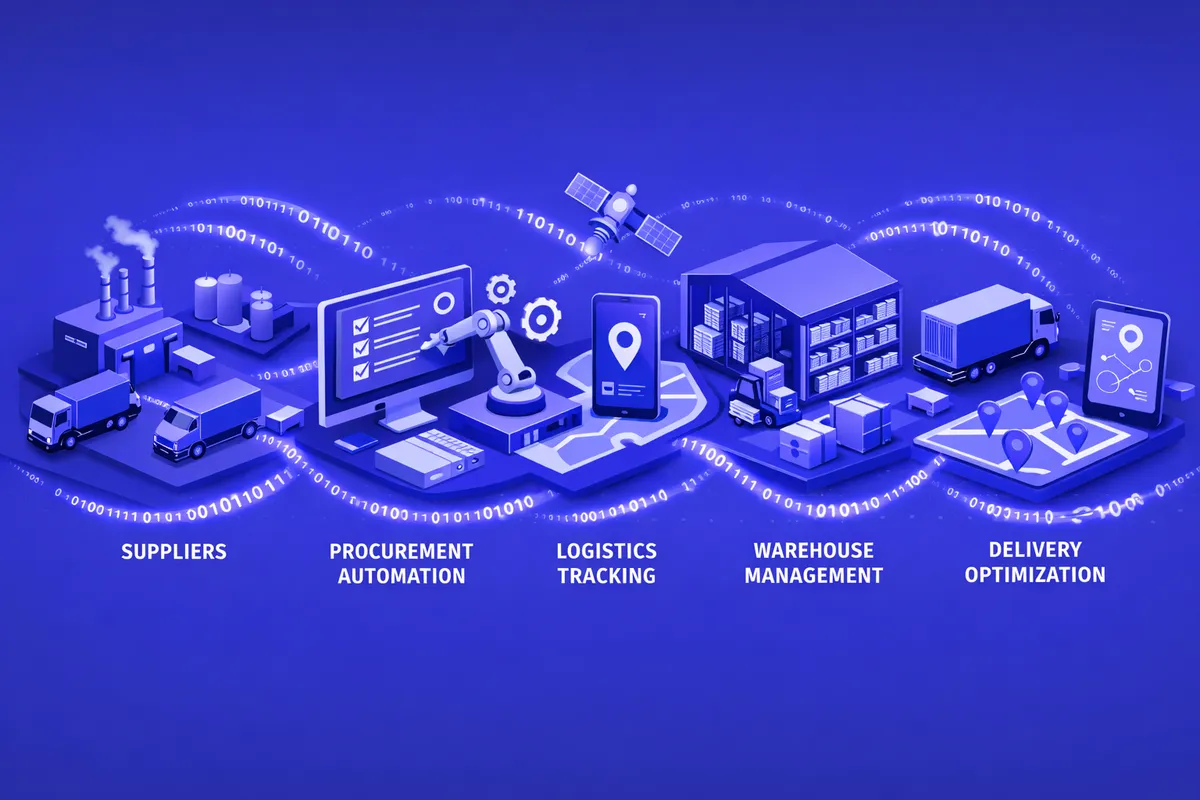
How We Build Supply Chain Automation for Evanston
We start by mapping your current operational flows in detail. For a retail business near the Evanston Public Library, that means understanding your current vendor relationships, your reorder process, your seasonal purchasing patterns, and where manual decision-making is currently absorbing time that automation could reclaim. For a food business on Sherman Avenue, it means mapping ingredient categories by velocity and variability, understanding your prep waste patterns, and identifying where the academic calendar creates reliable demand spikes versus unpredictable ones.
The discovery process takes two to three weeks for most Evanston businesses. We work through a structured audit of your purchasing records, vendor terms, and operational calendar. The output of this phase is a clear picture of where automation can reduce cost, reduce labor, and reduce the risk of stockouts or overstock. For Evanston businesses with two distinct demand seasons, the academic year and the summer, this audit often reveals that purchasing patterns are consistent with neither season and are instead a compromise that is optimal for neither.
System design follows the audit. We build automation workflows appropriate to your business scale and operational complexity. An independent retailer on Davis Street needs different tooling than a restaurant group or a professional services firm. We do not prescribe the same system to every client. We design around your existing technology infrastructure, your vendor relationships, and the specific demand patterns that your Evanston market generates. Implementation is staged so that automation goes live in lower-risk categories first, generating data and confidence before it extends to higher-stakes inventory decisions.
Industries We Serve in Evanston
Independent retail and specialty stores on Davis Street and throughout Evanston's commercial downtown manage inventory across multiple categories with demand curves that do not all move together. Automation that tracks sell-through rates by category, sets reorder points based on vendor lead time and seasonal velocity, and flags anomalies before they become stockouts gives the owner of a multi-category independent retailer a level of operational control that was previously only available to businesses with dedicated purchasing staff.
The restaurant and food service corridor along Sherman Avenue and Chicago Avenue uses supply chain automation to manage ingredient procurement with enough precision to protect margins against the price volatility that restaurant operators face on protein, produce, and specialty items. Automated reorder triggers tied to prep waste data and foot traffic patterns reduce over-ordering in slow periods and prevent the last-minute expensive purchasing that happens when popular menu items run out.
Near Dawes Park, fitness and wellness studios use automation to manage the supplies, cleaning materials, and equipment maintenance schedules that quietly consume administrative time. The bigger automation opportunity for fitness businesses in Evanston is scheduling and capacity management: automated waitlist processing, session-based demand forecasting, and staffing triggers tied to enrollment data reduce the labor cost of managing a variable-demand service business.
Evanston's wealth management and financial advisory firms along Ridge Avenue have supply chain challenges in the form of document processing workflows, compliance calendar management, and the operational sequencing of client engagement steps. Automation that moves client onboarding, annual review preparation, and regulatory filing work through predictable stages with appropriate notifications and handoffs reduces the risk of missed steps in a compliance-sensitive environment.
Specialty food and beverage businesses near the Grosse Point Lighthouse and the lakefront serve a market that is sensitive to both quality and availability. Automated vendor management that maintains relationships with multiple suppliers for key ingredients, with automatic fallback ordering when a primary supplier has a shortage or price spike, protects the menu consistency that keeps professional-family customers returning to these higher-ticket dining experiences.
Professional service providers throughout Evanston's downtown, from healthcare practices near Central Street to legal offices across the corridor, benefit from appointment scheduling automation that manages capacity without human intervention. An automated system that fills cancellation slots, manages waitlists, and triggers recall communications for patients or clients due for annual reviews recovers revenue that manual scheduling consistently leaves on the table.
What to Expect Working With Us
1. Operational audit and demand pattern analysis. We spend the first two to three weeks mapping your current purchasing and operational workflows against your actual transaction and consumption data. For Evanston businesses, this audit specifically examines how the academic calendar and the dual student-and-family demand structure affects your purchasing patterns. The audit deliverable is a document that identifies the highest-value automation opportunities before we build anything.
2. System design tailored to your Evanston business scale. We design automation workflows that fit your actual operational complexity, not a hypothetical enterprise. A three-person retail shop on Davis Street and a professional services firm with eight employees serving the North Shore have meaningfully different automation needs, and we scope and price accordingly.
3. Staged implementation starting with high-confidence wins. We begin automation deployment in the categories where the system has enough data to operate reliably and the risk of an error is manageable. For most businesses, that means starting with non-perishable reorder automation or administrative workflow automation before moving to more complex operational categories. Each stage generates performance data that informs the next.
4. Performance monitoring and calendar-specific review. Supply chain automation for Evanston businesses needs to be calibrated twice a year: before Northwestern's fall return in August, and before the winter semester and holiday season convergence in November. We build quarterly review checkpoints into the ongoing relationship, with specific attention to how the automated systems are performing relative to the academic and seasonal patterns that make this market distinct.