How We Build No-Code Platforms for Evanston
An Evanston engagement starts with the calendar. Before we touch a platform, we map the business to its actual cycle, when demand peaks, which quarter the tool has to be ready for, what breaks during the summer lull, because a no-code build that misses the window misses the point. For a tutoring service off Dempster Street, that means a session-booking app scoped to launch before the term it supports, not after.
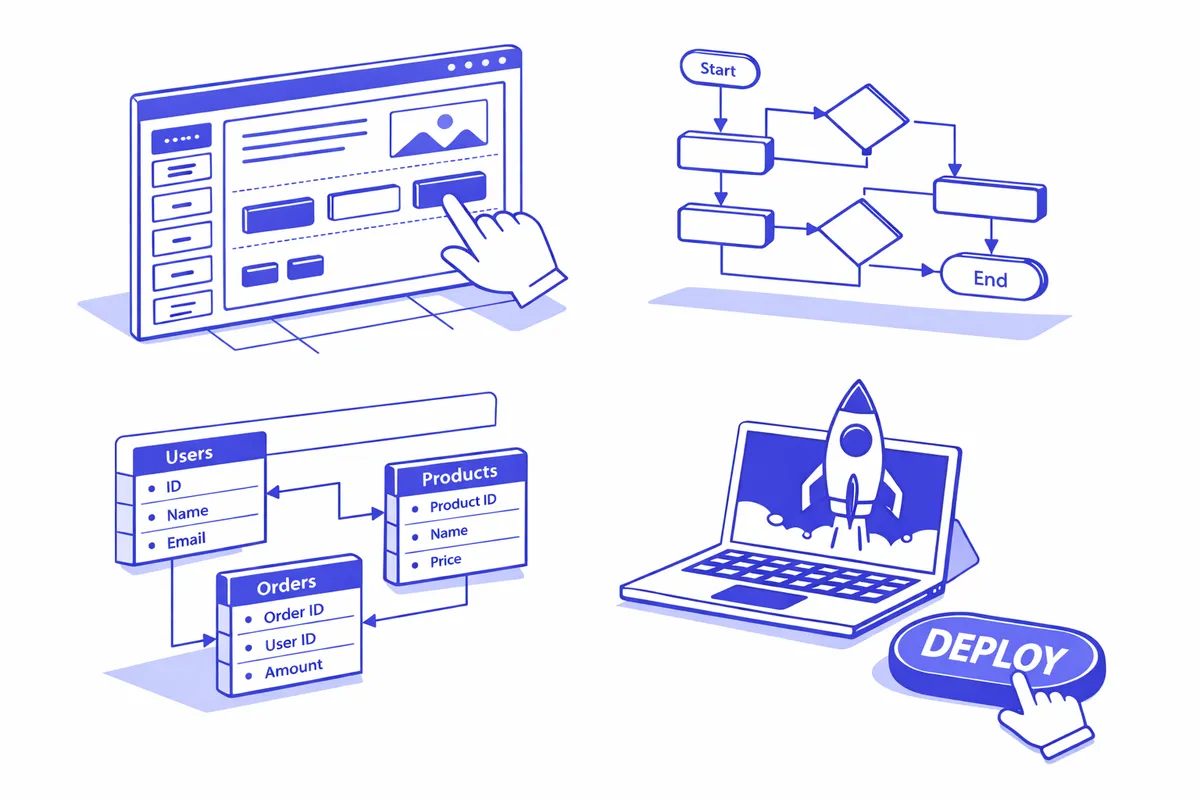
Then we get the data model right, because this is where no-code projects fail. We sit with the team and map how the business actually operates before configuring anything in Bubble or Airtable. A retailer near Davis Street that wants an inventory tool and a wealth manager on Sherman Avenue that wants a client-onboarding workflow need fundamentally different structures, and the structure has to be correct from the first decision. Fixing a broken data model later costs more than building it carefully now.
We build for the people who will actually use the tool, not the person who wrote the requirements. The interface gets designed for the front-desk staff, the bookkeeper, the studio manager. We bring software engineering discipline to the no-code build, then we hand it over with documentation and training so an Evanston team can run and adjust it themselves. The goal is independence: a tool your staff owns, not a dependency that pulls you back to us every time the next quarter shifts the requirements.
Industries We Serve in Evanston
Restaurants and cafes serving the Northwestern University crowd use no-code platforms for catering-order systems, online reservation tools, and staff-scheduling apps that flex with the academic calendar. A restaurant near Davis Street can stand up an order-management tool in weeks, in time for the September return, instead of running another quarter on paper tickets and a shared spreadsheet.
Professional services and wealth management firms along Sherman Avenue turn to no-code for client-intake portals, document-collection workflows, and pipeline trackers. A firm that has been managing onboarding through email and a spreadsheet can replace it with an Airtable-backed workflow that scales past the client ceiling the manual process quietly imposed.
Fitness studios and tutoring services off Dempster Street build class-registration, session-booking, and membership-management apps on no-code platforms. A tutoring service can launch a booking tool before finals season, when demand peaks, rather than discovering mid-term that the spreadsheet cannot keep up with the volume the quarter brings.
Independent retailers near the Evanston Public Library and along Chicago Avenue use no-code for inventory tracking, custom-order management, and customer-loyalty tools. A boutique can configure an order-tracking system in Bubble that fits how it actually sells, then maintain it in-house, which keeps the budget that custom development would have consumed inside the business.
Nonprofits and community organizations working near Dawes Park rely on no-code platforms for donation tracking, volunteer scheduling, and program-management tools. An organization can build a volunteer-coordination app in a few weeks for a fraction of custom-development cost, and the money saved goes back into programming rather than into a software vendor.
Property managers and real estate offices around Ridge Avenue build tenant portals, maintenance-request systems, and lease-tracking tools on no-code platforms. A property manager handling a portfolio of Evanston rentals can replace email-and-phone maintenance requests with a structured Retool app that logs, routes, and tracks every ticket to resolution.
What to Expect Working With Us
1. Calendar mapping. We start by charting your business against Evanston's academic-quarter rhythm, so we know exactly which quarter the tool has to be ready for. A build that lands after the demand window has closed is a build that missed its purpose, and we plan around that from day one.
2. Data model design. Before configuring any platform, we map how your business actually operates and build the data structure correctly from the first decision. This is the step that determines whether a no-code app holds up or has to be rebuilt, so we do not rush it.
3. Build for the real users. We design the interface for the people who will actually use it, your front-desk staff, bookkeeper, or studio manager, not the person who specified the requirements. The tool has to work for the humans running it every day.
4. Handoff and independence. We deliver with documentation and training so your Evanston team can maintain and adjust the platform without a developer on call. You own the tool outright, which matters when the next quarter changes what you need from it.