How We Build NLP Solutions for Evanston
We begin with a document and text audit. We catalog the types of text your organization processes, the volume of each type, the structured information you need to extract from each type, and the decisions or actions that follow from that extraction. For a law firm, that audit might show that contract review, correspondence triage, and research summarization are the highest-volume, highest-cost text processing workflows. For a healthcare practice, it might show that clinical note processing and insurance communication handling are the primary opportunities.
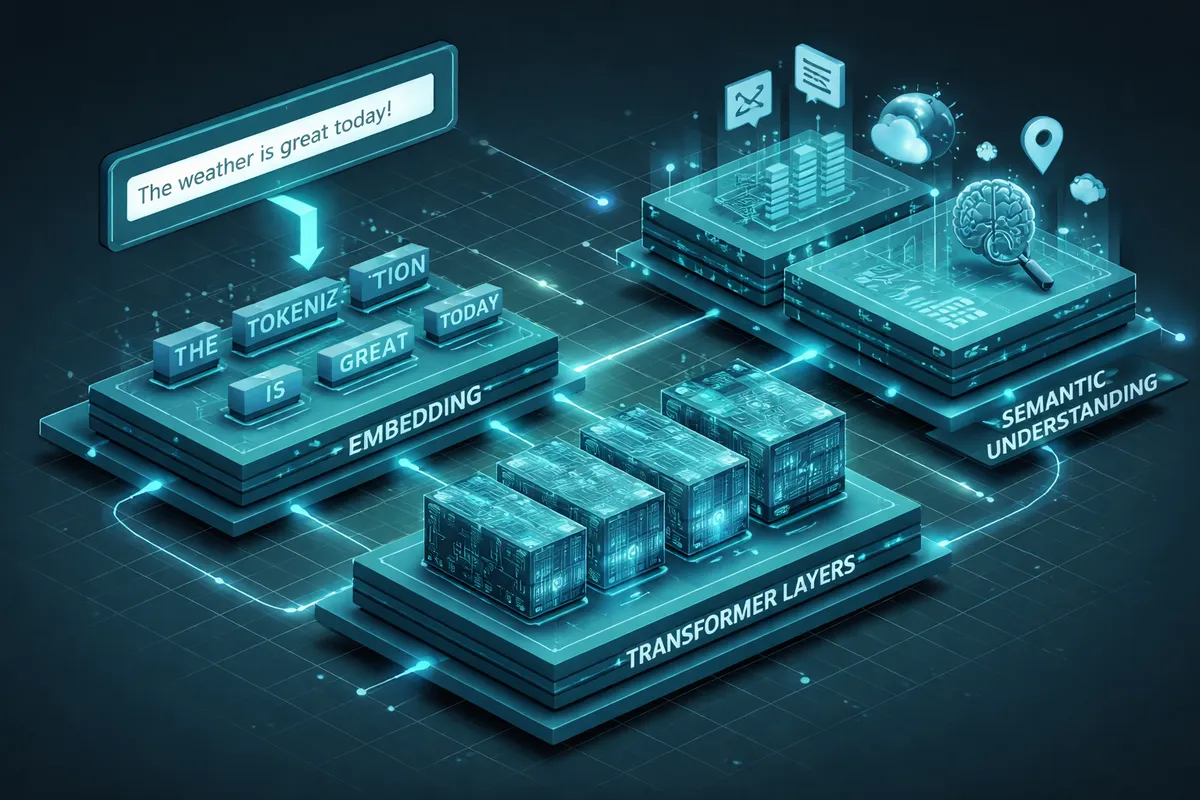
We design NLP solutions architecture for your specific use cases. Contract extraction systems are architecturally different from correspondence triage systems, which are architecturally different from research synthesis systems. The design choices about model selection, training approach, output format, and workflow integration depend on which specific problem you are solving. We make those choices explicitly and document them before building.
We train NLP systems on your specific document types. A contract NLP system trained on standard commercial contracts from public sources performs differently on the specific contract formats your firm uses than one trained on your actual document library. Where possible and appropriate, we train systems on your organization's own documents to improve accuracy on the specific language patterns and structures your firm encounters.
We integrate NLP output into your existing workflows. The value of NLP is not in the analysis itself but in what your team does with it. A contract extraction system that delivers output as a structured spreadsheet that integrates with your deal management system is more useful than one that delivers a text report your team has to manually transcribe. We design the integration between NLP output and your downstream workflows during the solution design phase.
Industries We Serve in Evanston
Law firms and legal practices on Davis Street and Sherman Avenue use NLP for contract review and clause extraction, legal research summarization across large document sets, deposition and transcript analysis, correspondence triage and routing, and brief drafting assistance trained on the firm's writing standards.
Medical and healthcare practices near Dempster Street and throughout Evanston use NLP for clinical note processing and structured data extraction, insurance document analysis and billing code suggestion, referral letter summarization, patient communication classification and routing, and medical literature review.
Consulting and advisory firms near Central Street use NLP for research report synthesis across large document libraries, client communication analysis and sentiment tracking, meeting transcript summarization and action item extraction, and proposal development assistance trained on the firm's methodology and standards.
Accounting and financial services firms near Grosse Point Lighthouse use NLP for financial statement analysis and comparison across multiple periods and entities, regulatory filing review and compliance flagging, client correspondence management and triage, and engagement documentation processing and structuring.
Research and academic organizations near Northwestern University use NLP for literature review and citation extraction across large document collections, grant application analysis and scoring, research proposal review, and technical document synthesis for interdisciplinary communication.
Professional training organizations near the Evanston Public Library use NLP for learner assessment and feedback analysis, curriculum content review and gap identification, course evaluation synthesis, and learning material adaptation based on participant needs and backgrounds.
What to Expect Working With Us
1. Document audit and use case definition. We catalog your text processing workflows, identify the highest-value NLP opportunities, and define the specific extractions, classifications, or analyses each solution needs to perform. We prioritize use cases by impact and feasibility and develop a solution design for your highest-priority application.
2. Solution design and model selection. We design the NLP architecture for your target use case, select the appropriate model and training approach, and specify the output format and workflow integration. We document the design and review it before development begins.
3. Development, training, and testing. We build and train the NLP system on your document types. We test accuracy against a held-out sample of documents with known correct outputs, and we document performance metrics before deployment. You review performance data before the system goes live.
4. Deployment and ongoing improvement. We deploy the solution in your workflow, monitor its performance, and conduct improvement cycles based on real-world accuracy data. NLP system accuracy improves over time as the model encounters more of your specific document patterns.