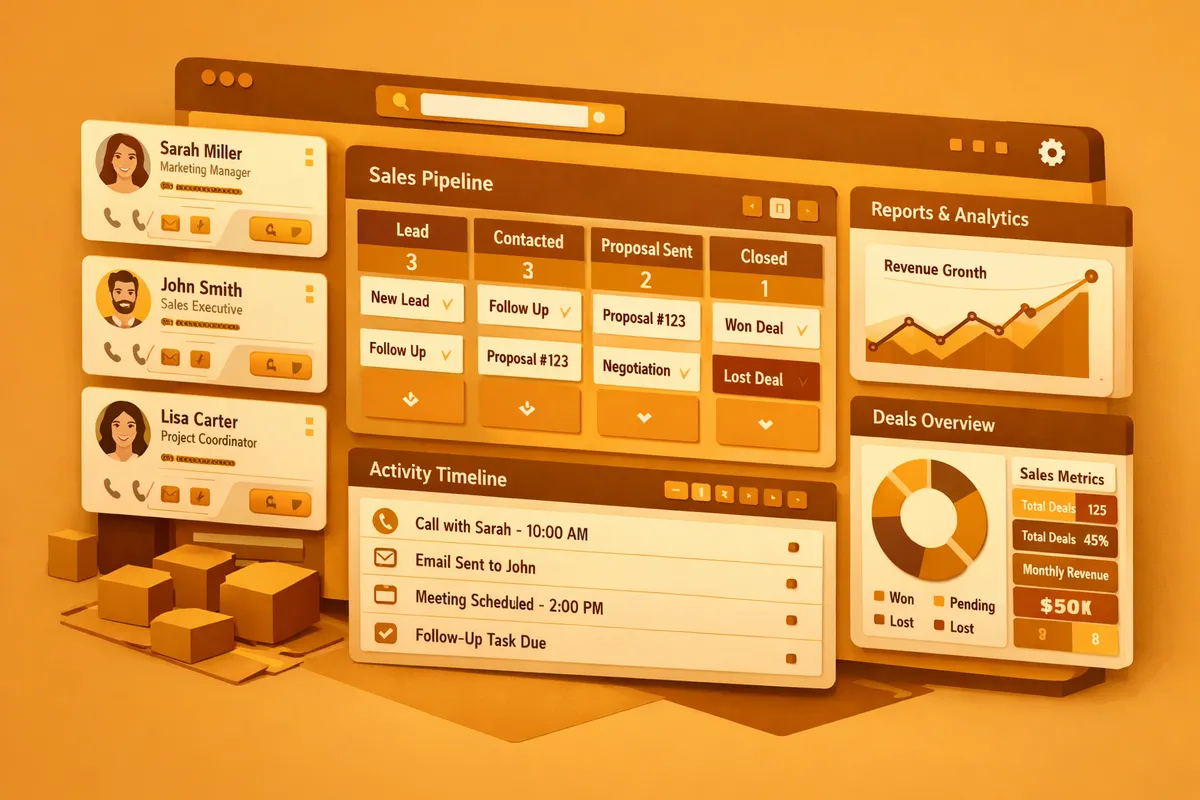
How We Build Custom CRM for Evanston
The discovery process for a custom CRM is a different conversation than most software projects. We are not asking what features you want. We are asking how your best client relationships actually work. We sit with the people who manage those relationships, watch how they currently track interactions in whatever mix of email, spreadsheets, and existing software they use, and map the information flows that matter. For a wealth management firm near Central Street, that process typically surfaces four or five relationship data types that their current CRM cannot model properly.
From that discovery, we design the data model: the entities your CRM needs to hold, how they relate to each other, what events and milestones need to be tracked, and what workflows should trigger automatically. For a professional services firm, that might mean matter records linked to client records, with billing milestones that trigger automated invoice drafts and approval workflows that route to the right partner. For an academic services business, it might mean student records linked to family records, with session history, test score tracking, and automated parent communication triggers built into the core data model.
Build and iteration follows. We develop in short cycles with working software every two weeks so you can test against real workflows before the system is fully built. That iteration process consistently surfaces requirements that did not come up in discovery. Better to find them at week four than week twelve. Final deployment includes data migration from your current system, staff training, and a 30-day supported launch period where we respond to questions and edge cases as they arise.
Industries We Serve in Evanston
Wealth management and financial advisory practices along Ridge Avenue and the surrounding residential professional corridors manage relationships measured in decades. A custom CRM built for this context holds family units rather than individual contacts, models beneficiary relationships and estate planning milestones, tracks annual review schedules with automated reminders, and records every client communication in a way that the practice can reconstruct the full relationship history for any client at any time.
Tutoring and academic enrichment businesses serving Northwestern University families and Evanston high school students track students through multi-year academic journeys. A custom CRM for this market holds student records with academic progress, subject-level tracking, parent communication logs, and enrollment histories, with family-unit records that connect multiple students in a household to a single billing relationship.
Professional services firms on Sherman Avenue and Chicago Avenue working on retainer or project-based billing need a CRM that models ongoing client work rather than closed deals. That means matter and project records linked to client accounts, deliverable tracking with deadlines and approval stages, and billing milestone triggers that initiate invoice workflows when project phases complete.
Independent fitness studios and wellness businesses near Dawes Park that build long-term client relationships benefit from a CRM tracking attendance history, health goal milestones, instructor relationships, and membership renewal timelines. The goal is to surface the clients at retention risk before they leave, not after. A custom CRM can model that lifecycle and trigger outreach when engagement patterns change.
Legal and accounting practices near the Evanston Public Library with confidentiality obligations and document management requirements need a CRM that accommodates those constraints while still modeling client relationships effectively. Custom builds allow us to design access controls and data handling that comply with professional standards without sacrificing the relationship visibility the practice needs.
University-adjacent consulting and research services operating near Northwestern University work with institutional clients, faculty researchers, and corporate sponsors across project timelines that span years. A custom CRM models those multi-stakeholder project relationships, tracks funding sources and deliverable obligations, and maintains the relationship history that makes renewal conversations and scope expansions easier.
What to Expect Working With Us
1. Relationship mapping and discovery. We spend the first two weeks understanding how your most important client relationships actually work. This involves interviews with the people who manage those relationships and a review of how information is currently tracked across email, documents, and whatever software exists. We document every data type that matters and every workflow your team relies on.
2. Data model design and review. Before we write code, we produce a written specification of the CRM data model: what records exist, what fields they hold, how they relate to each other, and what automated workflows fire on which events. You review and approve this before we start building. Changes at this stage cost hours. Changes after we have built three months of features cost weeks.
3. Iterative development with working reviews every two weeks. We build in cycles so you can test against real business scenarios continuously. For an Evanston professional services firm, that means a working client and matter record by week two, billing milestone triggers by week four, and referral network tracking by week six. You are testing real functionality, not reviewing mockups.
4. Deployment, migration, and team training. We migrate your existing data from whatever you currently use, train each team member on their specific workflows, and stay close for the first 30 days after launch. We handle the edge cases that always surface when real data meets a new system, and we document every customization so your team can maintain and extend the CRM independently over time.