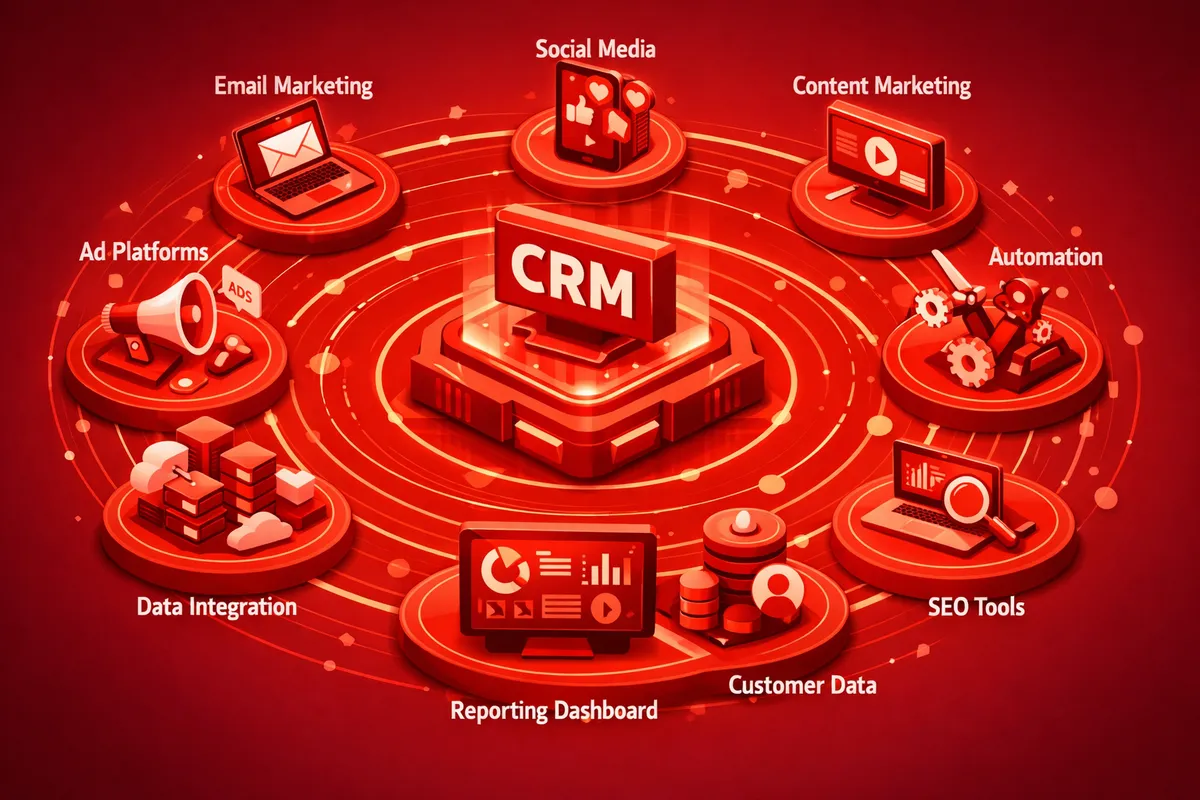
How We Build CRM & Martech Solutions for Evanston
CRM and martech consulting for Evanston organizations starts with a relationship data audit. We map every system in use: the CRM if one exists, the email service provider, the point-of-sale system for retail and restaurant clients, the practice management system for professional service firms, and any marketing tools currently running. We assess the data quality and completeness in each system and identify the specific gaps that prevent the organization from having a coherent view of its client and customer relationships.
Strategy and system design follows the audit. For a professional service firm on Sherman Avenue, the design centers on relationship visibility: which clients are active, which are at risk, which referral sources are producing new business, and which prospects are in the development pipeline. For a Davis Street retailer, the design centers on customer lifecycle management: who the loyal customers are, how often they purchase, what they purchase, and how to reach them with relevant communication. For a nonprofit or educational organization near Dawes Park or the Evanston Public Library, the design centers on constituent relationship management across donors, volunteers, program participants, and community partners.
Implementation and adoption planning follows design. Evanston professional services firms share a common adoption challenge: the senior professionals who generate the most relationship activity are the most resistant to entering data into a system. We configure CRM implementations to minimize the data entry required from senior professionals by integrating with email and calendar to capture activity automatically, importing contact data from existing systems, and reducing the attorney's or advisor's required input to strategic annotations rather than administrative record-keeping.
Industries We Serve in Evanston
Professional service firms on Davis Street and Sherman Avenue benefit from CRM consulting that configures the relationship management system around the firm's actual business development model, integrates with email to capture client communication automatically, and establishes reporting that gives principals visibility into relationship health across the entire client portfolio. Wealth management practices along Chicago Avenue benefit from compliance-aware CRM configurations that maintain communication archives in the format regulatory examinations require.
Independent retailers and gift shops along Davis Street benefit from martech consulting that connects customer purchase history, email marketing, and loyalty tracking into a coherent system. Evanston's retail economy runs on local loyalty. A boutique that knows which customers have not visited in three months, which customers reliably purchase before holidays, and which customers have referred neighbors can communicate with each segment appropriately rather than sending the same message to everyone.
Restaurants and food businesses near Davis Street and Dempster Street benefit from martech configurations that track reservation history, identify high-frequency guests, and support event and private dining marketing. Northwestern University creates a steady flow of faculty dinners, department celebrations, and alumni gatherings that a restaurant CRM can systematically convert into recurring bookings rather than one-time events.
Therapists and wellness practices in Evanston benefit from CRM and scheduling integration that manages client communication, appointment reminders, referral tracking, and reactivation outreach within the privacy constraints that healthcare communication requires. A practice that tracks referral sources accurately knows whether its referral marketing to primary care physicians is generating new clients.
Architecture and design firms serving Evanston's historic housing stock and new construction benefit from CRM consulting that manages the long project lifecycle typical of residential architecture, tracks the referral relationships that drive new project inquiries, and supports the portfolio marketing that positions the firm for the next commission. Evanston's Frank Lloyd Wright Prairie School heritage creates a discerning architectural clientele that rewards firms with a strong, consistent professional presence.
Nonprofits and community organizations near the Evanston Public Library and Dawes Park benefit from constituent relationship management that unifies donor records, volunteer data, program participant information, and community partner contacts into a single system. Evanston has a dense network of civic organizations. A nonprofit that manages these relationships in a coherent CRM retains donors longer and activates volunteers more effectively than one managing them in separate spreadsheets.
What to Expect Working With Us
1. Technology audit and relationship data assessment. We map every system the Evanston organization uses to manage client, customer, and constituent relationships, assess data quality and completeness, and identify the process and integration gaps that prevent the current environment from supporting effective relationship management.
2. Strategy and system design. We design the target technology configuration, data model, and process workflows around the organization's specific relationship management model: professional service pipeline for firms on Davis Street, customer lifecycle management for retailers, constituent management for nonprofits. The design is reviewed and approved before implementation begins.
3. Implementation, configuration, and integration. We configure the selected systems, build the integrations between them, and validate data quality before the system goes live. For wealth management firms and healthcare practices, the configuration is reviewed for compliance requirements before deployment.
4. Adoption program and ongoing optimization. We design and deliver training and behavior change support that ensures the CRM is used consistently by the professionals whose relationship activity it is meant to capture. Adoption is measured and tracked in the months following launch, and the system is adjusted based on real usage data.