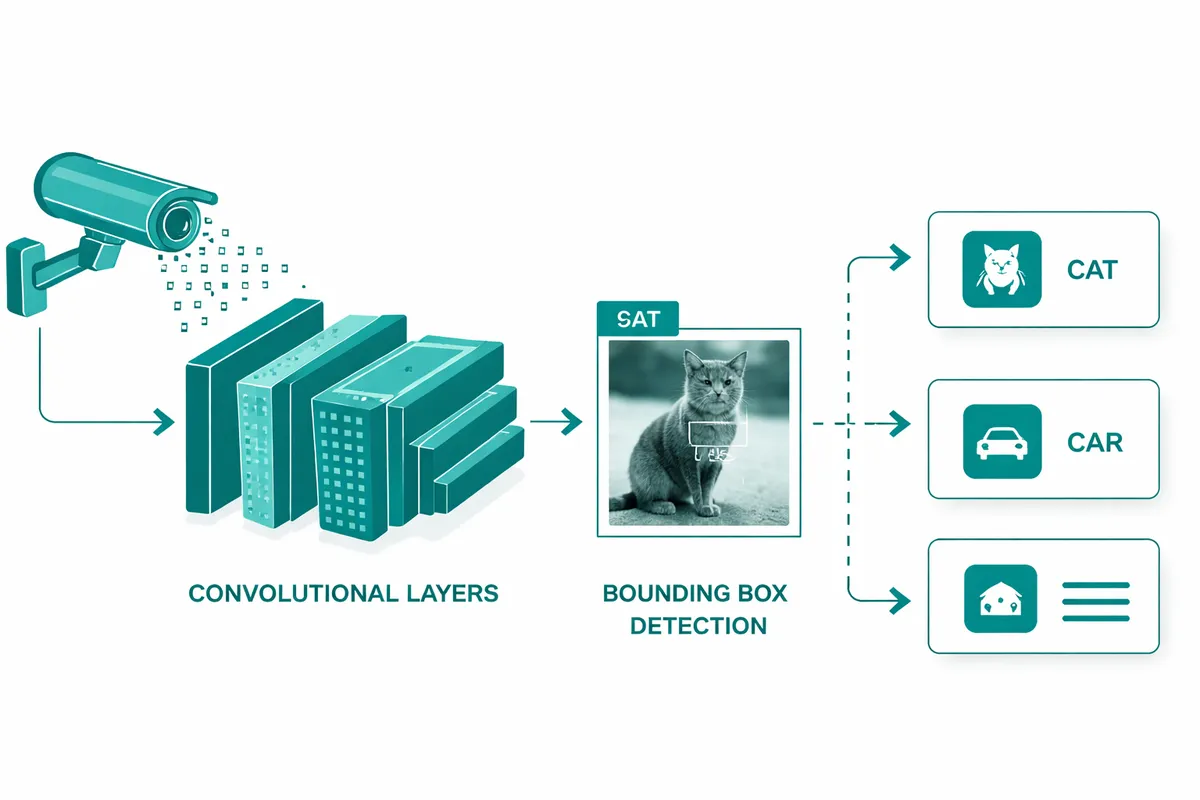
How We Build Computer Vision for Evanston
Every Evanston computer vision deployment begins with a use case prioritization conversation: which visual analysis applications have the most direct impact on business operations, and which technical approach delivers those applications at the appropriate cost and complexity level?
For retail and restaurant deployments, we start with the existing camera infrastructure. Most Evanston businesses have security cameras already installed. Computer vision capability can be added to existing camera systems rather than requiring new hardware in most cases. We assess the existing camera coverage for the specific use case, identify gaps, and supplement existing infrastructure where necessary.
Privacy is a design constraint that Evanston's professional and academic community takes seriously. We design computer vision systems that analyze aggregate behavioral patterns, occupancy levels, and movement flows without capturing or storing individually identifiable information. Retail analytics showing that forty percent of customers enter from Davis Street and spend an average of three minutes near the front display does not require or store images of individual customers.
Document processing deployments for professional services firms are designed with the security standards that financial and legal data require. Evanston's wealth management and legal community operates under regulatory frameworks that govern how client information is processed and stored. We design document vision pipelines that meet those standards and can be presented to compliance reviewers as a documented system with clear data handling procedures.
We integrate computer vision outputs into the business tools that already exist. A retail analytics system that reports to the owner's dashboard in the point-of-sale platform they already use is more valuable than one that requires logging into a separate analytics application. For professional services firms, document extraction outputs connect to the document management or CRM platform already in use rather than creating a parallel data stream.
Industries We Serve in Evanston
Independent retailers along Davis Street and Chicago Avenue use computer vision for customer traffic pattern analysis, display performance monitoring, occupancy tracking during Northwestern University game days and the summer Dawes Park event calendar, and inventory security monitoring. Retailers who understand their customer movement patterns make better decisions about display layout, staffing, and the seasonal configuration adjustments that improve conversion during Evanston's distinct seasonal peaks.
Restaurants and cafes along Sherman Avenue and Davis Street use computer vision for occupancy monitoring, table turnover analysis, queue management during peak service periods, and the kitchen efficiency monitoring that identifies bottlenecks in food preparation timing. Northwestern University's academic calendar creates predictable demand spikes that computer vision data helps restaurants prepare for rather than react to.
Professional services firms including wealth management offices, law practices, and accounting firms along Dempster Street and Central Street use computer vision for document scanning and data extraction, reducing the manual data entry that processes incoming paper documents into digital systems. For firms managing significant client document volumes, automated extraction delivers meaningful administrative efficiency.
Fitness studios and wellness centers near Grosse Point Lighthouse use computer vision for class occupancy monitoring, equipment utilization analysis, and the real-time capacity information that allows studios to optimize their class schedule for the distinct demand patterns of the Northwestern academic year versus summer and holiday periods.
Bookstores and specialty retailers in Evanston's walkable commercial corridors use computer vision for foot traffic analysis that informs staffing decisions, display optimization, and the inventory placement decisions that maximize sales from the store's best-positioned floor space. Computer vision security monitoring supplements traditional LP approaches with AI that flags unusual patterns rather than requiring continuous manual monitoring.
Healthcare and specialty practices serving Evanston's university-affiliated and residential professional population use computer vision for patient flow monitoring in waiting areas, document processing for intake forms and clinical records, and the facility utilization analysis that informs scheduling capacity decisions.
What to Expect Working With Us
1. Use case assessment and camera audit. We assess your specific computer vision use cases, evaluate existing camera infrastructure for applicability, and design the system architecture that addresses your priority applications. For Evanston professional services firms, this assessment includes a data handling review against applicable regulatory standards.
2. System build and integration. We build the computer vision system, connect it to existing infrastructure where possible, and integrate outputs into your existing business tools. Privacy-protective design is applied to every deployment, with explicit documentation of what data the system captures, processes, and retains.
3. Dashboard configuration and staff training. We configure the reporting interface to deliver the specific metrics your business uses in operational decisions, and we train the staff members who will use the system to interpret those metrics correctly. Computer vision analytics are most valuable when they change actual operational decisions.
4. Ongoing monitoring and model refinement. We monitor system performance after launch, refine the model's detection accuracy as it processes real-world data, and add new capability as the business identifies additional use cases. Computer vision systems improve with more data, and the Evanston retail and hospitality context provides enough data volume to see meaningful improvement in accuracy within the first few months.