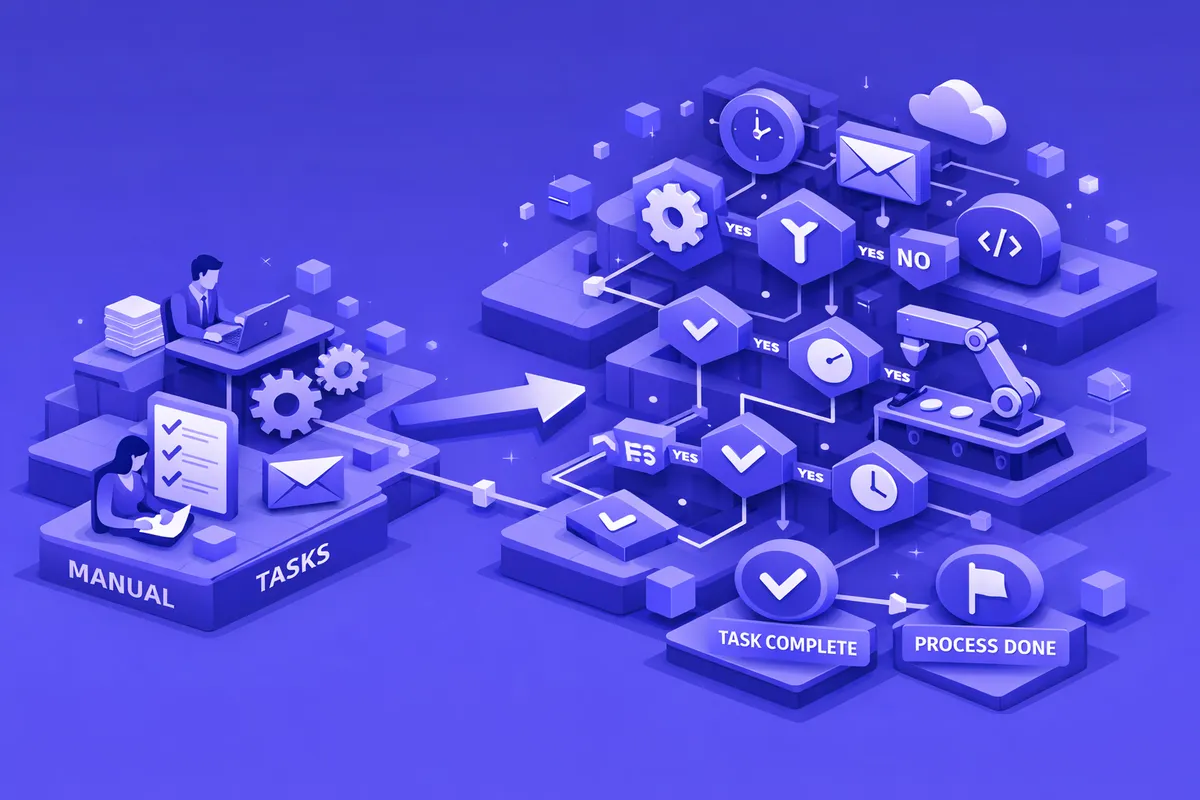
How We Build Business Process Automation for Evanston
We begin every Evanston engagement with a two-week discovery period. The goal is to map your current workflows across every system your business uses, identify where manual steps are introducing delay or error, and quantify the time each process consumes per week. Most Evanston professional service businesses discover that three or four workflows account for the majority of their administrative overhead, and those are the ones we prioritize for automation first.
From the discovery, we build a prioritized automation roadmap with explicit ROI projections. For an Evanston wealth manager spending four hours per month generating client performance reports manually, we project the time savings and improvement in report consistency before any project begins. For a restaurant on Davis Street spending three hours every Sunday on manual sales data entry, the ROI calculation is equally concrete. We do not ask Evanston business owners to take automation on faith. We show the numbers.
Implementation is phased. We build the highest-priority automation first, validate it against your real workflows, and confirm it is saving the projected time before moving to the next. Most Evanston businesses have a first production automation running within six weeks of engagement start, with subsequent automations following on a four-to-six-week cadence.
Industries We Serve in Evanston
Professional service firms on Sherman Avenue and throughout the Evanston business corridor benefit from automation of client onboarding sequences, engagement letter delivery, quarterly report generation, follow-up scheduling, and invoice generation triggered by engagement milestones rather than manual timesheet review.
Restaurants and food businesses on Davis Street and Central Street benefit from automation of reservation confirmation and reminder sequences, weekly revenue reconciliation, review response workflows, seasonal promotional campaigns triggered by the Northwestern University calendar, and catering inquiry follow-up sequences.
Fitness studios and wellness businesses near Ryan Field and throughout Evanston benefit from automation of new member onboarding, membership expiration reminders, class cancellation waitlist management, post-class feedback requests, and lapsed member reactivation campaigns that trigger on attendance data rather than manual review.
Independent retailers on Chicago Avenue and Dempster Street benefit from automation of order confirmation and shipping notification sequences, inventory-triggered marketing for new arrivals, post-purchase follow-up and review requests, and customer re-engagement campaigns based on purchase recency.
Wealth management and financial services practices serving the Evanston and North Shore market benefit from automation of quarterly report delivery, document request workflows, client anniversary outreach, and compliance documentation sequences that execute on schedule without manual calendar management.
Bookstores and specialty retailers near the Evanston Public Library and Northwestern University campus benefit from automation of event registration and reminder sequences, new inventory announcement workflows for established customers, and community event follow-up communications.
What to Expect Working With Us
1. Discovery. Two weeks mapping your current processes, the systems involved, the time consumed per week, and the error frequency. We quantify the cost of manual execution before recommending any automation. You see the numbers before any project begins.
2. Strategy and prioritization. We present a prioritized automation roadmap with explicit time savings and ROI projections for each initiative. You choose where to start based on your Evanston business priorities.
3. Implementation. We build automations in phases. Each automation goes live and validates against your real workflows before the next is built. Most Evanston businesses have a first production automation delivering value within six weeks.
4. Results. We establish baseline metrics before each automation launches and measure results after deployment. Monthly reporting shows time saved, error rate improvement, and staff capacity redirected to higher-value client work.