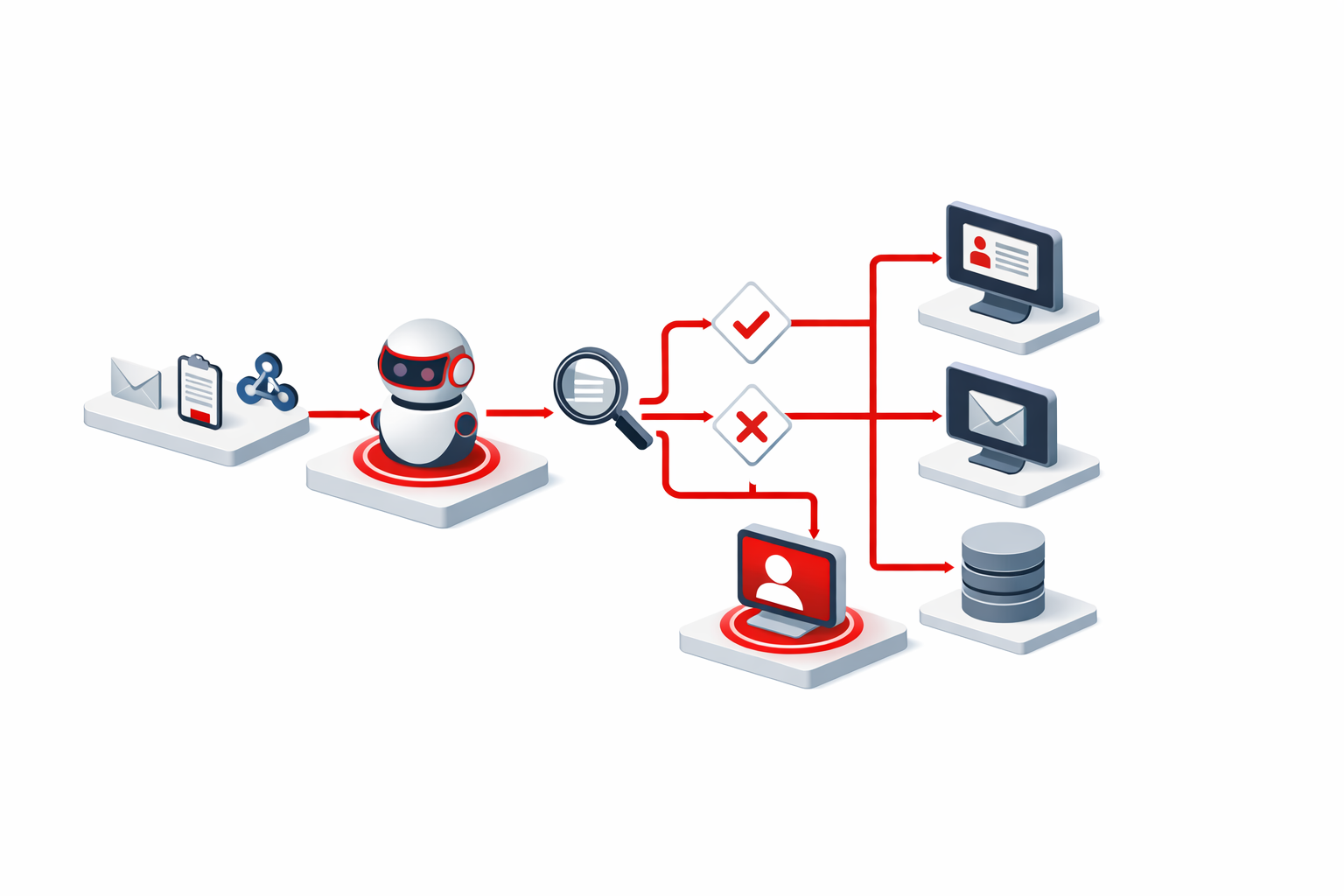
How We Build Autonomous Workflow Agents for Evanston
We begin by mapping your existing multi-step workflows in detail. For a law firm, that means documenting each step in the new matter intake sequence, the conditions that trigger each step, the tools and systems involved in each step, the decision points where human judgment is required versus where the process should proceed automatically, and the exception cases that require special handling. That map becomes the specification for the agent we build.
We design agent decision logic that handles the realistic variations your workflows encounter. Real business processes are not perfectly uniform. Client intake documents are missing required fields. Report data sources return errors. Approval requests go unanswered past deadline. The agent is designed to handle these variations with defined behavior: request the missing information, log the error and escalate, send a reminder and proceed or escalate based on elapsed time. Each exception case has a specified response.
We integrate the agent with your existing systems. Autonomous agents are only useful if they can actually access and act on your real tools: your practice management software, your document management system, your CRM, your billing platform, your email and calendar. We build the integrations that give the agent access to the systems it needs to complete each workflow step.
We build monitoring and audit capabilities into every agent. You see what the agent is doing, what it has completed, what it has flagged for human review, and where workflows stand in the sequence. The visibility is complete. The agent does not operate as a black box.
Industries We Serve in Evanston
Law firms and legal practices on Sherman Avenue and throughout Evanston use autonomous agents to manage new matter intake sequences, document review and summarization workflows, deadline monitoring and reminder generation, billing and time entry reconciliation, and client communication management.
Consulting and advisory firms near Central Street use autonomous agents to manage project status report generation, client deliverable routing and approval workflows, research compilation and synthesis, and engagement administration from project initiation through invoicing.
Wealth management and financial advisory firms near Grosse Point Lighthouse use autonomous agents to generate quarterly client performance reports, manage client onboarding document sequences, monitor portfolio compliance parameters, and route client communication for advisor review.
Accounting and tax practices near Dempster Street use autonomous agents to manage client document collection workflows during tax season, generate engagement status communications, coordinate e-filing sequences, and manage the multi-step billing and payment workflow for each engagement.
Healthcare and medical practices use autonomous agents to manage patient onboarding document sequences, insurance verification workflows, appointment confirmation and reminder sequences, and referral coordination processes that involve multiple systems and multiple participants.
Professional training and continuing education providers near Northwestern University use autonomous agents to manage participant enrollment workflows, course completion tracking and certification generation, instructor scheduling coordination, and program feedback collection and routing.
What to Expect Working With Us
1. Workflow mapping and specification. We document your target workflows in detail, identify decision points and exception cases, and develop the agent specification. You review and approve the specification before any development begins. This phase typically takes two to three weeks and produces the foundational documentation that guides everything that follows.
2. Agent development and system integration. We build the agents to specification and integrate them with your target systems. We handle the API connections, authentication, and data mapping that agents require to access your tools. Development typically takes four to eight weeks depending on workflow complexity and the number of system integrations required.
3. Testing and validation. We run agents against realistic test scenarios, including normal cases and documented exception cases. We document the agent's handling of each test case and compare it to expected behavior. You participate in test review before the agent goes live for production workflows.
4. Deployment and monitoring. Agents go live for production workflows. We monitor agent performance for the first 30 days, reviewing every flagged exception and every completed workflow sequence for accuracy. We address any behavior that does not match specification. After the initial monitoring period, we conduct monthly reviews and refine agents based on new exception cases that emerge in production.