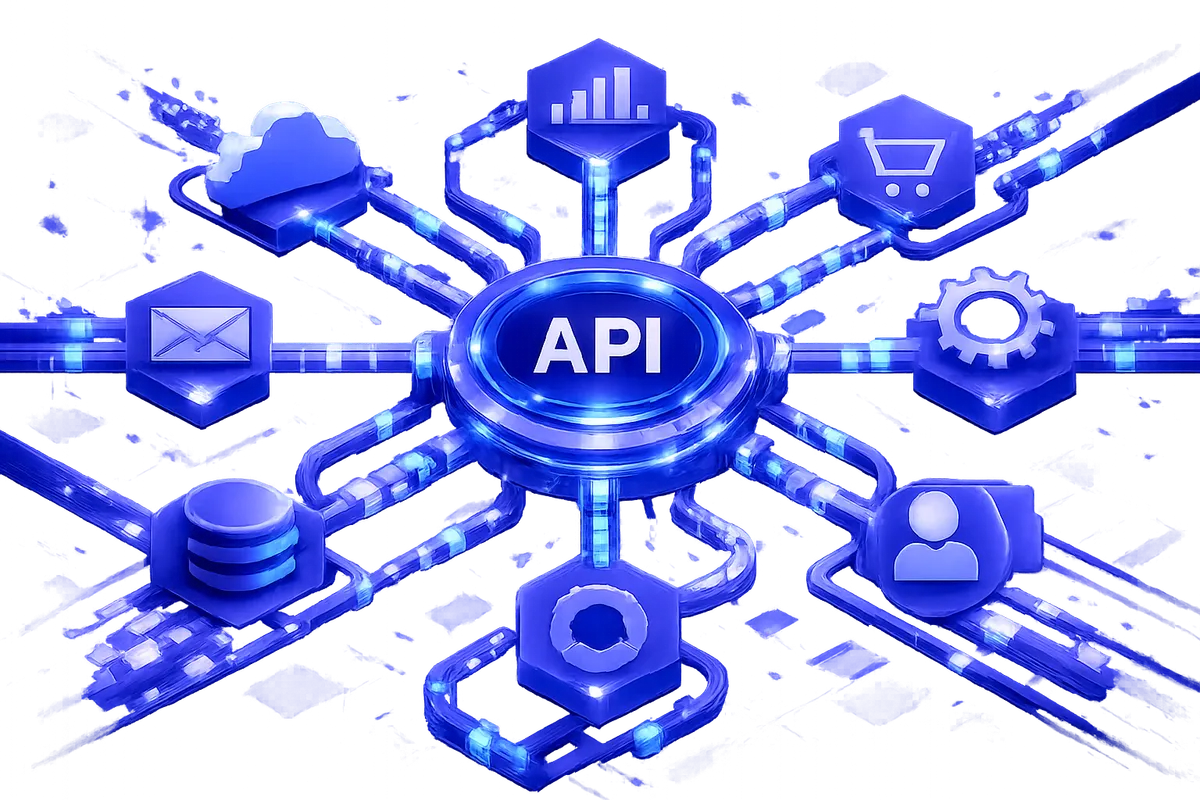
How We Build API Integration Services for Evanston
We begin every integration project with a system map. We document every software platform you operate, what data each one holds, what triggers in one system should cause an action in another, and where data currently moves manually. For a professional services firm on Chicago Avenue, that map might show that new client onboarding triggers five separate manual steps across three platforms. Each of those manual steps is a candidate for automation.
Integration architecture comes next. We design the connection logic: which system is the source of truth for each data type, how conflicts are resolved when the same record exists in multiple systems, and what the failure behavior looks like when an API call does not succeed. This design phase prevents the common failure mode of integrations that work fine in testing and silently drop records in production. We build error logging into every integration so failures surface immediately rather than accumulating invisibly.
Build and testing follows the architecture phase. We develop each connection, test it against representative data volumes, and validate that edge cases, like a customer record with a missing phone number or a transaction categorized under an unexpected code, are handled gracefully. For Evanston businesses with complex data relationships, like a tutoring center tracking multiple students per family household, we test family-level data integrity explicitly.
We deploy to production with a monitoring window in place. The first 30 days after launch, we watch the integration logs actively and catch any edge cases that did not surface in testing. After that, we hand over a monitoring setup your team can run independently.
Industries We Serve in Evanston
Financial planning and wealth management firms near Ridge Avenue operate CRMs, portfolio management platforms, and compliance reporting tools that should share client data but rarely do by default. We wire these platforms together so that a new client onboarded in the CRM automatically populates the portfolio system, triggers a compliance document workflow, and schedules a follow-up task without a staffer manually entering the same information in three places.
Tutoring and test-prep services near Northwestern University track students across enrollment systems, session scheduling tools, parent communication platforms, and billing software. API integration ensures that when a student books their first paid session, their parent receives an automated welcome email, their account status updates in billing, and their tutor receives a brief in their scheduling tool simultaneously.
Independent fitness studios and wellness businesses on Sherman Avenue run scheduling, payments, email marketing, and accounting on different platforms. A new membership sale in Mindbody should immediately create a contact in Mailchimp, post revenue to QuickBooks, and tag the referral source in a CRM. Without integration, each of those steps happens manually or not at all.
Professional services firms along Davis Street billing on time and materials need their time-tracking platform, invoicing system, and CRM connected so that project hours logged automatically generate draft invoices and update the project record in the CRM. Chasing those connections manually adds hours to every billing cycle.
Independent restaurants and event venues near Dawes Park managing reservations, private event inquiries, and catering requests across multiple platforms benefit from integration that consolidates inquiry data into a single workflow: a catering inquiry submitted on the website automatically creates a task in the event management system, logs the contact in the CRM, and sends a confirmation to the inquirer without manual handling.
Specialty retailers and bookstores near the Evanston Public Library using separate inventory, point-of-sale, and e-commerce platforms face synchronization challenges every time stock levels change. API integration keeps inventory counts consistent across all three platforms in real time, preventing online oversells and manual stock adjustment sessions.
What to Expect Working With Us
1. System inventory and integration mapping. We document every platform you run, interview the people who use them daily, and identify every manual data transfer currently happening between systems. This session typically surfaces three to five integration opportunities that could collectively save 10 or more staff hours per week.
2. Architecture design and approval. Before writing a line of code, we produce a written integration architecture document: which systems connect, what data flows in which direction, how conflicts resolve, and what the error-handling behavior is. You review and approve this before we build anything. For Evanston businesses with multiple stakeholders, like a practice with partners on Ridge Avenue, this approval step prevents mid-build surprises.
3. Build, testing, and parallel validation. We build each integration and test it against real data volumes before deploying to production. For high-stakes integrations handling client financial data, we run a parallel validation period where both the automated system and the existing manual process run simultaneously and results are compared.
4. Documentation and team training. Every integration we build comes with technical documentation and a plain-language operations guide for your team. If an API key needs rotation or a platform updates its data format, your team or your IT contact can handle it without calling us. We also train the people who will monitor the integrations on how to read the error logs and escalate when something goes wrong.