How We Build AI Sales Intelligence for Evanston
We begin with a data audit covering every source of prospect and client interaction data in your firm. That typically includes your CRM, email platform, calendar system, proposal tracking, and any marketing automation tools. For Evanston professional firms that have been in practice for years, that data often contains valuable historical patterns that have never been analyzed: which intake sources convert most reliably, how long the average engagement cycle runs by service type, and which client segments generate the most referrals.
We integrate those sources into a unified intelligence layer. Most Evanston firms have data in three to five separate tools that have never been connected. The integration alone often surfaces immediate insights: prospects who were last contacted four months ago without any follow-up, client segments that generate referrals at twice the rate of others, and service lines that take twice as long to close as comparable ones with no corresponding difference in value.
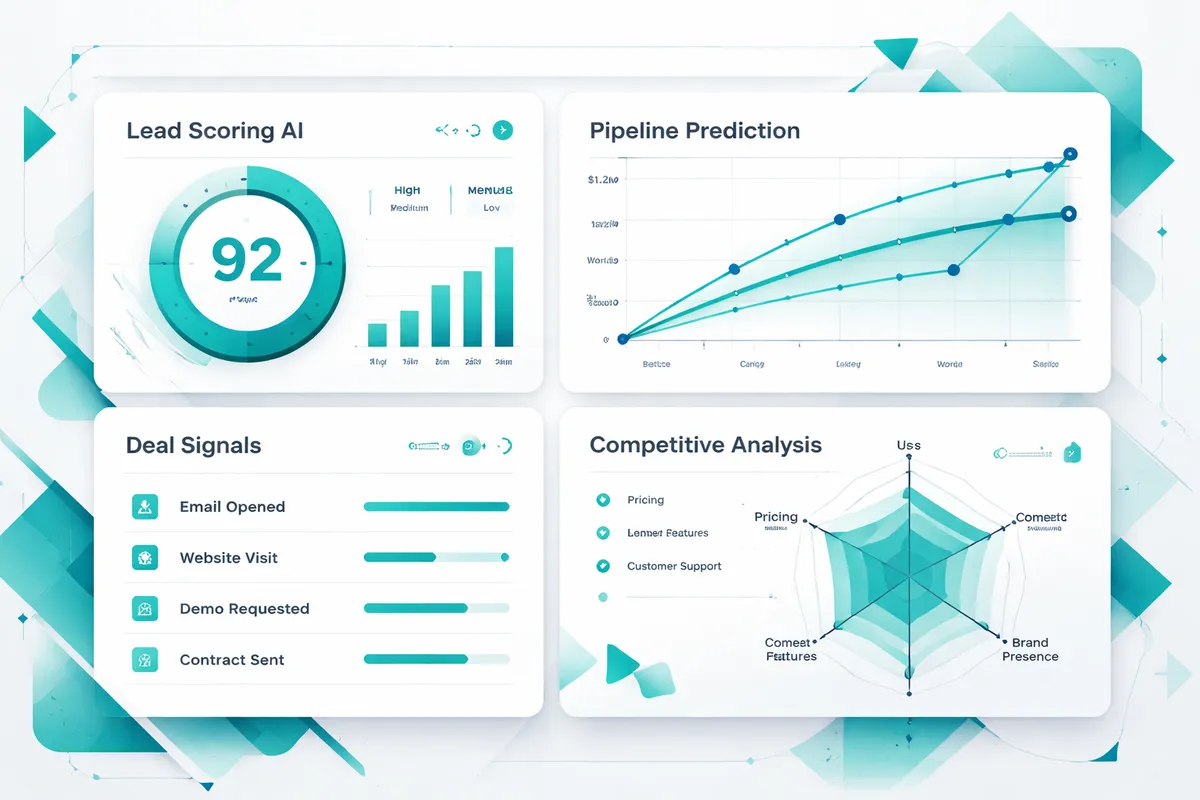
We build dashboards that give your team real-time pipeline visibility. For a consulting firm on Dempster Street, the dashboard shows active prospects by stage, last contact date and method, engagement trend over the past 30 days, and estimated close probability based on historical patterns from similar prospects. For a wealth management firm near Central Street, it shows prospect portfolio size category, meeting frequency, proposal status, and a risk score based on engagement signals.
We deploy lead scoring models that prioritize your team's attention automatically. Instead of reviewing every CRM record to decide who deserves a call this week, your team sees a ranked list of prospects who have shown high engagement signals in the past seven days, and a separate list of prospects whose engagement has dropped and who need a re-engagement call. The AI does the sorting. Your team does the calling.
Industries We Serve in Evanston
Consulting and advisory firms near Sherman Avenue and downtown Evanston use AI sales intelligence to track proposal pipelines, measure engagement across multi-month sales cycles, identify at-risk prospects before they go cold, and prioritize outreach based on behavioral signals rather than intuition.
Wealth management and financial advisory firms use AI sales intelligence to score prospects by engagement level and estimated investable assets, track referral patterns across their client base, identify clients approaching major life transitions who may need expanded service conversations, and forecast quarterly asset growth based on pipeline quality.
Law firms in downtown Evanston use AI sales intelligence to track matter development pipelines, measure business development activity across the attorney team, identify which networking investments generate the most high-value client relationships, and flag client relationships that have gone quiet and may be at retention risk.
Accounting and tax practices near Grosse Point Lighthouse use AI sales intelligence to track service expansion opportunities across the existing client base, measure which advisory services generate the most referrals, and identify clients who have engaged for basic services but may be candidates for more comprehensive planning relationships.
Professional training and executive education firms near Northwestern University use AI sales intelligence to track corporate client enrollment conversations, measure engagement on multi-year training partnerships, and forecast cohort enrollment based on historical organizational buying patterns.
Healthcare and dental specialty practices use AI sales intelligence to track referring provider relationships, measure referral volume and trend by source, identify referring providers whose volume has declined and may warrant an outreach conversation, and forecast new patient volume based on referring network health.
What to Expect Working With Us
1. Data audit and integration design. We assess your CRM, email, calendar, and proposal data. We identify the prospect and client signals your current tools are capturing but not surfacing. We design the integration architecture and define the metrics your team will use to make decisions. This phase typically takes two to three weeks.
2. Integration build and model training. We connect your data sources, build the unified intelligence layer, and train the lead scoring and engagement models on your historical data. We validate model accuracy against known outcomes from your deal history before deploying scoring live.
3. Dashboard configuration and team training. We build the dashboards your team will use in their daily workflow. We train your business development team on how to read signals, act on prioritization recommendations, and use the system to prepare for client conversations. Training typically takes a half day for most Evanston professional firm teams.
4. Ongoing refinement and strategy sessions. We conduct monthly reviews of pipeline performance data, refine scoring models as your deal history grows, and identify patterns that warrant strategy adjustments. Most Evanston firms discover significant pipeline insights in the first 90 days that they act on immediately.