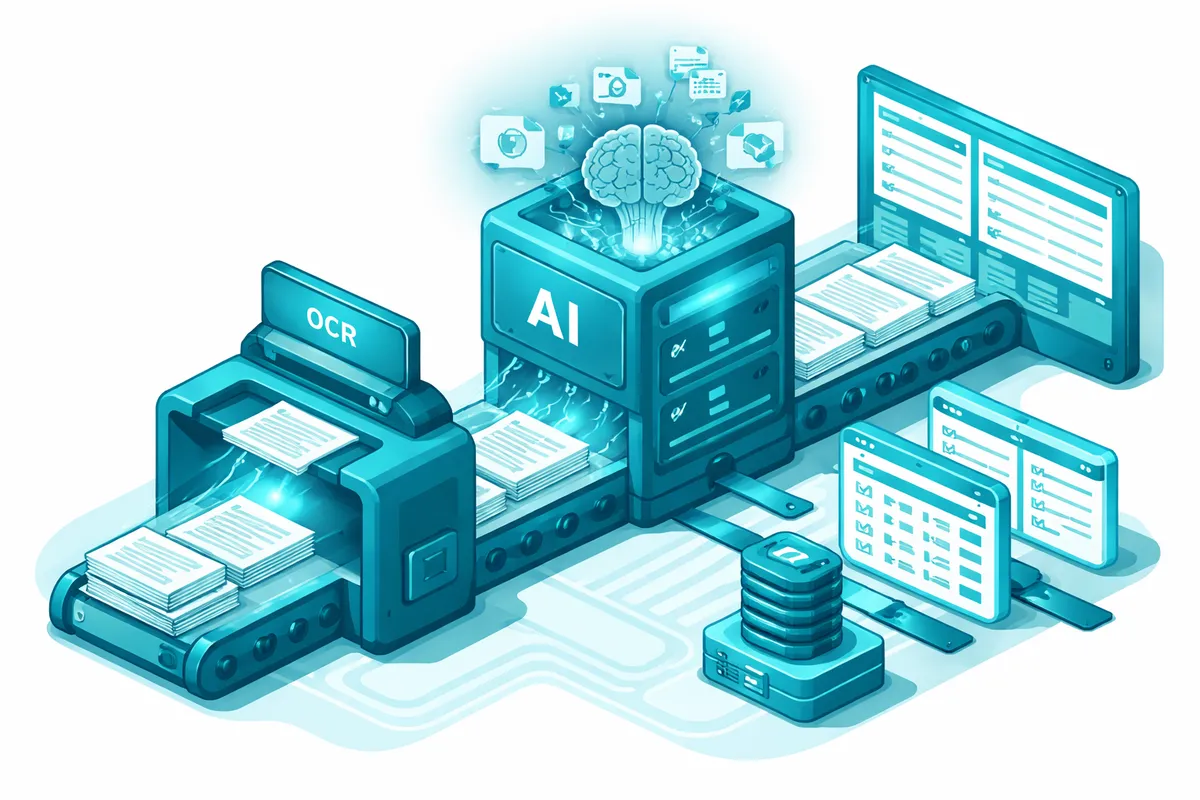
Document Processing in Evanston's Specific Contexts
Northwestern's administrative operations process applications to academic programs, faculty appointment documentation, research grant proposals, IRB protocols, and a continuous stream of contracts and agreements. AI document processing reduces the administrative burden on staff who currently spend significant time on extraction and routing tasks, freeing them for the review and judgment work that genuinely requires human attention. The research environment also generates lab notebooks, experimental protocols, and data documentation that AI can structure for compliance and reproducibility purposes.
Evanston's legal and professional services community on Chicago Avenue and Ridge Avenue processes transaction documents, client agreements, regulatory filings, and correspondence in volumes that expand faster than staff can scale. Real estate transactions generate stacks of property records, title documents, and closing disclosures. Estate planning practices process wills, trusts, and financial account documentation. Tax and accounting firms process financial statements, tax documents, and client records during peak seasons that overwhelm manual capacity. AI document processing makes these seasonal and volume challenges manageable.
Healthcare practices serving the Evanston and North Shore community process patient intake forms, clinical notes, referral letters, insurance authorizations, and billing documents in formats that vary across insurance companies, referring providers, and documentation systems. AI document processing normalizes these formats, extracts the relevant clinical and administrative data, and routes documentation to the correct place in the practice management workflow.
Evanston's nonprofit organizations process grant applications, grant reports, program participant records, and donor documentation that supports both program delivery and fundraising compliance. AI document processing makes it practical for organizations with small administrative teams to handle the reporting requirements that funders impose without diverting program staff from mission work.
Our Implementation Approach
Document processing projects begin with a document inventory: what document types the organization processes, what information needs to be extracted from each, what the current manual workflow looks like, and where the volume and error problems are most acute. This inventory identifies the highest-value automation targets: the document types with the highest volume, the most manual processing steps, and the most significant consequences of processing errors.
We build and test the processing system against real document samples from the organization before deployment, measuring extraction accuracy and classification confidence against human-reviewed ground truth. Documents where AI confidence falls below threshold route to human review rather than processing automatically. The confidence threshold calibrates based on the consequences of errors: medical documents with clinical implications set a higher confidence bar than administrative documents with lower-stakes errors.
Integration connects the document processing system to existing systems: practice management platforms, case management databases, CRM systems, document management repositories, and workflow tools. Documents flow from the AI processing system to their destinations without manual re-entry.
Ongoing improvement uses the human review of low-confidence documents as training data that continuously improves the model's accuracy for the organization's specific document types. Most organizations see significant accuracy improvement in the first 90 days as the system learns from real-world document variation.