Your Cart (0)

Your cart is empty

Evanston, Chicago

AI Data Pipelines in Evanston

AI Data Pipelines for businesses in Evanston, Chicago. We know the neighborhood, the customers, and what it takes to compete locally.

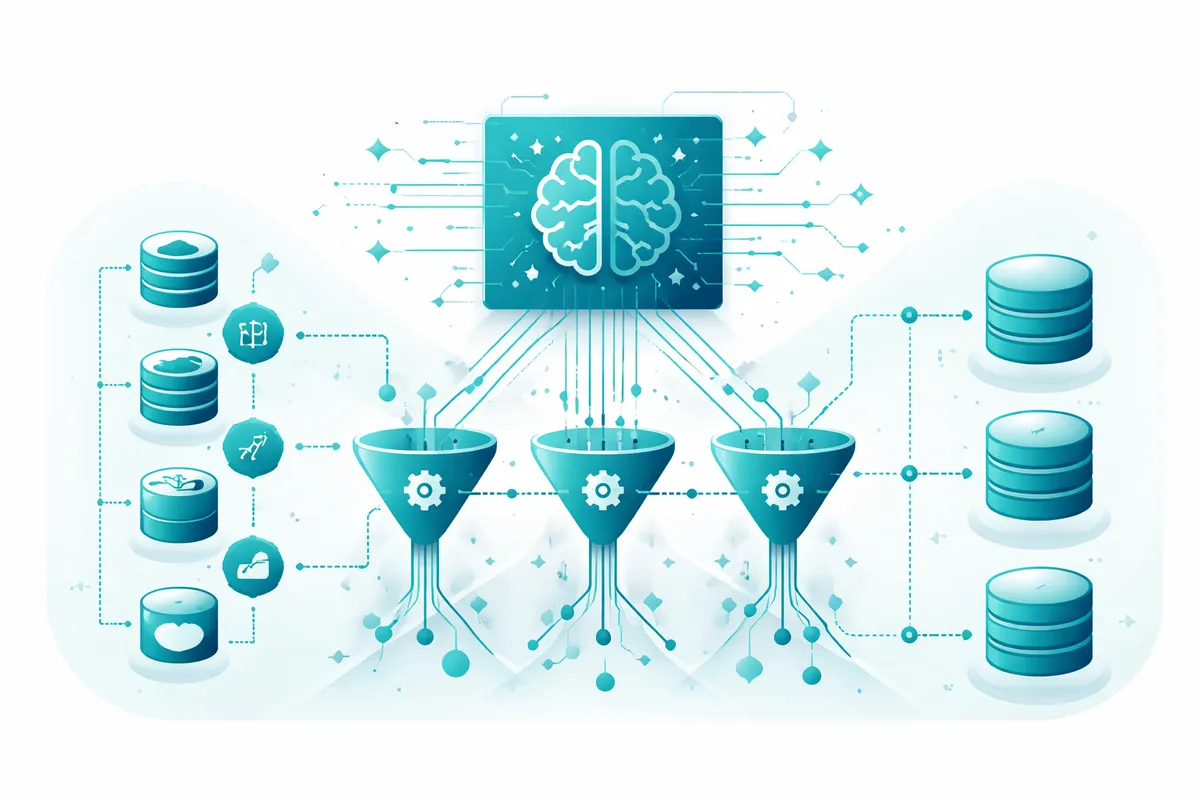
AI Data Pipelines in Evanston service illustration

Data Pipeline Applications in Evanston

Research data management for Northwestern-affiliated operations involves moving data from experimental systems, survey platforms, electronic health records, and external data sources into analytical environments where researchers can work with it. AI pipelines automate the collection and preparation steps that currently consume significant research staff time, and apply cleaning and validation logic that improves data quality before analysis begins.

Healthcare data integration for Evanston's medical practices involves connecting practice management systems, electronic health records, billing platforms, and patient communication tools so data flows consistently without manual reconciliation. AI pipelines handle the format translation and validation that makes interoperability between different healthcare systems practical rather than theoretical.

Nonprofit program data consolidation for organizations like Family Focus Evanston or the Youth Job Center involves aggregating participant data from multiple program databases into unified reporting environments. AI pipelines standardize data across programs, fill gaps through intelligent inference where appropriate, and produce the outcome reports that funders and boards require without the manual assembly work that currently occupies program staff time.

Business intelligence automation for Evanston's professional services firms, retailers, and hospitality businesses involves connecting transaction systems, CRM platforms, marketing tools, and financial software so management reporting updates automatically rather than requiring monthly manual data pulls. AI pipelines handle the integration and transformation, making dashboards live rather than periodic.

E-commerce and retail operations in Evanston's independent business corridor involve inventory data, transaction data, customer behavior data, and marketing response data that needs to flow between point of sale, e-commerce platform, email marketing, and inventory management systems. AI pipelines automate these flows and flag inventory, fulfillment, or customer behavior anomalies for human review.

Our Pipeline Development Process

We begin with a data inventory: every system the organization uses, what data it generates, how frequently that data changes, and where it currently needs to go. For most Evanston organizations, this inventory surfaces connections that exist manually today and should be automated, as well as connections that theoretically exist in integrations that are not working reliably.

From the inventory, we design a pipeline architecture that routes data from each source to each destination with the transformation logic, cleaning rules, and validation checks specific to each data type and use case. We document data flows visually so non-technical stakeholders can understand what is connected to what and what happens when a source system changes.

Implementation builds the pipelines in stages, deploying the highest-priority connections first so the organization starts seeing value before the full architecture is complete. Each pipeline includes monitoring and alerting that notifies appropriate team members when data flows fail, when anomalies exceed threshold, or when data quality indicators fall below acceptable levels.

Ongoing maintenance covers schema drift adaptation, performance optimization as data volumes grow, and expansion as new source systems or destinations need to be connected. Most organizations find that data pipeline needs grow over time as they build confidence in automated data flows and identify new analysis and automation use cases.

Frequently Asked Questions

HIPAA compliance is the primary governance requirement for any pipeline handling protected health information. This means data encryption in transit and at rest, access controls limiting who can see patient data at each stage of the pipeline, audit logging of all data access, Business Associate Agreements with any vendors involved in data processing, and data retention and deletion protocols aligned with HIPAA requirements. We build these controls into pipeline architecture rather than adding them as afterthoughts, which is the approach that survives regulatory review.

The benefit is precisely that data flows automatically without requiring technical staff to manage it. An organization where one staff member currently spends significant time exporting data from program databases and importing it into reporting templates every month can redirect that time to program work once a pipeline automates the flow. Ongoing pipeline maintenance requires monitoring and occasional intervention, but significantly less time than manual data management. We size pipeline solutions to match the technical capacity of nonprofit operations, avoiding over-engineered solutions that create maintenance burdens.

We have experience integrating with the research data platforms common in academic environments: REDCap for clinical research data, Qualtrics and similar survey platforms, electronic health record systems including Epic, laboratory information management systems, and various data repositories. The specific connections available depend on API access, data governance agreements, and the technical specifications of each system. We assess integration feasibility during discovery and build only what can be done securely and compliantly.

Historical data quality issues require a one-time remediation effort before ongoing pipeline automation can produce reliable results. We assess historical data quality as part of the pipeline design process, build one-time cleaning operations for the most significant issues, and design ongoing pipelines with validation rules that prevent the same quality problems from recurring. The remediation and the pipeline design happen in parallel so the organization does not have to wait for perfect historical data before deploying automation.

The honest comparison includes the full cost of manual data management: staff time, error correction, delayed reporting, and decisions made on stale or incomplete data. Most Evanston organizations that quantify their manual data management costs discover that pipeline automation has a payback period of six to eighteen months. Beyond payback, the ongoing benefit is continuous: faster reporting, better data quality, staff time redirected to higher-value work, and AI model performance that reflects current data rather than periodic snapshots.

AI model training requires clean, consistently formatted, regularly updated data. Manual data preparation before each training run is expensive and introduces inconsistency. Data pipelines that automate the collection and preparation of training data make AI model improvement a continuous process rather than a periodic project. For Evanston organizations building AI systems, whether for predictive analytics, natural language processing, or computer vision applications, reliable data pipelines are foundational infrastructure, not a nice-to-have. Explore our [AI data pipeline services across Chicago](/chicago/ai-data-pipelines) or learn about other [digital services in Evanston](/chicago/evanston).

Ready to get started in Evanston?

Let's talk about ai data pipelines for your Evanston business.