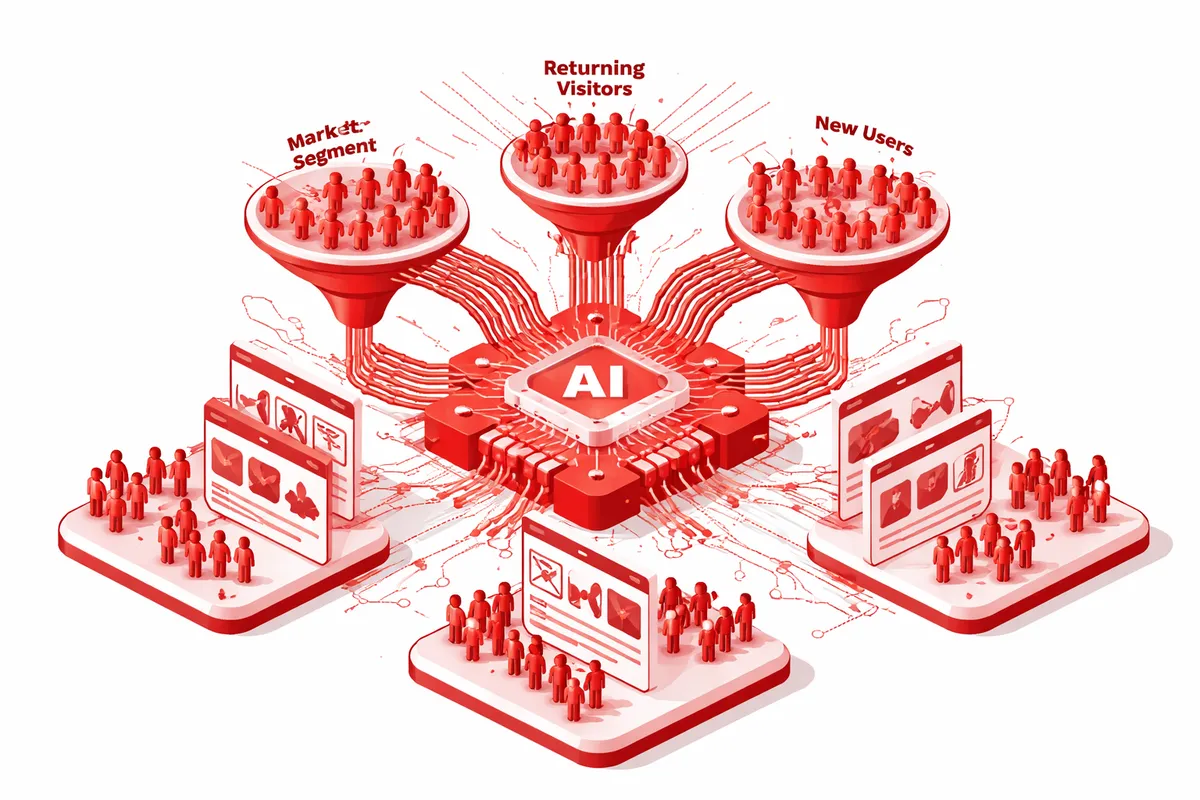
Building Personalization for Evanston's Audience Mix
The university dimension creates a personalization segment that does not exist in most communities. Northwestern-adjacent organizations deal with an audience that cycles continuously: new students arrive every September, graduating classes leave every June, visiting faculty rotate annually, research cohorts form and dissolve. Content personalization for organizations with significant Northwestern audience overlap needs to account for this cyclicality. Onboarding content for new arrivals, community-building content for established community members, and transition content for departing students serve three meaningfully different segments that share physical space but have very different content needs.
Evanston's language diversity creates a personalization opportunity that many local businesses have not fully exploited. The city's international population, anchored by the university but extending well into the broader community, includes speakers of Mandarin, Spanish, Korean, Hindi, and dozens of other languages who are more likely to engage with content in their first language or that reflects their cultural context. AI personalization can serve language-specific content variants without requiring organizations to maintain full multilingual content libraries manually.
The North Shore wealth gradient creates personalization opportunities for businesses serving clients across the income spectrum from Evanston into Wilmette, Kenilworth, and Winnetka. Content that speaks to value and community fit resonates with Evanston's diverse residential base. Content that speaks to exclusivity, discretion, and prestige resonates with the North Shore's affluent northern suburbs. AI personalization can serve both without the organization having to choose which audience to prioritize.
Our Implementation Process
We begin with an audience architecture exercise: mapping every meaningful segment the organization serves, documenting the content signals that identify each segment, and writing the content strategy for each. For Evanston organizations, this exercise often surfaces segments that have been conflated. When a business has been treating all Evanston customers as one audience, the AI segmentation work reveals that it has actually been serving multiple distinct communities that share a zip code but have different needs.
From the audience architecture, we build the personalization rules and content variations. This typically means developing three to five content variations for each major audience segment across every key touchpoint: homepage messaging, email subject lines and body content, social media post variations, and landing page content for specific campaigns. AI then applies these variations dynamically based on segment signals, without requiring manual selection for each individual interaction.
We integrate the personalization system with existing email platforms, website CMS, and social media management tools so the personalization layer works within existing workflows rather than requiring separate systems for every channel. Most Evanston organizations see meaningful lift in engagement metrics within the first 60 days of personalization deployment, as content begins reaching each audience segment in the form most likely to resonate with them.