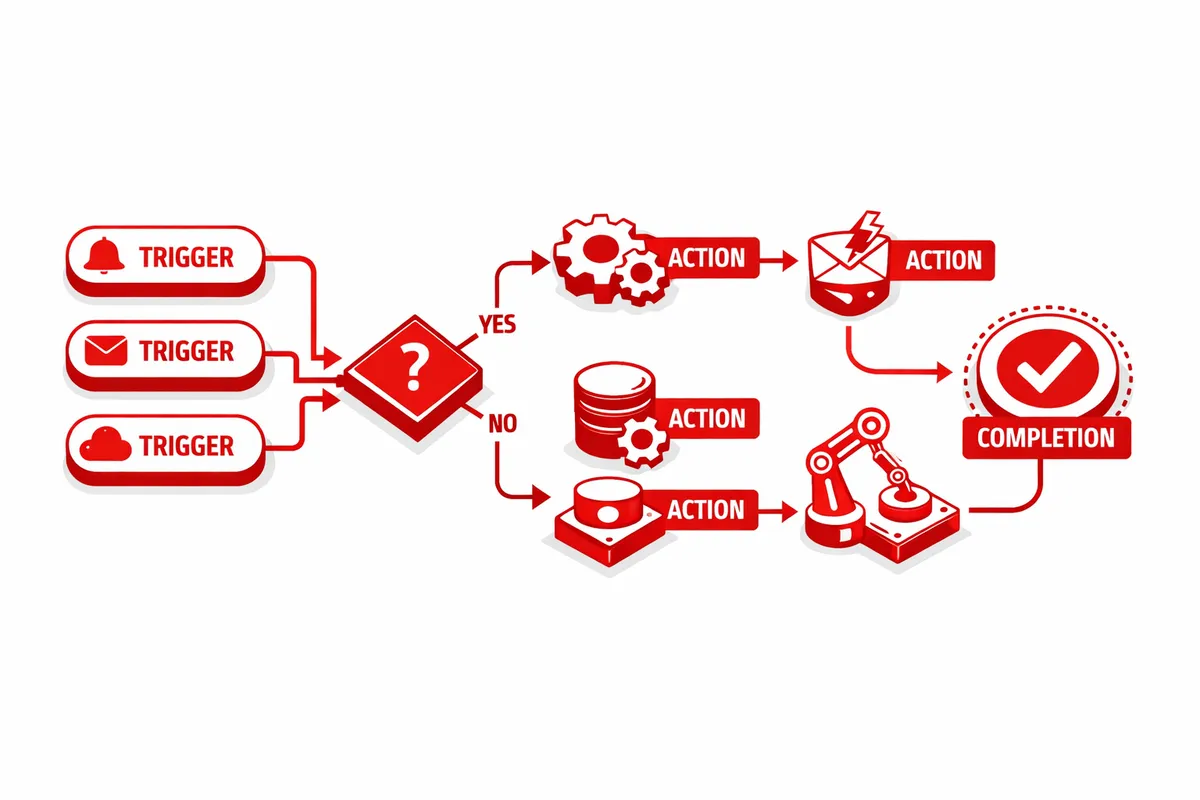
How We Build Workflow Automation for Englewood
We start where the time goes. For community organizations in Englewood, that usually means grant reporting, participant intake, and inter-program communication. For small businesses, it means appointment management, customer follow-up, and inventory coordination. For health-related services, it means compliance documentation, scheduling, and billing. We map the current process in detail: who does what, when, using which tools, and where things fall through the cracks. That map reveals which automations deliver the fastest return on the hours your team currently spends.
Integration does not require replacing the tools you already use. Many Englewood organizations operate with Google Workspace, basic CRM tools, scheduling apps, and accounting software like QuickBooks. We connect these existing platforms so data moves between them without manual intervention. When a participant record is updated in the case management system, the change propagates to the funder's reporting template. When an appointment is booked, the confirmation email goes out automatically. We build the connections between your current tools before recommending new ones, which keeps the transition manageable for small teams.
The first automations we deploy handle the most repetitive daily tasks. These go live within two weeks and free up time immediately. The second wave addresses multi-step processes: grant reporting cycles, client lifecycle management, staff coordination workflows. The third wave adds scheduling intelligence and exception alerts so staff attention goes to the situations that actually need human judgment rather than monitoring routine operations manually.
Industries We Serve in Englewood
Community nonprofits and development organizations throughout Englewood automate grant reporting, participant intake, outcome tracking, and donor communication. When a quarterly report is due, the system pulls participant counts, outcome metrics, and program expenditures from the relevant tools and populates the funder templates automatically. Staff review and submit rather than spending weeks compiling data from disconnected spreadsheets.
Barbershops and salons on Halsted Street, Ashland Avenue, and Garfield Boulevard automate appointment booking confirmations, reminder texts, post-visit review requests, and lapsed-client reengagement messages. A client who has not booked in 45 days receives a personal check-in message automatically. The stylist stays focused on the client in the chair rather than on the phone managing follow-ups.
Urban farms and food businesses connected to Growing Home's model and the food entrepreneurs building near Englewood Square automate harvest and inventory tracking, customer subscription management, market schedule notifications, and wholesale order communications. When available inventory updates, the customer notification goes out without anyone drafting the message manually.
Home healthcare agencies serving Englewood's senior population automate caregiver scheduling, visit documentation routing, certification renewal tracking, and billing workflows. When a caregiver completes a visit and submits documentation, the billing record generates automatically, the supervisor receives a summary, and the client's care log updates in real time.
Churches and faith-based organizations along Garfield Boulevard and throughout Englewood automate volunteer coordination, event registration, donation acknowledgment, and community service sign-up workflows. When someone registers for a food pantry shift, the confirmation goes out immediately, the roster updates, and a reminder fires 24 hours before the event.
Small food businesses and neighborhood caterers automate order intake, delivery scheduling, supplier purchase orders, and customer communication. When an order arrives, the workflow logs it, sends a confirmation, adds it to the production schedule, and alerts the supplier if restocking is needed.
What to Expect Working With Us
1. Process audit and prioritization. We document every manual task your organization or business performs on a repeatable basis, estimate the time cost per week, and rank by automation ROI. For a community organization in Englewood, we typically identify 20 to 40 automatable processes in the first session. The ones consuming the most staff hours go first.
2. Platform connection and data mapping. We connect your existing tools and resolve the data inconsistencies between them. This phase surfaces why certain manual steps became necessary in the first place. Once your platforms share data correctly, automation becomes straightforward and the workarounds your team has built over time become unnecessary.
3. Core workflow deployment. The first automations go live within two weeks. These are the high-frequency, rules-based tasks: intake confirmation, appointment reminders, status notifications, and scheduled reporting. Your team recovers real time from the first week, before the full build is complete.
4. Advanced workflow buildout and ongoing optimization. Multi-step processes with conditional logic, approval routing, and exception handling deploy in weeks three through six. After launch, we review performance monthly and add new automations as your operations evolve. The system grows with your organization rather than becoming a static tool that stops reflecting how you actually work.