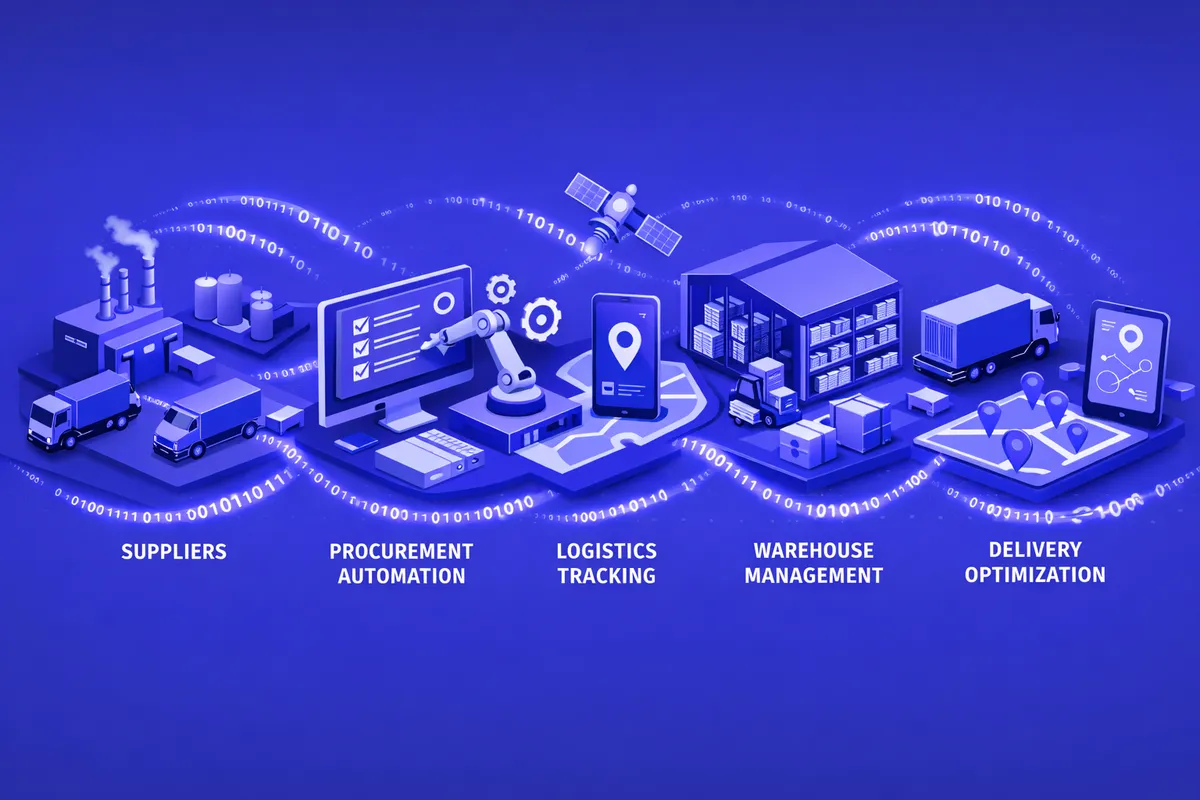
How We Build Supply Chain Automation for Englewood
Every Englewood engagement begins with a mission-aligned supply chain audit: mapping your current procurement and distribution workflows, identifying where manual steps create the most risk to service reliability or organizational sustainability, and building a prioritized automation roadmap. For urban agriculture operations, this audit maps the specific coordination points between growing schedules, harvest operations, post-harvest processing, storage, and distribution. For retail food businesses, it maps the purchasing cycle from inventory monitoring through supplier ordering to receiving and production input management.
Integration architecture is designed around the tools Englewood organizations already use. Many community organizations use adapted nonprofit software alongside QuickBooks or spreadsheet-based inventory systems. Small food businesses often use Square for point-of-sale alongside basic accounting tools. Our automation layer connects your existing platforms rather than replacing them.
We implement highest-impact automations first. For urban agriculture operations, that typically means harvest yield tracking connected to cold storage management and wholesale fulfillment scheduling. For retail food businesses, it means automated inventory monitoring and reorder triggering for production inputs. Later phases add demand forecasting, distribution optimization, and the reporting layer that provides supply chain visibility across all business relationships.
Industries We Serve in Englewood
Urban Farms and Agricultural Businesses: Urban farm operations near Garfield Boulevard managing harvest planning, post-harvest processing, cold storage, wholesale account fulfillment, and community distribution need automation that coordinates production cycles with supply commitments, tracks inventory from harvest through distribution, and provides wholesale customers with the shipment visibility they require for their own operations.
Community Food Organizations and Food Pantries: Community food programs along Halsted Street and near Ogden Park managing mixed donated and purchased inventory need automation that tracks all product categories in one place, generates procurement needs for consistently required items, monitors expiration, and supports distribution scheduling that matches supply to anticipated community need.
Small Food Businesses and Incubated Startups: Small food businesses operating through Kennedy-King College programs and selling through Englewood Square retail and direct community accounts need procurement automation that handles production input purchasing, delivery tracking, and inventory management without requiring administrative staffing that early-stage businesses cannot afford.
Neighborhood Grocery and Retail Operators: Grocery stores and specialty food retailers along 63rd Street and Ashland Avenue managing product catalogs with both mainstream staples and specialty items need automated reordering triggered by sales depletion, with reorder parameters calibrated to each supplier's lead time and minimum order requirements.
Auto and Home Services Businesses: Auto service shops and home services businesses along Racine Avenue and Ashland Avenue managing parts and supply inventory across multiple vendor programs need automation that monitors availability, triggers replenishment based on service demand, and tracks inbound shipments without manual follow-up on every order.
Home Healthcare and Social Service Organizations: Home healthcare providers and social service organizations managing supply purchasing across multiple program accounts need automated procurement workflows that track spending by program, generate compliant purchase orders, and provide the documentation that regulatory and grant reporting requires.
What to Expect Working With Us
1. Mission-Aligned Audit. For community organizations and urban agriculture businesses, our supply chain audit is structured around your service delivery mission and economic development context. We identify how supply chain failures affect your community impact and build automation priorities around reducing those failures first.
2. Integration Architecture. We design the connections between your existing platforms and the automated workflows. For urban agriculture operations with specialized production tracking needs, we identify the appropriate integration points between growing management, inventory, and distribution systems before any development begins.
3. Phased Implementation. Highest-impact automations go live first. For urban farms, the first phase typically connects harvest yield tracking to cold storage management and wholesale fulfillment scheduling. For retail food businesses, it covers inventory monitoring and automated procurement triggering for production inputs.
4. Training and Ongoing Support. Training is included in every engagement, designed for non-technical operators. Ongoing support is structured to resolve issues quickly without requiring your team to develop technical expertise. For community organizations with staff turnover, documentation and training materials are built to transfer knowledge reliably.