How We Build RAG Systems for Englewood Organizations
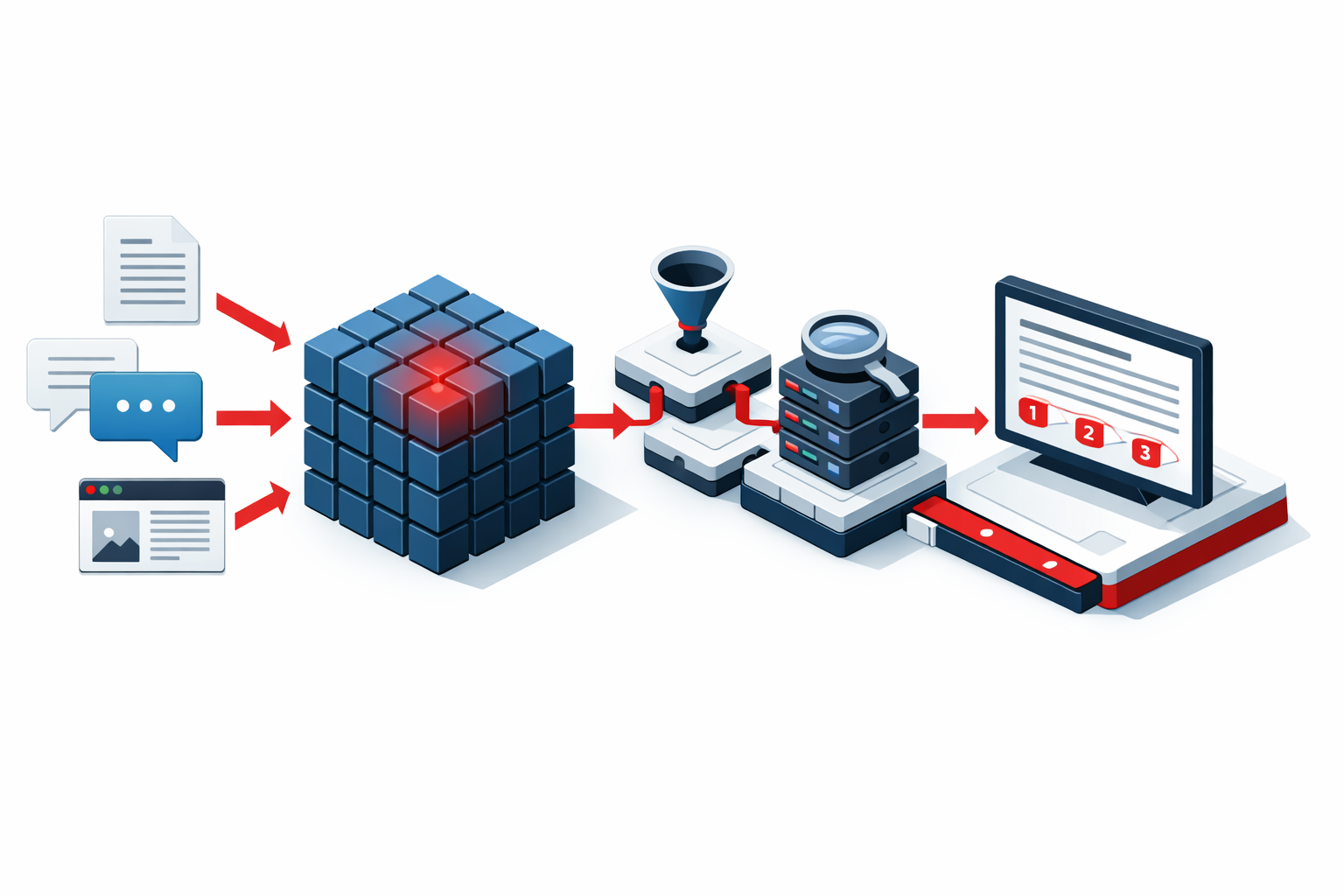
Our RAG development process begins with an audit of your organization's existing knowledge. We work with your leadership to identify all the documents, systems, and records that represent institutional knowledge: grant proposals and evaluation reports, program curricula and training materials, client database exports, past correspondence, audio recordings from community meetings, blog posts and social media content, scanned paper documents. Some of this material may live in Google Workspace, some in email archives, some in local network folders, some in actual filing cabinets that need scanning.
We then ingest all of that material into a unified knowledge base. The RAG system learns the structure of your organization: which programs exist, which staff or volunteer roles support each program, what outcomes you track, who your partner organizations are. The AI develops a semantic understanding of your work so it can connect related concepts even if they were documented years apart or by different people.
Next, we build a query interface tailored to your organization's needs. Some teams need a Slack bot so staff ask questions right in their workflow. Others prefer a web interface where multiple people can search simultaneously. Some organizations want internal-only access while others eventually expose their knowledge base to the community Englewood serves, letting residents ask questions about available services and programs.
Finally, we establish a maintenance and improvement workflow. RAG systems improve as they encounter real questions and corrections. When staff find an answer that is incomplete or inaccurate, they can flag it and provide feedback. Monthly reviews ensure the system continues serving your team's evolving needs as you launch new programs and retire old ones.
Industries We Serve in Englewood
Community health centers and clinics serving residents along 63rd Street and Halsted Street use RAG to maintain searchable patient care protocols, referral networks, insurance information, and community health data. New care coordinators can query the system to find which organizations provide free mental health services or substance abuse treatment. Staff can ask: "What are the eligibility criteria for our free clinics?" and get answers pulled from program policies and past intake documentation.
Nonprofits and community development organizations operating in Englewood build RAG systems to track grant outcomes, program curricula, volunteer training materials, and historical community data. Grant writers can query past evaluation reports to cite outcomes in new proposals. Program managers can ask: "What were the employment outcomes from our 2022 workforce development program?" and retrieve data from past evaluations and client follow-up surveys.
Urban farms and food-focused community initiatives like Growing Home use RAG to organize crop planning guides, volunteer training protocols, seasonal planting schedules, and soil science information. Seasonal staff and volunteers can ask: "What cover crops should we plant in the fall beds?" and receive guidance from past planting plans and agricultural research materials stored in the system.
Community colleges and workforce training programs like Kennedy-King College use RAG to manage curricula, student resources, job placement data, and community partnership information. Instructors can query the system to find relevant case studies or past student projects. Career counselors can ask: "What are the industry certifications our graduates have earned?" and retrieve employment outcome data from past training cohorts.
Grassroots organizing and advocacy organizations use RAG to track community feedback, past organizing campaigns, policy research, and partner organization information. Organizers can query the system to find which community leaders have spoken out about housing or education issues. Research staff can ask: "What has been documented about disinvestment in our schools?" and retrieve past policy reports, media articles, and community testimony.
Faith-based organizations and churches serving Englewood maintain member databases, counseling notes, community outreach records, and historical ministry programming. Staff can ask: "What community partnerships does our church have?" and retrieve documentation of past collaborative programs and contact information for partner organizations throughout the South Side.
What to Expect Working With Us
1. Knowledge audit and ingestion. We analyze your organization's complete knowledge landscape, identify where institutional knowledge lives (documents, databases, recordings, archives), and develop a plan to securely ingest that material into the RAG system. This typically takes 1 to 3 weeks depending on how many documents you have and how they are organized. We handle sensitive material (client records, personnel files) with appropriate privacy protections.
2. System design and testing. We build a RAG system customized for your organization's query patterns and internal language. We test the system with your team, asking sample questions: "What are the eligibility requirements for our youth programs?" and "Who are our partner organizations in workforce development?" We refine the system based on your feedback until it reliably answers the kinds of questions your staff asks most frequently.
3. Interface deployment and training. We deploy your RAG system through an interface your team finds natural to use. We conduct training sessions with your staff so everyone understands how to query the system, what to expect from the answers, and how to provide feedback when answers are incomplete. For Englewood organizations accustomed to calling a senior staff member with questions, the RAG system becomes a trained colleague available around the clock.
4. Continuous improvement and iteration. After launch, we monitor the system's performance, track which questions it answers well and which it struggles with, and make monthly refinements. As your organization evolves and takes on new programs, we add new documentation to the knowledge base so the RAG system remains current.