How We Build Field Service Management for Englewood
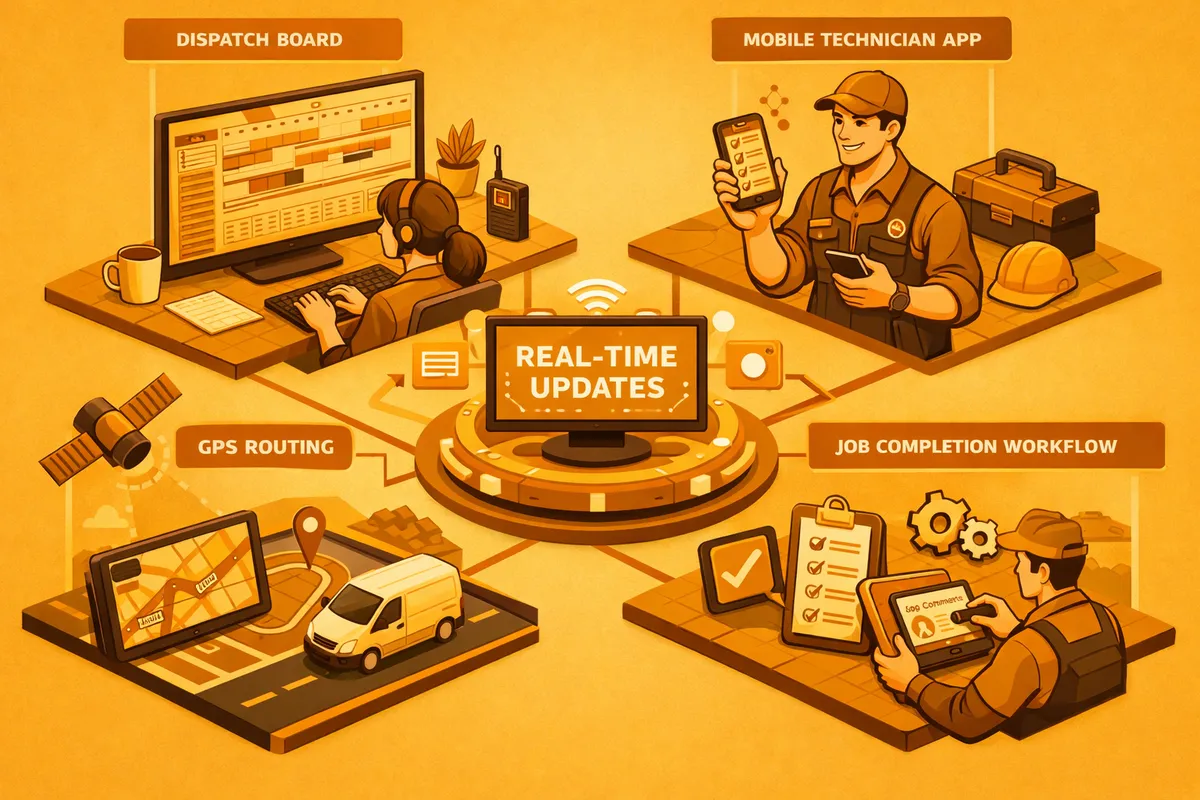
FSM systems for Englewood service businesses and community organizations start with the actual service model: who is sending staff or technicians to client locations, what documentation those interactions need to produce, and how communication reaches clients who may have variable technology access. For community-based organizations, this often means building mobile workflows that field staff can use on basic smartphones, with documentation forms that capture what funders and compliance systems require without imposing technical complexity on frontline workers.
For Englewood's private service businesses, FSM systems need to support both neighborhood residential clients and institutional accounts with different documentation expectations. A home repair contractor serving residents along Ashland Avenue and also maintaining facilities for a community organization on 63rd Street needs a single dispatch system that handles both job types with appropriate documentation for each.
Routing for Englewood's South Side territory spans a grid from 63rd Street south to Garfield Boulevard and east-west from Ashland Avenue to Racine Avenue, with service extensions into adjacent Woodlawn, Auburn Gresham, and Chicago Lawn for businesses that serve the wider South Side. We configure routing with real traffic data for the South Side street network, including the timing of heavy traffic windows on Halsted Street and the connection routes between Englewood and adjacent neighborhoods.
We build customer communication tools with accessibility in mind. SMS confirmation reaches customers who do not use email regularly. Plain-language messages with no jargon, clear appointment times, and a direct contact number give Englewood residential customers the information they need without requiring app downloads or account creation. For community organization clients, we build staff notification workflows that operate within existing organizational communication practices rather than replacing them entirely.
Industries We Serve in Englewood
Community and Social Service Organizations: The nonprofits and community health organizations operating along 63rd Street and Garfield Boulevard manage field staff and volunteers across Englewood and adjacent South Side neighborhoods. FSM tools adapted for community-based field operations handle staff assignment, route optimization, visit documentation, and funder-facing reporting. Growing Home's urban farming operations, community health outreach programs, and neighborhood service organizations each have a field coordination problem that FSM infrastructure can solve more efficiently than spreadsheets and group texts.
Home Repair and General Contractors: Englewood's residential housing stock represents genuine demand for qualified home repair and contracting services. Contractors serving the blocks between Halsted Street and Racine Avenue need FSM tools that schedule and dispatch efficiently, document completed repairs with photos and signatures, and generate invoices that residents can understand and reference. For contractors doing subsidized repair work through community programs, FSM documentation produces the compliance records those programs require.
Cleaning and Janitorial Services: Commercial cleaning companies serving Englewood's institutional clients, including Kennedy-King College, park field houses at Ogden Park and Hamilton Park, and the community organizations along 63rd Street, need service verification documentation, staff assignment management, and account management tools. Cleaning contracts with institutional clients require proof-of-service records that informal scheduling systems cannot reliably produce.
Home Healthcare and Personal Care Services: Home healthcare providers serving Englewood's residential population send staff to client addresses across a wide South Side territory. FSM systems adapted for home care scheduling handle staff routing, client visit documentation, compliance record-keeping, and patient communication. The field service management framework applies directly to any organization managing staff in clients' homes, including personal care aides, therapy services, and community health workers.
Barbershops and Salon Mobile Services: Mobile barber and beauty service businesses serving Englewood residents at care facilities, homes, and community events need scheduling, client management, and routing tools. Mobile personal care services are a growing part of the Englewood service market and a natural FSM application for service providers operating without a fixed location.
Property Maintenance and Facility Management: Residential property owners and community organizations maintaining buildings along Ashland Avenue and the residential streets between 63rd Street and Garfield Boulevard need property maintenance scheduling, work order documentation, and vendor management tools. FSM systems that manage maintenance schedules, track completion, and generate service records help Englewood property owners and community organizations maintain their building stock more effectively.
What to Expect Working With Us
1. Mission-aligned operational audit. For community organizations, we begin by understanding your service model, your funder reporting requirements, and the specific field coordination challenges your staff faces. For private service businesses, we document current scheduling workflows and identify the highest-friction points. We design systems that solve real operational problems without imposing technical overhead that your team cannot support.
2. Accessible mobile configuration. We configure mobile workflows for the devices your field staff actually have. Basic Android smartphones, limited data plans, and variable connectivity in Englewood's South Side buildings are design constraints we account for, not afterthoughts. Offline capability for documentation capture ensures that a service visit is recorded even when connectivity is unreliable.
3. Documentation built for compliance and accountability. For community organizations with funder reporting requirements, we build documentation fields that capture what your funders need at the visit level. For private contractors working with community programs or institutional clients, we build work order documentation that produces the compliance records those relationships require.
4. Community-paced implementation. We do not impose implementation timelines that do not reflect the capacity of community-based organizations. We phase rollout to match your team's ability to absorb new tools, build training into the engagement timeline, and provide support through the first operational cycle before moving to the next phase.