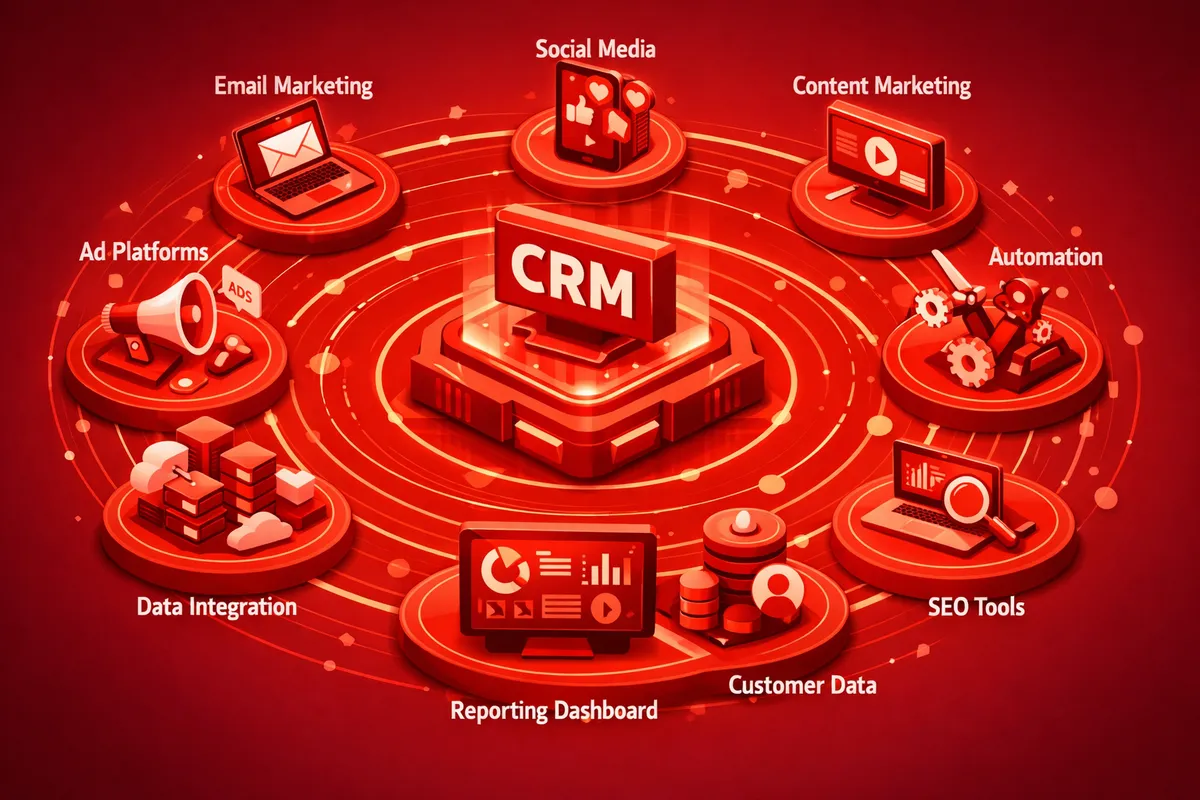
How We Build CRM and Martech Systems for Englewood
We start with a customer journey audit. We map how a client first encounters the business, how they become a client, what the ongoing relationship looks like, and what happens when they refer someone else or become inactive. This map reveals where information needs to be captured, where follow-up needs to be triggered, and where communication needs to happen.
Platform selection follows. We evaluate CRM platforms against the business's specific requirements: number of contacts, required features, integration with existing tools, ease of use for the team, and budget. For small businesses with fewer than a thousand contacts, we often recommend tools like HubSpot Free, Mailchimp CRM, or Notion-based systems. For businesses with more complex needs, we evaluate Zoho CRM, ActiveCampaign, or industry-specific platforms. We do not have preferred vendor relationships.
Configuration is thorough. We set up contact records, custom fields for information specific to the business's client relationships, pipeline stages for whatever conversion process the business runs, and automated sequences for the follow-up patterns that should happen consistently. We import existing contacts from wherever they currently live.
Training is hands-on. We work through real use cases with the people who will use the system daily. Adding a new contact, logging an interaction, checking follow-up reminders, sending a campaign. These tasks need to feel natural before the business goes live.
Industries We Serve in Englewood
Home healthcare and senior care agencies on the South Side maintain relationships with clients, client families, referral sources, and caregivers simultaneously. A CRM configured for this complexity tracks client health notes, family communication preferences, caregiver assignments, and billing contacts in one place. We build systems for home healthcare agencies that reduce the administrative burden of managing that relational complexity.
Community nonprofits and social service organizations near Ogden Park and Kennedy-King College hold relationships with program participants, donors, volunteers, and community partners. A well-configured CRM makes donor stewardship systematic: anniversary acknowledgments, annual report delivery, cultivation sequences for lapsed donors. Program participant tracking ensures no one falls through the cracks during a program cycle.
Barbershops and personal care businesses use CRM differently from most industries. The core function is client retention: knowing who is overdue for a visit, sending re-engagement messages to clients who have not been in for sixty days, acknowledging client birthdays or anniversaries. We configure lightweight CRM tools that handle these retention functions without adding complexity the shop does not need.
Food businesses and caterers maintain relationships with individual clients, corporate accounts, and event planners simultaneously. A catering CRM tracks inquiry history, prior event details, dietary preferences, and follow-up timelines. Marketing technology sends seasonal menus, holiday promotion emails, and re-engagement campaigns to past clients who have not booked in a while.
Faith organizations and community programs on Garfield Boulevard maintain complex member and participant databases that span multiple programs, giving histories, and volunteer roles. A CRM configured for church and community organization needs creates a unified member record that is accessible to multiple staff and volunteer coordinators without creating data siloes.
Urban agriculture and food enterprise businesses manage wholesale accounts, community-supported agriculture members, institutional clients, and individual market customers through different relationship channels. We configure CRM systems that handle the distinct communication and follow-up needs of each channel from a single platform.
What to Expect Working With Us
1. Customer journey mapping and requirements definition. We document who your clients are, how they come to you, and what the ongoing relationship requires. We define the specific CRM and martech capabilities that address your actual needs, not a wish list.
2. Platform selection and vendor comparison. We recommend two or three platforms with clear comparison of features, costs, and trade-offs. We give you our recommendation and the reasoning behind it. You make the final call with full information.
3. Configuration, data migration, and automation setup. We configure the platform, import existing contacts, build the pipeline stages and custom fields that match your operations, and set up the automated sequences that should run without manual triggering.
4. Training, documentation, and adoption support. We train your team in your actual environment. We document the essential tasks in plain language. We follow up at thirty and ninety days to review adoption, address any friction points, and adjust the configuration based on what real-world use has revealed.