How We Build Business Process Automation for Englewood
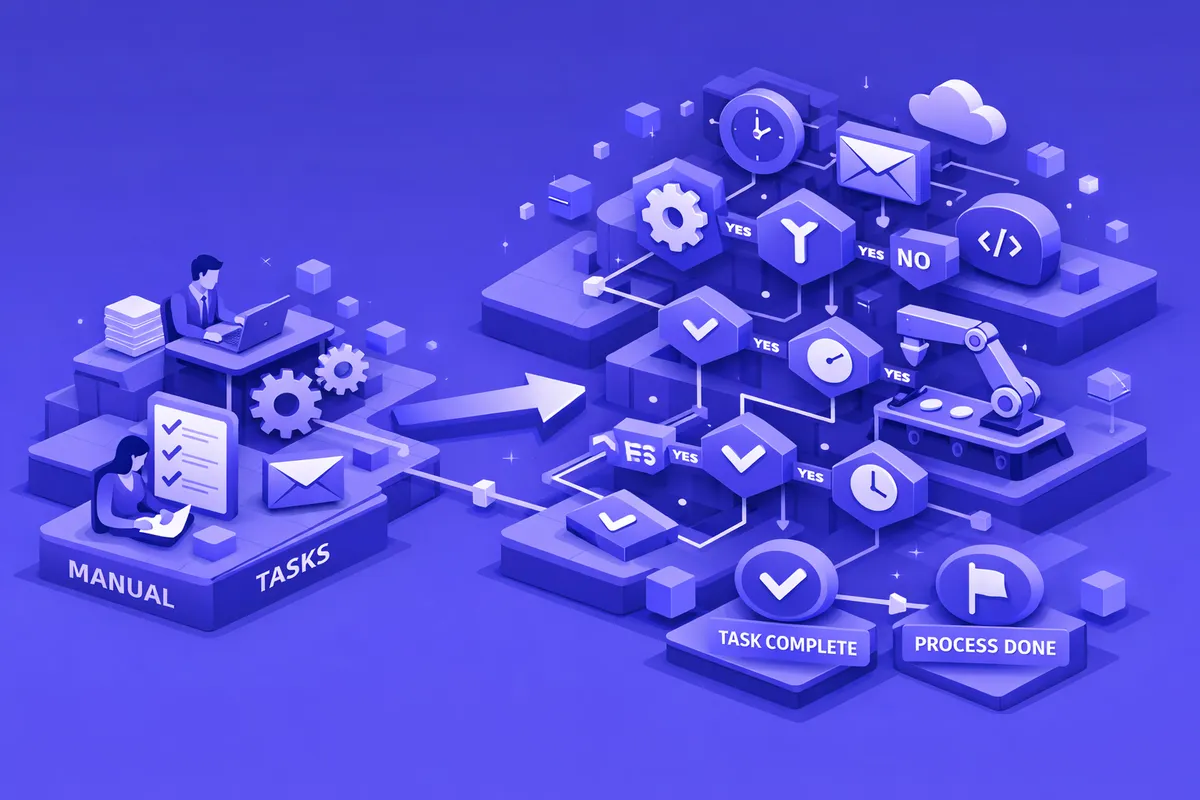
We approach Englewood engagements differently than we approach Loop or Near North Side projects. The starting question is not "What is your annual automation budget?" It is "What is taking the most of your time right now, and what would you do with that time if it were freed up?"
From that conversation, we identify the one or two workflows that are consuming the most operator time relative to their complexity. We map those workflows in detail, identify the specific software involved, and build a scoped fixed-price proposal for automating them. We do not upsell to platforms or services that exceed what the organization actually needs.
For most Englewood businesses and organizations, the priority automations fall into a few clear categories. Communication sequences: appointment reminders, volunteer coordination messages, program participant updates. Data workflows: program intake to tracking system, caregiver schedule to payroll, invoice to accounts receivable. Reporting pipelines: program data aggregation for grant reports, weekly summary generation for leadership review. Each of these categories has well-established automation approaches that we adapt to the specific software and workflow each organization uses.
We build automation using tools that connect to platforms already in use: Google Workspace, Microsoft 365, scheduling software common in healthcare and human services, CRM tools used by nonprofits, and accounting software ranging from QuickBooks to Wave. We prioritize approaches that keep ongoing costs low and do not create dependency on expensive platform subscriptions.
Industries We Serve in Englewood
Barbershops and personal care businesses along 63rd Street and Halsted Street use business process automation to handle appointment booking confirmations, reminder sequences, review request campaigns, and client rebooking outreach. Barbershops with loyal long-term clientele that have not adopted booking software can benefit from even basic automation that moves appointment confirmations from phone calls to text sequences, freeing the chair time that phone management currently interrupts.
Home healthcare agencies and caregiver services operating across Englewood and surrounding South Side neighborhoods use business process automation to handle caregiver schedule confirmation and reminder sequences, shift change notifications, new client intake workflows, billing submission routing, and compliance documentation reminders. Home healthcare is a high-coordination business where the administrative cost of manual scheduling and billing is often underestimated.
Food businesses and urban farms including operations in the Englewood Square area and along the Garfield Boulevard corridor near Growing Home use business process automation to handle institutional customer order confirmation workflows, delivery scheduling coordination, invoice generation and follow-up, and seasonal production planning communications. Food businesses that supply schools, hospitals, or institutional buyers have predictable order cycles that are natural automation candidates.
Nonprofits and community organizations working along 63rd Street, near Kennedy-King College, and through the broader Englewood community use business process automation to handle program enrollment workflows, participant data collection, service delivery tracking, volunteer onboarding sequences, and grant reporting data aggregation. Organizations managing multiple program tracks simultaneously benefit most from automation that captures data consistently at the point of service rather than requiring reconstruction at report time.
Churches with community programs serving Englewood through food pantries, after-school programming, job training, and senior services use business process automation to handle program registration workflows, participant reminder sequences, volunteer scheduling coordination, and weekly communication distribution to congregation members. Congregations doing substantial social service work often operate with administrative infrastructure designed for a smaller scope of programs.
Small retail and service businesses on Englewood Square and along Ashland Avenue use business process automation to handle customer follow-up communications, inventory reorder notifications, vendor invoice processing, and appointment or service scheduling coordination. Retail and service businesses in the revitalization corridor that are growing their customer base benefit from automation that maintains consistent customer communication as volume increases.
What to Expect Working With Us
1. A conversation about what is actually painful. We do not start with a capabilities presentation. We start by asking what is consuming the most of your time each week and what happens when that task does not get done. The answer to those two questions determines where we start.
2. A fixed-price proposal for a specific workflow. Before any work begins, we present a clear scope: this specific workflow, automated using these specific tools, delivered in this timeline, at this price. No open-ended retainers. No scope creep without a change order. You decide whether the time savings justify the investment before committing.
3. A build that matches your real situation. We build automation using the software you already have, at the scale your operation actually runs. We do not recommend enterprise platforms for small organizations. We build practical solutions that deliver the promised time savings at a sustainable ongoing cost.
4. Training for whoever will monitor the automation. The person managing the automation after we hand it off may be the business owner, an office manager, or a program coordinator. We train whoever that is on what to look for in the daily or weekly automation report, what exceptions mean, and how to flag something for adjustment if the workflow needs to change.