How We Build AI Strategy Consulting in Englewood
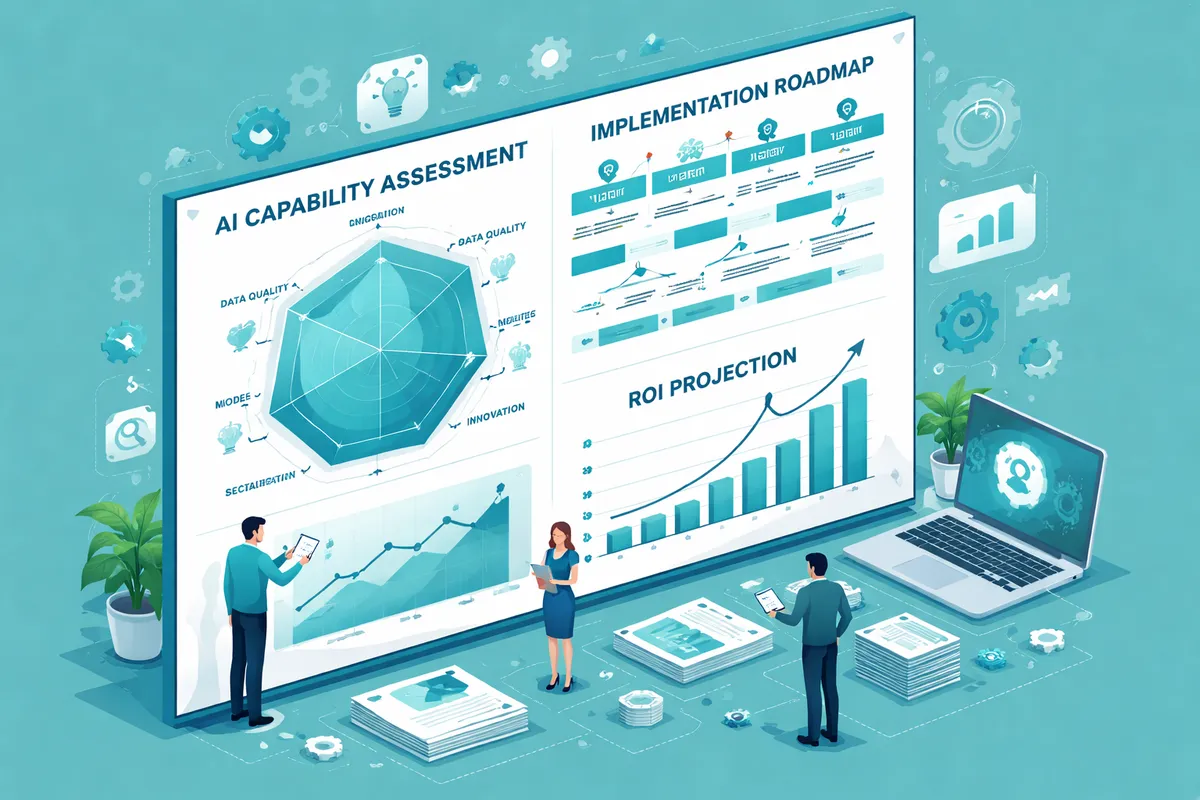
We begin with a business assessment. What you sell. Who buys it. What tools you already use. Where bottlenecks cost you money or customers. Then we build a prioritized AI roadmap with clear ROI projections for each initiative. For retail businesses near the Green Line, the first priority might be inventory forecasting that cuts dead stock and improves cash flow. For service providers along Halsted, the starting point might be automated scheduling that eliminates phone tag and reduces no-shows. For nonprofits, it could be grant reporting automation that frees staff for program delivery. Every recommendation includes budget estimates, expected timelines, and measurable success criteria so you can evaluate each step before committing.
What to Expect Working With Us
1. Business assessment. We review your operations, your technology, your customer data, and your revenue in detail. For Englewood businesses, we pay particular attention to the gap between the operational efficiency that your current tools provide and what AI can close affordably. 2. Market context. We map the development dynamics around Englewood Square and along the Halsted and 63rd corridors to identify how changing neighborhood economics affect your AI strategy. Growth creates opportunity, but only for operators who are positioned to capture it. 3. Roadmap delivery. You receive a written AI strategy with prioritized recommendations, budget ranges, implementation timelines, and success metrics. Every recommendation is actionable and sized to your actual resources. 4. Follow-through. We guide the first implementation through launch and review results before recommending the next step. No phase begins until the previous one is working.
Industries We Serve in Englewood
Retail businesses get strategies focused on inventory optimization, customer personalization, and local search dominance along 63rd Street and near Englewood Square. A shop doing $200K in revenue does not need the same AI stack as a chain doing $20M, and we build the roadmap accordingly for the actual scale of the business. The first priority for most Englewood retailers is customer acquisition through search optimization before moving to retention tools, because reaching new customers who do not yet know the business exists is typically the highest-value opportunity in a neighborhood with growing foot traffic.
Service providers receive plans for automating appointments, follow-ups, and customer communication in the order that generates the fastest payback. For a hair salon or beauty shop on Halsted, automated rebooking reminders alone can increase monthly revenue by 15 to 20 percent by capturing clients who intended to come back but forgot to schedule. That is often the highest-ROI starting point for a service business with an established client base.
Nonprofit organizations get AI strategies that maximize program impact and streamline reporting requirements, often starting with document processing or data pipeline automation that saves dozens of hours per month. Food businesses receive plans for demand forecasting, delivery platform optimization, and loyalty automation tailored to their menu, capacity, and customer patterns. Every recommendation is specific to the business in front of us, not a generic food-service template.