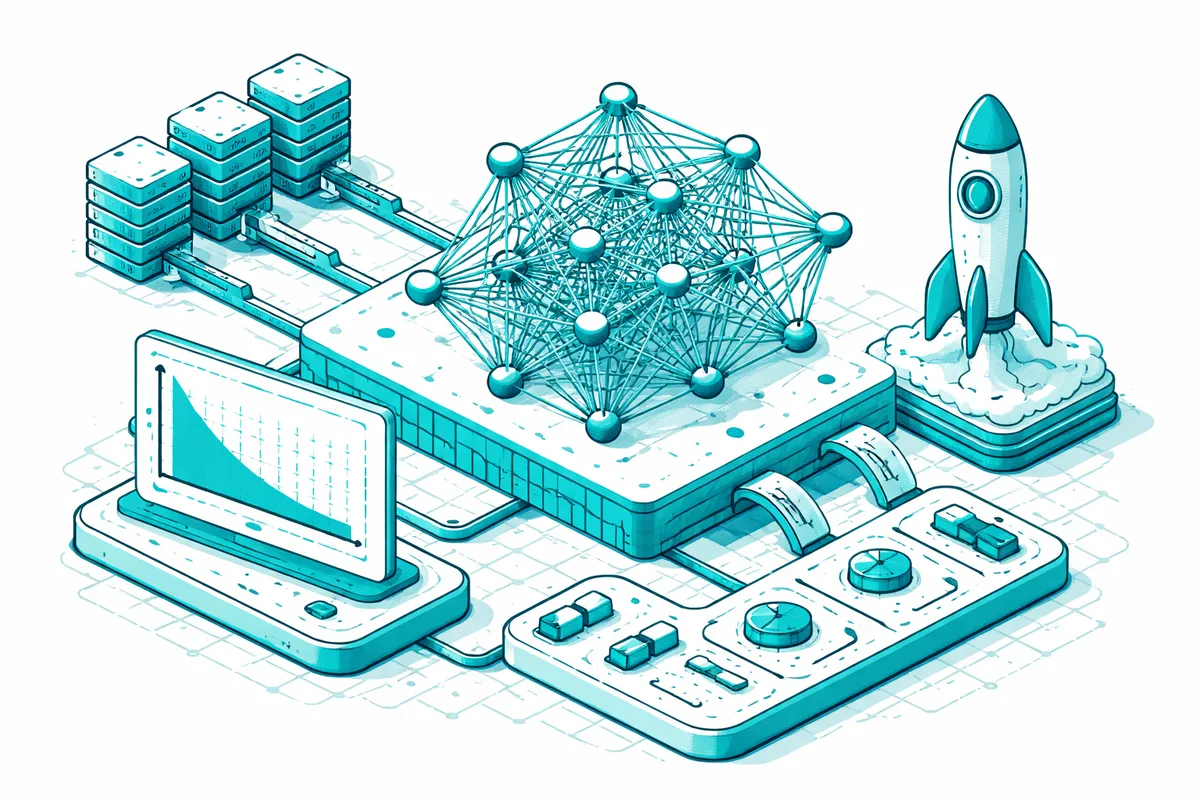
How We Build AI Model Training in Englewood
We start with the data your business has already collected: sales transactions, customer interactions, appointment histories, inventory records, and any other operational information. We clean and structure this data, then train models specific to your use case. For a retail business near Englewood Square, that might be a demand forecasting model that predicts next week's best sellers by day, incorporating community event schedules and development activity that shifts the foot traffic profile along 63rd Street. For a service provider near the Green Line at 63rd, it could be a customer churn model that identifies clients at risk of not rebooking based on appointment timing changes and communication patterns. For a nonprofit, it might be a donor lapse prediction model that identifies supporters drifting toward disengagement before they go quiet entirely. Every model is validated against your actual historical outcomes before we deploy it.
Industries We Serve in Englewood
Retail businesses train models to predict inventory needs based on local shopping patterns, community events along 63rd and Halsted, and seasonal shifts specific to South Side neighborhoods where buying behavior follows community rhythms rather than national marketing calendars. A clothing store can reduce dead stock by 25 to 35 percent with a model that knows which sizes and styles sell in which months to this specific customer base. The savings from reduced overstock alone often cover the cost of model training within the first season.
Healthcare providers build models that identify patients at risk of missed appointments based on scheduling patterns, communication history, and seasonal factors, enabling proactive outreach that reduces no-shows and keeps care continuity intact. In Englewood, where healthcare access and trust are both significant factors in patient behavior, a model that predicts which patients are most likely to cancel allows providers to intervene with reminders, transportation assistance, or rescheduling support before the slot goes empty.
Food businesses use trained models to optimize prep quantities, predict which menu items will sell on which days, and reduce food waste by matching production to actual demand rather than gut feeling. The community market schedule at 63rd and Halsted, the Saint Sabina event calendar, and the Ogden Park programming schedule all shift demand in ways that a model trained on your data will learn to predict accurately within weeks of deployment.
Community organizations develop models that forecast program enrollment demand and resource needs weeks in advance, allowing better allocation of limited staff and funding. When an organization can predict which programs will oversubscribe and which will underperform, it can staff and supply them appropriately rather than discovering the mismatch on the day of the event.
What to Expect Working With Us
1. Data audit and business case definition. We review your existing data sources and work with you to define the specific prediction problem with the highest business value. For most Englewood businesses, that starts with demand forecasting or customer retention, where the gap between generic model performance and custom model accuracy is most immediately visible and valuable.
2. Data preparation and South Side enrichment. We clean and structure your operational data, then layer in community signals: the 63rd Street corridor event calendar, Ogden Park programming, Saint Sabina community schedules, development activity near Englewood Square, and seasonal patterns specific to South Side commerce.
3. Model training and validation. We train the model on your historical data and validate its predictions against real past outcomes before deployment. You see the accuracy benchmarks before the model makes a live decision, so you know exactly what improvement you are getting.
4. Deployment and continuous improvement. We integrate the model into your workflow and conduct quarterly retraining as new data flows in. Models improve month over month as they accumulate more signal from your live operations and the neighborhood's evolving commercial dynamics.