How We Build Accounting Automation for Englewood
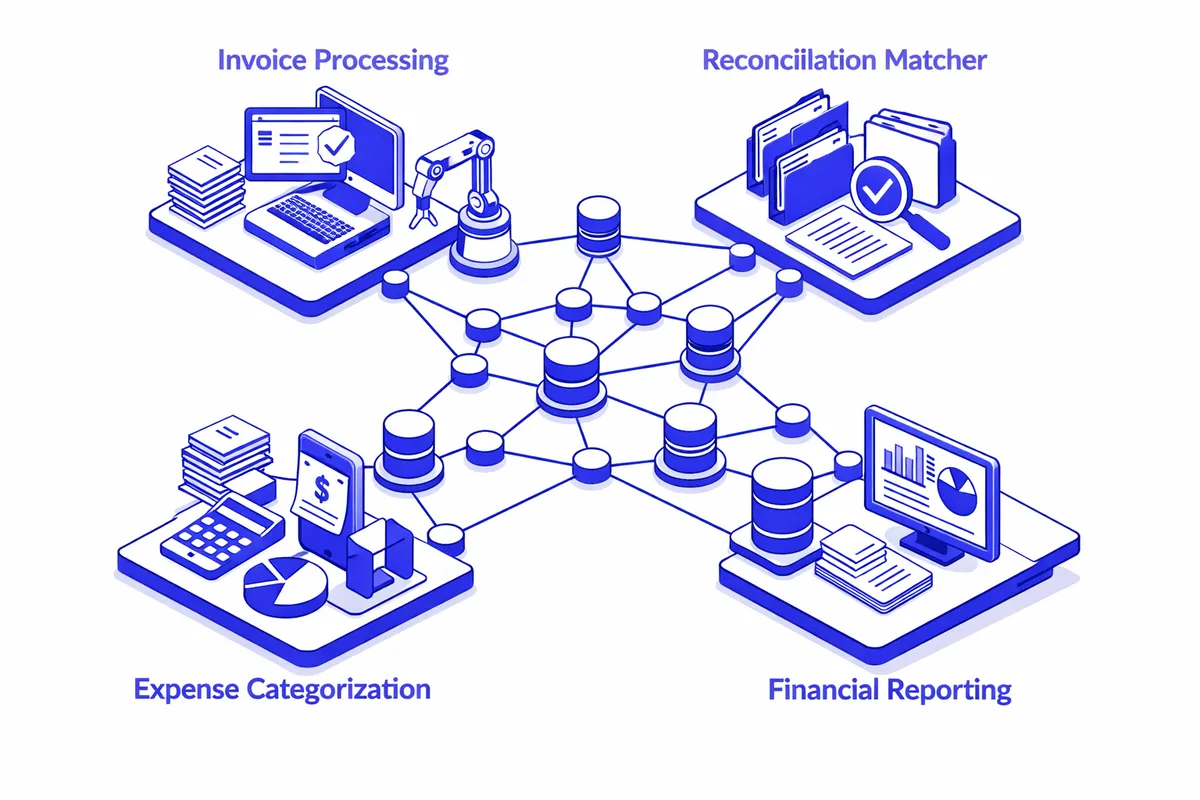
We build practical automation for practical operations. Englewood's business community does not need enterprise software or consulting frameworks designed for corporate finance departments. It needs automation that works with QuickBooks or the platform it already uses, that is documented in plain language, and that delivers measurable time savings quickly.
Every engagement starts with the question: where does your accounting take the most time? For a home healthcare agency on Racine Avenue, the answer is almost always Medicaid billing reconciliation. For a food business connected to Kennedy-King College's culinary programs, it is cost allocation and grant reporting. For a salon on Halsted Street, it is daily revenue reconciliation and booth rental billing. We go to that process first.
We map the current process step by step, identify every step that follows a rule rather than requiring interpretation, and build automation for those steps. The home healthcare billing reconciliation follows rules: match the remittance against the authorization, post the payment, flag the underpayment. The grant expense tracking follows rules: tag this vendor's invoices to this grant fund, this expense category to that program. Automation applies those rules consistently and routes the exceptions for human review.
Testing uses historical data. Before any automation touches current records, we run it against three months of your actual transactions and compare the outputs against what your books currently show. Englewood organizations operating on tight margins cannot absorb accounting errors; the testing phase is where we find them and fix them.
Industries We Serve in Englewood
Home healthcare agencies on Racine Avenue and Ashland Avenue use accounting automation to handle Medicaid billing reconciliation, visit documentation matching, and patient balance posting. Home health billing is among the most complex in the healthcare sector; automation handles the high-volume routine transactions and surfaces the exceptions, denials, underpayments, and authorization mismatches, that require staff attention.
Urban farms and food businesses near Growing Home on Garfield Boulevard use accounting automation to manage multi-channel sales reconciliation, production cost allocation, and grant fund tracking. Agricultural enterprises that sell through multiple channels simultaneously need the accounting to reflect which revenue came from which channel and which costs belong to which program; automation maintains that structure without requiring manual allocation on every transaction.
Community nonprofits and social service organizations throughout Englewood use accounting automation for grant fund management, program expense tracking, and donor reconciliation. Organizations serving the Ogden Park and Hamilton Park communities often manage multiple restricted funds and reporting requirements simultaneously; automation keeps the fund accounting current and produces grant-to-actual reports in real time rather than at month-end reconstruction.
Barbershops and salons along Halsted Street and Ashland Avenue automate daily revenue reconciliation, tip reporting, and booth rental billing. Cash-intensive service businesses benefit particularly from automation because the daily reconciliation discipline that manual systems require is exactly the type of routine task that gets deferred when the business gets busy.
Small food businesses and restaurants on 63rd Street use accounting automation for vendor invoice processing, daily sales posting, and payroll journal entries. Restaurants operating near Englewood Square benefit from automation that handles the daily accounting discipline so the owner's attention stays on operations rather than bookkeeping.
Churches and faith communities on 63rd Street and Garfield Boulevard use accounting automation for designated fund accounting, donation tracking, and event revenue management. Faith communities with active programming throughout the year, including back-to-school drives, holiday food distributions, and summer youth programs, generate significant transaction volumes that manual accounting systems process slowly and inconsistently.
What to Expect Working With Us
1. One process first. We do not scope a comprehensive accounting transformation for organizations operating with limited administrative resources. We identify the single most painful manual process and automate that one first. You see the benefit in the first month, not after a six-month implementation.
2. Build at your current technical level. If you use QuickBooks on a desktop in your office, we build automation that connects to QuickBooks and delivers exception reports to your email. We do not require platform changes or technical upgrades as a prerequisite.
3. Test with real data before going live. Every automation runs against historical transactions and produces results we compare against your existing records. We find problems during testing, not after the automation has been running for three months.
4. Train whoever handles your accounting. The person who currently does your accounting learns the automation before we step back. They understand what it does, how to read the exception reports, and how to modify a rule when something in the business changes.