How We Build UI/UX Design for Edgewater
Research in Edgewater requires intentional sampling. If your business serves a multilingual clientele, your research participants should include non-native English speakers. If your wellness studio serves clients across a wide age range, your usability testing participants should include older adults who use digital interfaces differently than your most tech-forward members. We recruit deliberately from the populations that represent your real user base rather than defaulting to the research participant profile that is easiest to find.
For hospitality products serving Edgewater's lakefront and Bryn Mawr Avenue corridor, we conduct observational research in the actual physical spaces where digital interactions happen: a guest discovering your restaurant through a travel platform, pulling up the menu on their phone while standing at the host stand, trying to understand whether reservations require a card. That specific physical moment has design implications that no amount of desk research produces. We observe it directly.
For wellness platforms serving the Broadway and Clark Street wellness corridor, we map the complete client journey from first digital discovery through booking, attendance, and membership renewal with attention to the friction points that cause clients to give up or choose a competitor. Edgewater's density of wellness options along this corridor means clients have alternatives. The booking experience that causes friction is not just a UX problem. It is a retention problem.
For property management and rental platforms serving the Sheridan Road rental market, we design for the international prospect who needs trust signals, the local tenant who needs a frictionless maintenance request process, and the property manager who needs operational clarity daily. These three users have almost no overlap in their needs, and the design has to serve all three.
Industries We Serve in Edgewater
Hospitality and restaurant technology serving Edgewater's ethnic restaurant corridor along Granville Avenue and Devon Avenue, and the lakefront dining options near Berger Park, benefits from multilingual-ready interface design, reservation and ordering flows designed for international and non-native English speaking visitors, and hospitality operations tools designed for the staffing realities of independent Edgewater restaurants.
Wellness and fitness platforms serving studios along Broadway and Clark Street benefit from booking flow design accessible to clients across age and technical familiarity, member portal design for community-oriented wellness businesses, and instructor-facing tools designed for how Edgewater wellness professionals actually work between classes rather than in a quiet desktop environment.
Real estate and property management platforms serving the Sheridan Road and Edgewater Beach Apartments area rental market benefit from property portal design for international prospects, tenant experience applications that support Edgewater's multilingual tenant population, and property management tools designed for the operational patterns of Edgewater's predominantly mid-size landlord and property management company market.
Community and cultural organizations connected to the Edgewater Historical Society benefit from accessible interface design serving residents across age and technical background, multilingual content presentation, and event registration experiences that reduce the barriers to community participation.
Independent retail and specialty service businesses on Bryn Mawr Avenue and Granville Avenue benefit from e-commerce and appointment booking experiences designed for Edgewater's diverse customer base, loyalty and retention features appropriate to neighborhood-rooted businesses where relationships are the primary retention driver, and mobile-first design for the on-foot shopping patterns of Edgewater's walkable commercial corridors.
Medical and dental practices serving the Edgewater community near Peirce Elementary School and throughout the neighborhood benefit from patient portal design accessible to patients across language background and digital familiarity, appointment booking flows that minimize the support calls that complex scheduling systems generate, and telehealth interfaces appropriate for the age and technology range of an Edgewater practice's patient population.
What to Expect Working With Us
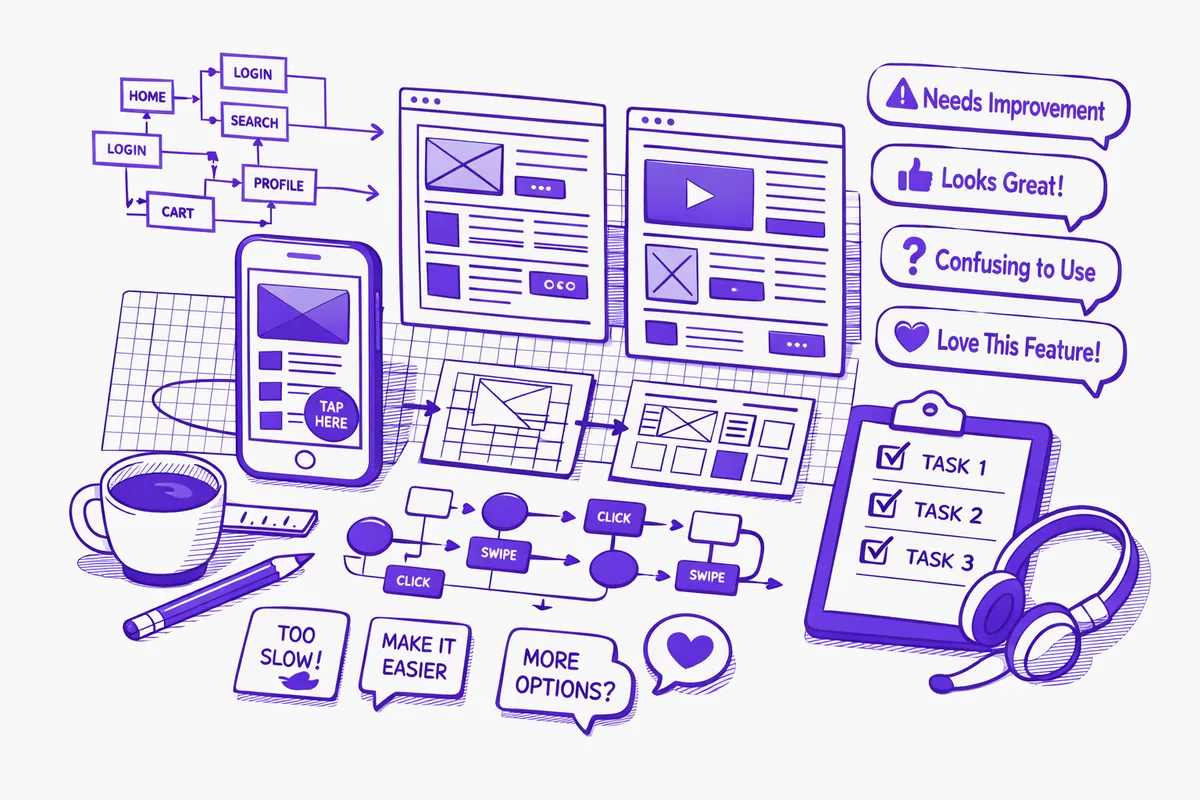
1. Discovery and Research. We begin by understanding who your users actually are, not just who you imagine them to be. For Edgewater businesses serving diverse, multilingual, or international clientele, this means recruiting research participants who represent that diversity, not just the easiest participants to find. We observe, interview, and test with people whose backgrounds reflect the real Edgewater community.
2. Information Architecture and Wireframing. Structure before surface. Wireframes establish flow and content organization before visual design begins, allowing early feedback from Edgewater stakeholders and test participants without the investment of high-fidelity design work. For products serving non-native English speakers, wireframe-level content clarity testing identifies language and navigation issues before they are built into production.
3. High-Fidelity Design and Prototyping. Pixel-precise interface design in Figma, including the interactive prototype that test participants use to complete realistic tasks. For Edgewater hospitality and wellness products, this phase includes mobile-first design that reflects the on-foot, on-phone context in which most of your users will encounter the product.
4. Testing and Iteration. We test prototypes with real Edgewater users from the target population before development begins. For products serving international clientele near the lakefront or multilingual communities along Devon Avenue, testing with participants who represent those groups reliably surfaces issues that standard usability testing misses.