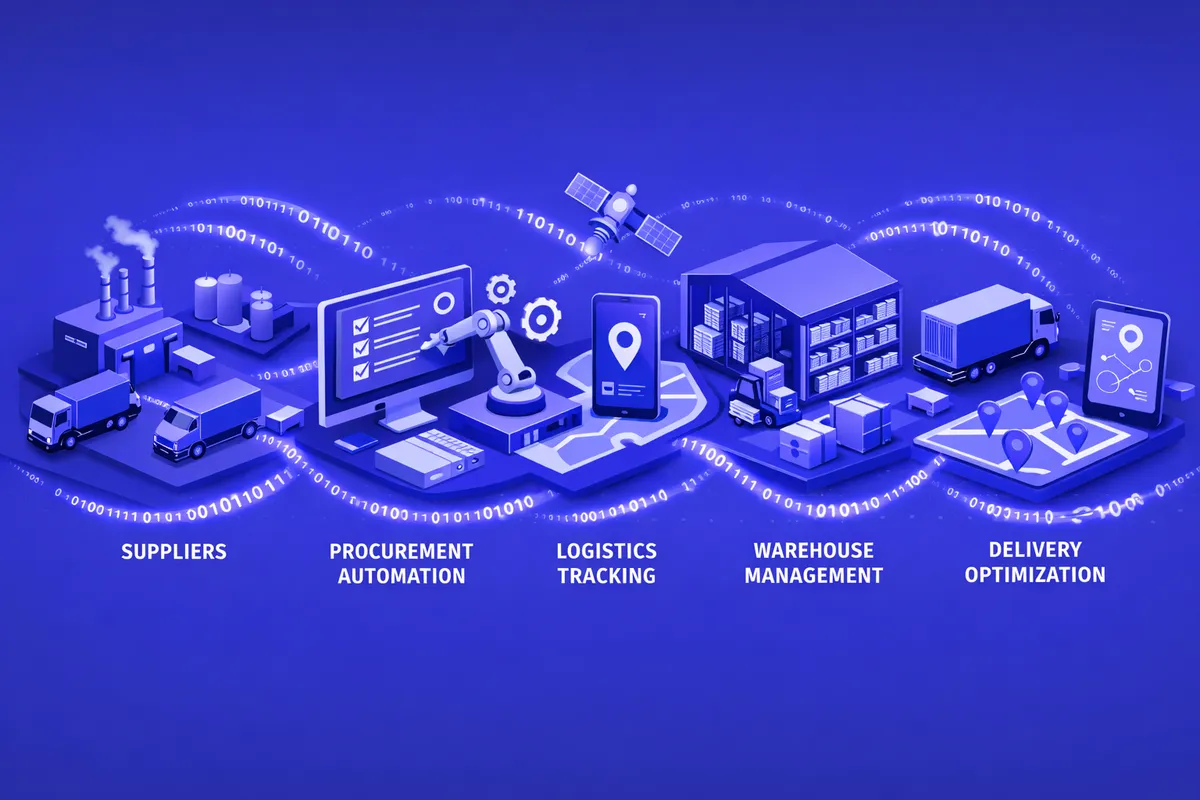
How We Build Supply Chain Automation for Edgewater
Edgewater's supply chain automation needs span hospitality, healthcare, and independent retail, each with distinct operational requirements. We design implementations that reflect the specific patterns of your business model rather than applying a generic procurement automation template.
For hospitality businesses along Broadway and Granville Avenue, the automation architecture centers on integrated inventory monitoring across food, beverage, and supply categories, with purchasing workflows that connect to your POS data for demand-driven reorder calculations. When cover counts increase, the automation detects the consumption acceleration and adjusts reorder timing to maintain safety stock. Supplier communication automation confirms orders and tracks delivery status without requiring a chef or manager to follow up manually.
For healthcare practices, the automation design prioritizes expiration date tracking and compliance documentation: inventory records that capture lot numbers and expiration dates at receiving, FIFO dispensing enforcement that ensures oldest inventory is used first, and automated reorder triggers that account for both consumption rates and shelf life remaining. Medical supply chain documentation that supports regulatory review is built into the workflow from the beginning.
For independent retailers along Bryn Mawr Avenue, the automation is lighter but still impactful: inventory thresholds that trigger reorder recommendations automatically, seasonal parameter adjustment workflows that update safety stock levels ahead of known demand shifts, and supplier communication templates that reduce the manual coordination time each order requires.
Industries We Serve in Edgewater
Independent Restaurants and Hospitality Businesses: The restaurants and bars along Broadway and Granville Avenue manage food, beverage, and operational supply inventories with daily ordering cadences, perishable goods management requirements, and seasonal demand patterns tied to Edgewater's lakefront summer traffic. Automated reorder triggering, supplier communication, and perishable inventory tracking with FIFO enforcement reduce the administrative burden and waste that manual hospitality procurement creates.
Ethnic Food Businesses and Specialty Importers: Edgewater's diverse international dining and specialty food businesses along Devon Avenue manage import-dependent supply chains with extended lead times and supplier reliability variation. Automated supplier lead time tracking, import order management, and inventory monitoring calibrated to longer supply cycles ensure specialty ingredients are available without over-purchasing perishables.
Healthcare Practices and Medical Offices: The medical and dental practices near Devon Avenue and Sheridan Road manage medical supply inventories with expiration requirements, compliance documentation needs, and the FIFO dispensing standards that regulated healthcare supplies require. Automated expiration tracking, FIFO enforcement, and compliance documentation workflows address the supply chain regulatory dimension that manual management fails to maintain.
Independent Retailers Along Bryn Mawr: The specialty retailers and boutiques along Bryn Mawr Avenue manage multi-supplier product catalogs with seasonal demand patterns and the import relationships that specialty retail often involves. Automated inventory monitoring, seasonal reorder parameter adjustment, and supplier communication reduce the purchasing coordination burden for independent operators managing both buying and retail operations.
Yoga Studios and Fitness Businesses with Retail Components: Edgewater's yoga and fitness businesses that sell retail products alongside their service offerings manage small-scale retail supply chains that benefit from automated reorder management. Studios that carry apparel, equipment, and wellness products need the same inventory monitoring and reorder triggering that larger retailers use, scaled to their product depth and supplier relationships.
Coffee Shops and Specialty Cafes: The specialty cafes along Clark Street and Broadway manage coffee, food, and supply inventories with the daily cadence and supplier relationship complexity that quality cafe operation requires. Automated reorder triggering calibrated to daily consumption patterns, supplier communication workflows, and the seasonal adjustment capability to account for summer volume differences keep cafe supply chains running without daily manual purchasing decisions.
What to Expect Working With Us
1. Business model and supply chain assessment. We begin by understanding your business type, your supplier relationships, your inventory categories, and your current procurement process. For Edgewater businesses, we pay particular attention to the seasonal demand dimension and any import supply chain complexity.
2. Automation design and platform selection. We design the automation architecture appropriate for your business model and recommend the inventory and procurement platforms that best fit your operational context, whether that is Toast or Square integration for a restaurant, a dedicated medical supply tracking system for a healthcare practice, or Shopify and QuickBooks integration for a specialty retailer.
3. Implementation and testing. We build the automation, integrate with your existing systems, and test against your actual operational scenarios. Testing for hospitality clients includes simulation of both shoulder-season and peak-season volume to validate that seasonal parameter adjustments work correctly.
4. Launch support and performance monitoring. We deliver 30 days of post-launch support and monitor key supply chain metrics, including fill rates, order accuracy, and carrying costs, to confirm the automation is performing as designed and identify optimization opportunities.