How We Build Inventory Management for Edgewater
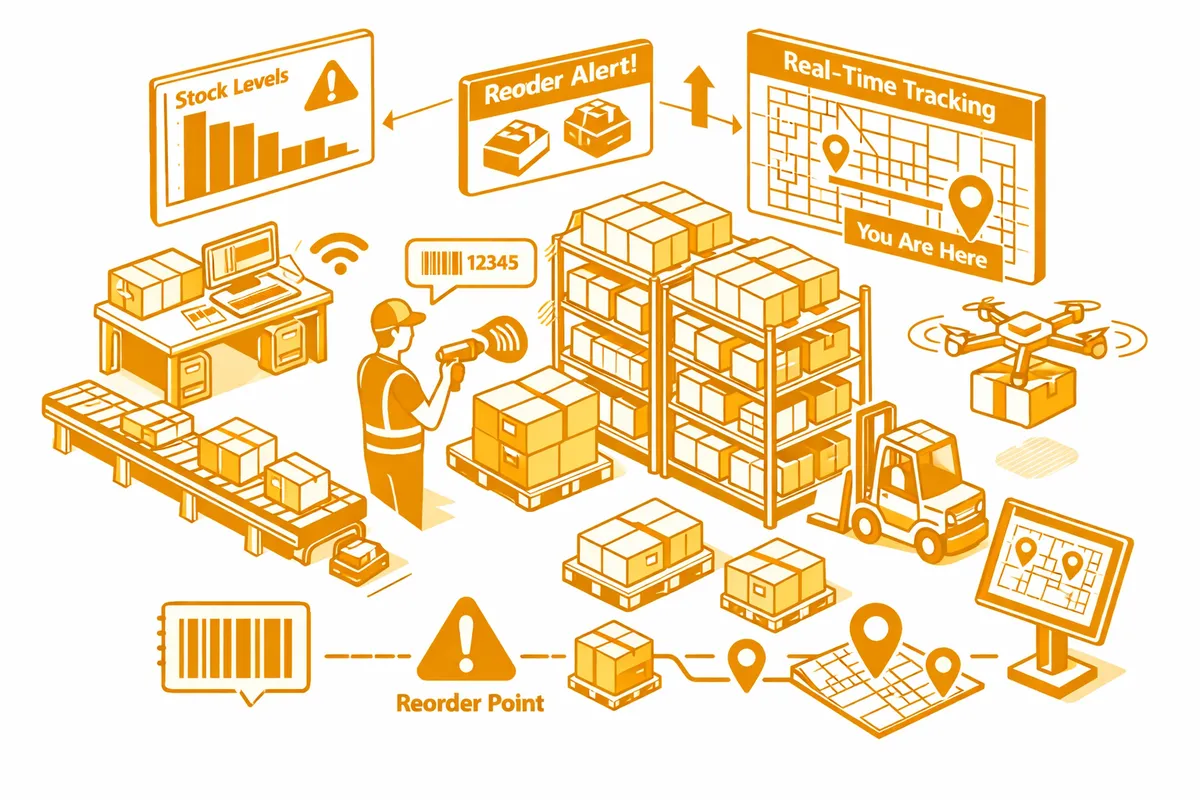
Before recommending any system, we document your current inventory flow from receiving to sale. For a bookstore on Clark Street, that means understanding how new and used titles enter the system, how you set prices on used stock with variable condition grades, how returns and buybacks get processed, and how your POS data currently reconciles with your physical count. For a restaurant on Devon Avenue, it means understanding your ordering cycle, your supplier relationships, your storage constraints, and where the gap between theoretical and actual food cost appears on your monthly P&L.
The diagnosis almost always reveals three or four specific failure points that account for the majority of the inventory loss or management overhead. We address those first rather than rebuilding the entire system from scratch. A bookstore that knows its biggest problem is used-book intake inconsistency gets a solution for that specific workflow before we address anything else.
System architecture choices follow from your business type. Specialty food retailers on Devon Avenue often benefit most from a combination of a proper POS integration and a mobile-first receiving workflow that lets staff count stock at the shelf rather than back at a desk. Yoga studios with retail components need inventory that lives inside their scheduling and membership platform rather than in a separate system. Bookstores with used inventory need flexible SKU structures that handle variable condition and pricing without requiring manual data entry on every title.
We build integrations with your existing POS, ecommerce platform, and accounting software so inventory data flows through your operations without manual re-entry. A sale at your Clark Street register decrements the same inventory count that your online store references. A receiving shipment on Devon Avenue posts to inventory and generates a cost-of-goods entry in QuickBooks in one step.
Industries We Serve in Edgewater
Independent bookstores on Clark Street and Broadway carry two fundamentally different inventory types: new titles with standard ISBN tracking and used titles with condition-dependent variable pricing that resists automation. We build systems that handle both, with barcode scanning for new arrivals and a rapid-intake workflow for used books that captures condition, suggested price, and category without requiring full cataloging on every volume. Inventory reports show slow-movers, reorder candidates, and the return-on-shelf-space metrics that help a buyer make better purchasing decisions.
Ethnic food shops and specialty grocers along Devon Avenue manage perishable inventory with culturally-specific demand curves that standard retail software misreads completely. We build demand forecasting that accounts for the community calendar: Eid, Lunar New Year, Diwali, and the summer months when ethnic restaurant traffic on Devon Avenue spikes. Expiration date tracking at the SKU level flags items before they become shrink rather than after.
The yoga and fitness studios on Granville Avenue and Broadway that sell retail merchandise alongside memberships need inventory systems that do not require a separate login and workflow from the membership management. We integrate apparel, supplement, and equipment inventory directly into the studio's existing scheduling platform so a front desk staff member checking someone in can see the retail stock level without switching applications.
Real estate offices near Berger Park and serving the Edgewater and Rogers Park corridor maintain marketing material inventories: brochures, branded items, sign installations. While this is not retail inventory, it has the same stockout and overorder cost structure. We build simple digital asset and physical material tracking systems that give principal brokers visibility into branch-level marketing supply without requiring spreadsheet reconciliation.
Coffee shops along Clark Street near the Edgewater Historical Society manage inventory across two distinct categories: the ingredients and supplies that drive daily production and the retail merchandise like whole-bean bags, branded mugs, and brewing equipment that supplements revenue. Most coffee shop inventory management defaults to eyeballing the first category and ignoring the second. We build systems that handle both, with reorder point alerts for espresso supplies and retail sell-through tracking for merchandise.
Dental and medical practices on Bryn Mawr Avenue and Granville Avenue manage clinical supply inventories that have regulatory compliance implications beyond standard retail. We build inventory tracking for disposable supplies, sterilization consumables, and sample medications that includes lot number tracking, expiration date management, and the audit trail documentation that practice compliance requires.
What to Expect Working With Us
1. Inventory audit and loss analysis. We review your current inventory records, your most recent physical count, your ordering history, and your sales data to calculate your actual inventory accuracy rate and identify where loss is occurring. For most Edgewater independent retailers, this reveals a shrink rate between 3 and 8 percent of cost of goods that a systematic inventory approach can reduce by half or more.
2. System design and integration mapping. We design the inventory architecture that fits your business: which platform, which integrations, which workflows get automated, and which require human decision-making. The design document shows you exactly how inventory will flow from supplier order through receiving through sale through reconciliation before any development work begins.
3. Implementation and data migration. We build the system, migrate your existing inventory data, and integrate with your POS, ecommerce platform, and accounting software. For Devon Avenue food businesses, implementation includes configuring product categories, shelf-life settings, and the culturally-specific demand parameters that make the forecasting useful rather than generic.
4. Staff training and 30-day accuracy baseline. Inventory management systems only work if staff use them correctly at receiving and at point of sale. We run training sessions calibrated to your staff's actual technical comfort level, then monitor system accuracy for 30 days post-launch and address any workflow gaps that emerge during real operations.