How We Build Employee Portals for Edgewater
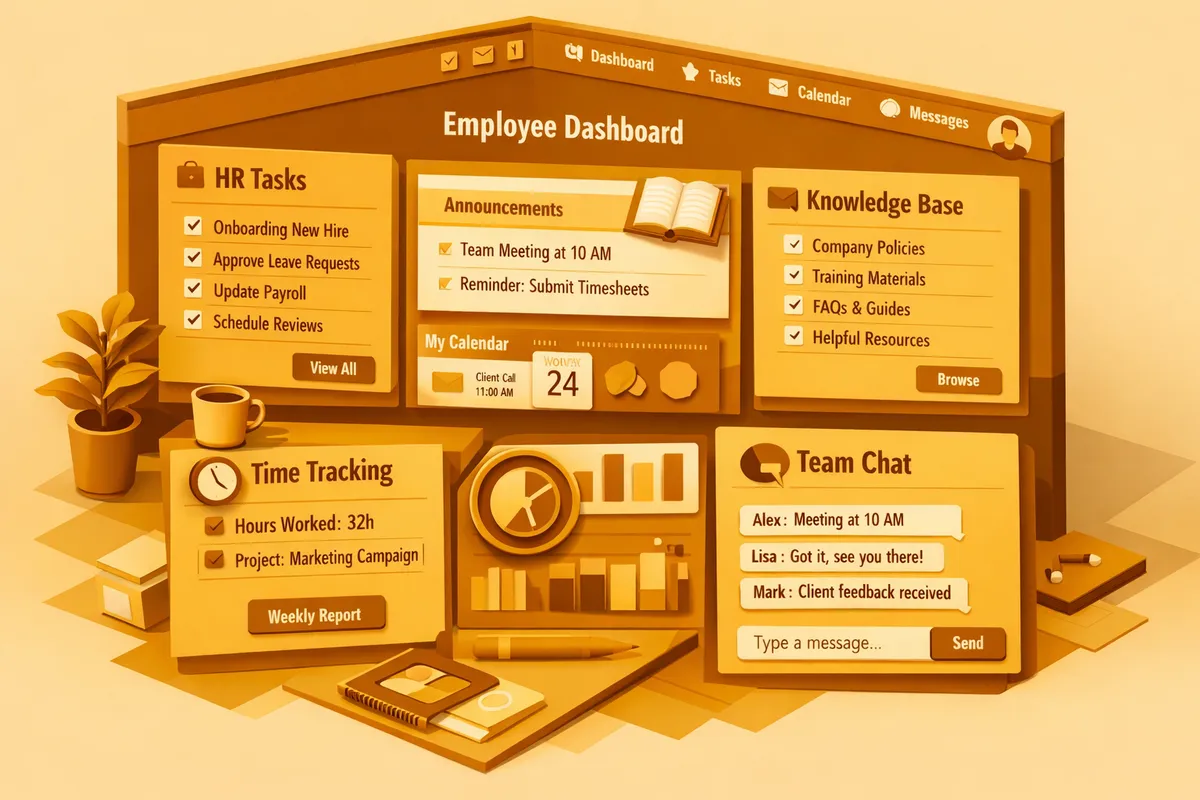
We start by mapping your actual operational workflows rather than imposing a generic HR software framework. For a medical practice on Granville Avenue, that means walking through how new providers get credentialed, how schedule changes get communicated, how patient intake staff track their hours, and how HR documents like offer letters and policy updates reach the full team. Each step that happens through email, phone call, or paper gets mapped as a candidate for portal automation.
The architecture follows the map. Most Edgewater small businesses do not need enterprise HRIS software. They need a purpose-built portal that handles the five to ten workflows where the friction is highest. We build custom solutions on a NextJS and PostgreSQL stack, or configure and extend a platform like BambooHR or Notion depending on the scope, and ensure the solution can be managed by whoever handles operations without requiring a developer to make a schedule change.
For Edgewater businesses with multilingual staff, the portal includes language preferences at the user level. A restaurant on Devon Avenue where front-of-house staff primarily navigate in Spanish should have a portal that meets them there, not one that requires English fluency to submit a time-off request.
We build with mobile-first architecture. Edgewater's service industry workforce checks schedules, requests time off, and accesses HR documents from their phones, not from a desktop in a back office. Every portal function works cleanly on an iPhone or Android device with the same reliability it has on a desktop browser.
Industries We Serve in Edgewater
Dental and medical practices along Bryn Mawr Avenue and Granville Avenue face credentialing, scheduling, and compliance documentation requirements that paper-based systems handle poorly at scale. We build portals that manage provider license tracking and renewal reminders, patient-hour reporting by staff member, schedule request workflows, and access-controlled policy document libraries so the front desk team can find the updated OSHA form without calling the office manager.
Yoga and fitness studios on Broadway and Granville Avenue run on instructor availability and substitution logistics that change constantly. A studio portal handles instructor shift preferences, sub requests visible to the full instructor pool, class count tracking for payroll calculations, and automated notifications when a class is understaffed. The scheduling chaos that plagues multi-instructor studios becomes manageable when everyone accesses the same real-time data.
The ethnic restaurants along Devon Avenue and Broadway often employ teams across two distinct language groups: back-of-house and front-of-house staff who may not share a common working language with management. Portals with language-preference settings and translated policy documents reduce miscommunication around scheduling, tip distribution, and HR policy compliance.
Independent bookstores and specialty retailers on Clark Street manage small teams where every person wears multiple hats. A portal that handles shift scheduling, document storage for employment agreements, and a shared task list for opening and closing procedures reduces the management overhead that makes running a small retail operation feel like a second full-time job on top of the actual work.
Real estate offices near Berger Park and serving the Edgewater and Rogers Park market have agents who are independent contractors operationally but employees for compliance and licensing purposes. Portals that handle licensing renewal tracking, commission document access, listing assignment workflows, and internal communication channels give principal brokers visibility into their team's activity without requiring constant check-in calls.
Coffee shops along Clark Street and Broadway manage part-time staff with variable availability across seven-day operating schedules. A portal with self-service shift swap requests, manager-approval workflows, availability update submissions, and automated schedule publication eliminates the Sunday night group text and the Monday morning "who's covering the opening shift" crisis.
What to Expect Working With Us
1. Workflow audit and priority ranking. We interview whoever currently owns scheduling, HR, and internal communications for your business and document every manual process in detail. For a yoga studio on Granville Avenue, that conversation typically reveals that three to five hours per week of management time is consumed by tasks a portal could handle in minutes. We rank those tasks by time cost and error rate to determine which portal features to build first.
2. Portal build and access control design. We build the portal with role-based access: what a barista sees on Clark Street is different from what the shop owner sees. Sensitive HR documents are accessible only to managers. Scheduling is visible to all staff but editable by the right tier. We design the permission structure to match your actual organizational hierarchy, not a generic org chart template.
3. Staff onboarding and adoption plan. A portal that your team does not use solves nothing. We design the rollout sequence for your specific workforce, including in-person walkthroughs for less digitally fluent staff, mobile setup support, and a 30-day adoption check-in where we assess usage and address barriers.
4. Ongoing support and expansion. Employee portals grow with your business. The core scheduling and document features you launch with in year one often expand to performance tracking, onboarding checklists, or benefits management in year two. We build the initial architecture to accommodate that growth without requiring a rebuild.