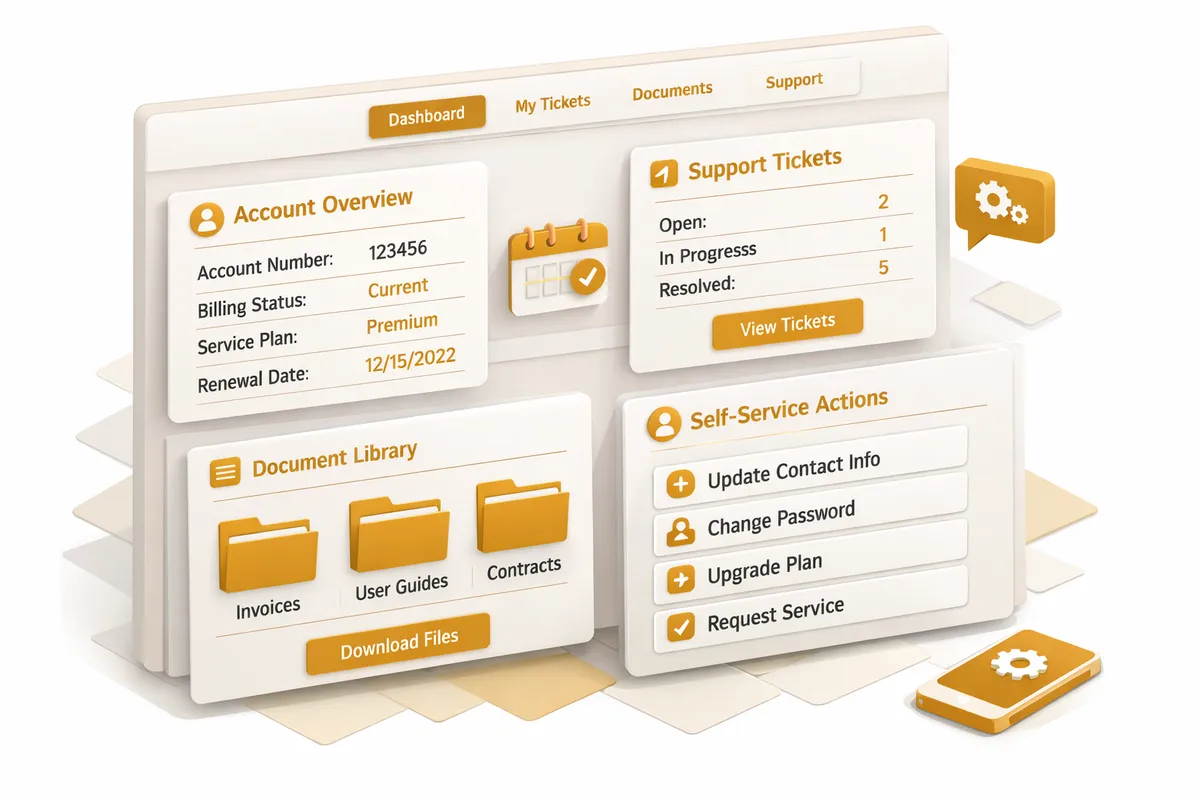
How We Build Customer Portals for Edgewater
Healthcare portal development for Edgewater practices begins with a HIPAA technical safeguards review. We assess the categories of protected health information the portal will handle, design the security architecture to meet the safeguards required for those data types, and document the controls for your compliance review before build begins. There is no shortcut here. The practices on Broadway that serve patients from the Edgewater Historical Society's community events to the morning clinic near Loyola University's adjacent campus hold information that requires proper protection.
Multilingual support is a first-order requirement for Edgewater portals, not an optional add-on. We build language selection into the portal architecture from the start, allowing patients to receive forms, instructions, and notifications in their preferred language. For the most common languages in Edgewater's patient population, we can support full interface translation. For less common languages, we can at minimum provide translated versions of the highest-stakes documents: pre-procedure instructions, consent forms, and post-visit care summaries.
For hospitality and wellness businesses, portal design begins with the customer journey and the specific moments where self-service access adds the most value. A Sheridan Road property management company and a Clark Street yoga studio have different portal architectures. The property company needs booking history, invoice access, and maintenance request tracking. The yoga studio needs class booking, membership status, attendance history, and payment management. We design to the specific use case rather than applying a generic template.
Integration with the practice management or booking systems already in use is standard. For healthcare practices, we connect to the EHR or practice management system to pull appointment data and push completed intake forms. For hospitality and wellness businesses, we connect to the booking or membership platform to provide live account data. The integration layer keeps the portal current automatically.
Industries We Serve in Edgewater
Dental and medical practices on Broadway and Bryn Mawr Avenue build patient portals that provide appointment scheduling and confirmation, pre-visit intake form completion, secure messaging with the care team, lab and imaging result delivery, post-visit summary access, and insurance explanation of benefits documentation. For practices serving non-English-speaking populations, multilingual form and instruction support is built into the portal from the start.
Physical therapy and rehabilitation practices near Berger Park and along Clark Street use portals that allow patients to track treatment plans, log home exercise completion, review video instructions for prescribed exercises, and communicate with their treating clinician between appointments. A physical therapy portal that keeps the patient connected to their program between visits improves adherence and outcomes, which is the single best thing a practice can do for patient retention.
Yoga, fitness, and wellness studios along Granville Avenue and Clark Street use membership management portals that give members access to class schedules, booking history, membership status and renewal, workshop registration, and billing records. For studios operating multiple membership tiers, the portal enforces each member's specific benefits and prevents the confusion that comes from staff manually tracking tier-level access.
Short-term rental and property management companies serving the Sheridan Road and Edgewater Beach corridor build guest portals that provide booking history, property access instructions, maintenance request submission, invoice access, and return guest discounts. Property managers who self-manage buildings on Sheridan Road benefit from portals that handle guest communication volume without proportional staff increases.
Real estate offices on Clark Street and Granville Avenue build client portals that give buyers and sellers access to listing documents, offer history, inspection reports, closing timeline, and transaction communication. A real estate transaction generates a significant volume of documents and coordination steps. A portal that surfaces all of it in one place for the client reduces the anxiety that drives the calls and emails that consume agent time.
Mental health and counseling practices near Loyola University's adjacent campus provide client portals for secure messaging, appointment scheduling, intake documentation, and billing. For counseling practices, the secure messaging function is particularly important: a client who needs to reach their therapist between sessions benefits from a channel that is documentable and secure rather than a personal email or text message.
What to Expect Working With Us
1. HIPAA compliance review and security architecture design for healthcare portals. For any Edgewater practice that will carry protected health information in the portal, we complete a technical safeguards assessment and document the security controls before build begins. The documentation is suitable for your HIPAA compliance officer's review and can be incorporated into your organization's HIPAA risk assessment.
2. Multilingual content and interface planning. We identify the languages used by your patient or client population, prioritize translation requirements, and plan the multilingual content architecture before design begins. For healthcare portals, translated intake forms and care instructions are built in parallel with the English-language versions.
3. Integration assessment and connection to existing systems. We assess the practice management, EHR, booking, or membership systems you already use and design the integration that keeps portal data current automatically. Integration scope is defined in the discovery phase and forms part of the project specification before build begins.
4. Pilot launch with a representative patient or client group. We launch with a small group from your existing patient or client base who reflect the diversity of your full population, gather feedback on language accessibility and ease of use, and refine before full rollout.