How We Build Business Process Automation for Edgewater
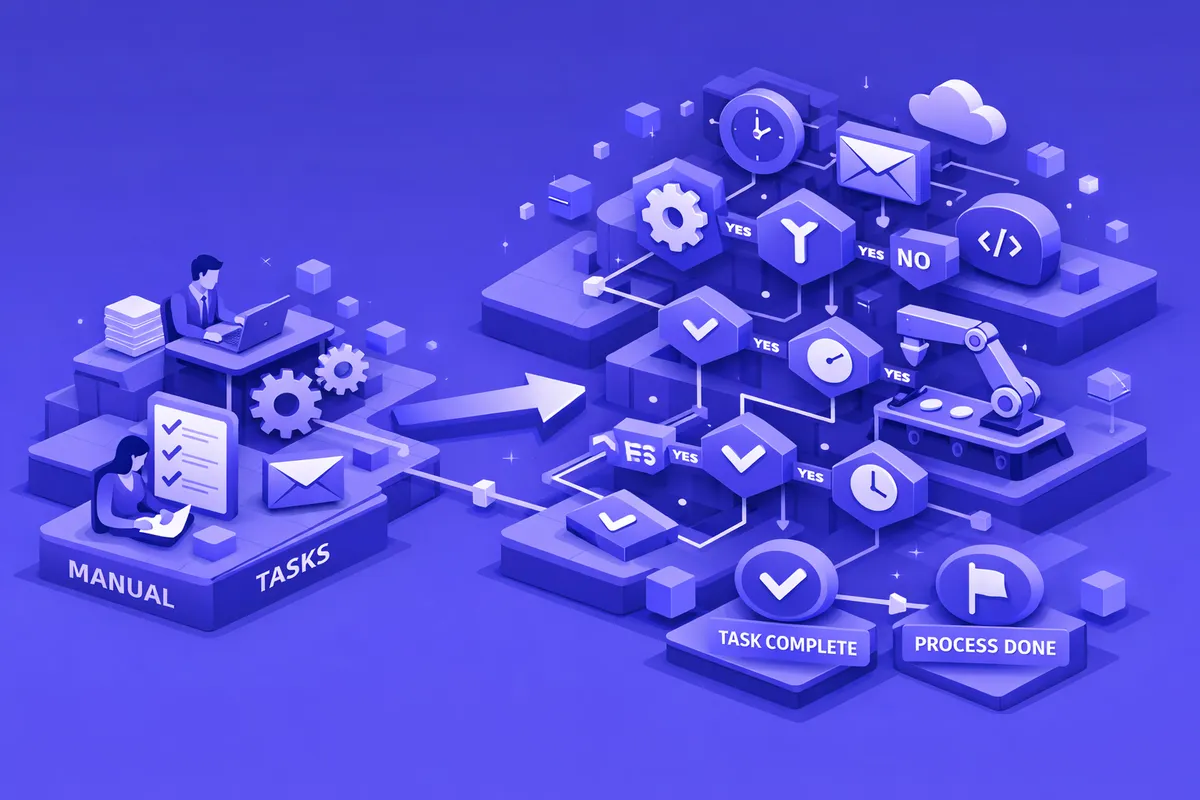
We begin by sitting with the people who do the work. For a dental practice on Bryn Mawr Avenue, that means an afternoon at the front desk watching how a high-rise patient booking differs from a walk-in from the side streets. We map every recurring process end to end: where it starts, who touches it, which tools it passes through, and where information gets re-entered by hand.
From that map we build a prioritized automation plan. The first builds target the processes that cost the most staff time or fail most often under pressure. For an Edgewater business straddling two audiences, that is usually intake, scheduling, billing handoffs, and the follow-up sequence that turns a one-time visitor into a repeat customer.
We build on the tools you already run. Most Edgewater businesses have a booking platform, a payment processor, a CRM or contact list, and an accounting tool that do not talk to each other. We connect them, so a confirmed appointment near Sheridan Road automatically updates the calendar, triggers the reminder, opens the intake form, and posts the record to billing without a person bridging each step. Where a native connector does not exist, we build lightweight middleware sized for a small operation, not an enterprise.
Every workflow is tested against real Edgewater scenarios before it goes live. We document each one in plain language, train your team on the parts they touch, and monitor the system for the first thirty days to catch edge cases the map did not predict.
Industries We Serve in Edgewater
Dental and medical practices along Bryn Mawr Avenue carry the heaviest process load in the neighborhood. Business process automation connects their booking system, insurance verification, intake forms, and recall reminders into one chain, so a front desk serving both Sheridan Road high-rise patients and bungalow-block regulars manages exceptions instead of routine data entry across four disconnected tools.
Independent bookstores on Clark Street run inventory, special orders, event RSVPs, and a loyal customer list that rarely connect. We automate the reorder triggers, the special-order status updates that customers currently call to check, and the event reminder sequence, freeing staff near the Edgewater Historical Society to do the curation work that defines an independent shop.
Yoga and wellness studios off Broadway and Granville Avenue lose owner hours to membership renewals, class waitlists, and lapsed-client outreach. Process automation links the booking platform to the CRM so renewals, waitlist promotions, and re-engagement messages run on schedule, which matters most through the slower months after Berger Park's summer season ends.
Real estate offices on Sheridan Road work a pipeline of leads, listings, and transaction milestones that demands constant manual tracking. We automate lead follow-up, listing alerts for active buyers, and the closing-milestone communications, so agents working Edgewater's spring lease cycle keep deals moving without dropping a touchpoint.
Coffee shops and cafes near the Edgewater Beach Apartments handle daily sales reconciliation, vendor reordering, and loyalty programs by hand. Business process automation closes the books automatically each night, flags low stock before a Saturday rush, and runs the loyalty communications, returning the owner's morning to the counter.
Specialty retail and service shops along Granville Avenue and Devon Avenue juggle purchase follow-up, supplier invoices, and review requests across separate systems. We automate the post-sale sequence, the invoice intake and routing, and the review prompt, so a small Edgewater shop competes on operational consistency without adding an administrative role.
What to Expect Working With Us
1. Process discovery at your counter. We spend real time inside your Edgewater operation, watching how work actually moves rather than how an org chart says it should. We leave with a documented map of every recurring process and a ranked list of automation opportunities with estimated time savings.
2. Phased automation build. We build in priority order, starting with the workflows that drain the most staff time or break most often. Each automation is configured on your existing tools where possible and tested against real scenarios from your business before activation.
3. Launch through an Edgewater cycle. We activate your automations and monitor them for thirty days, deliberately spanning a known demand pattern such as the Loyola September surge or the spring real estate cycle, so we catch how the system behaves under both of Edgewater's clocks.
4. Documentation and team handoff. We document every workflow in language your staff can use, train the team on the steps they interact with, and set up failure alerts so problems surface in hours, not weeks. You own the system; we make sure you can run it.