How We Build AI Sales Intelligence for Edgewater
We begin with a sales process and pipeline audit. We document how your Edgewater business acquires leads or inquiries, how those inquiries move through your conversion process, and what behavioral signals are currently available in your existing systems. For a real estate office, that might mean reviewing CRM records, email communication logs, and showing activity data. For a dental practice, it means reviewing new patient inquiry records, follow-up call logs, and conversion timing data.
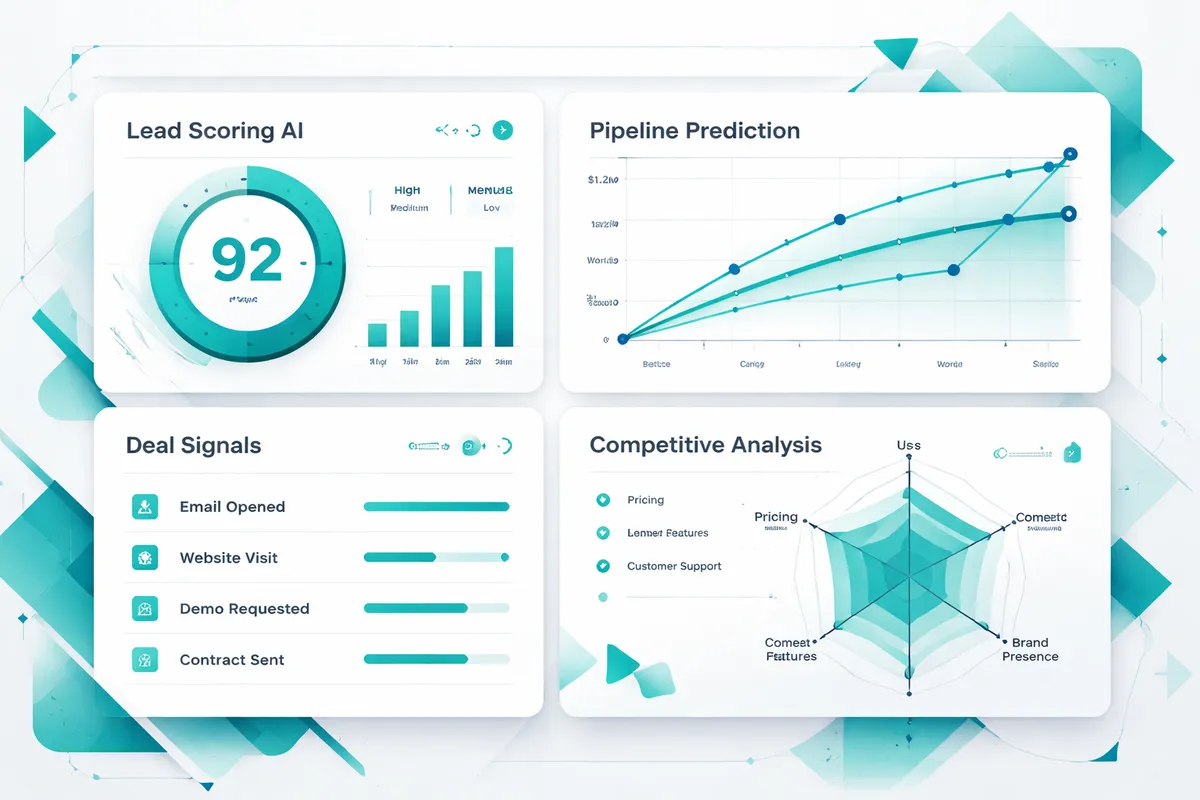
From the pipeline audit, we design the scoring model. The scoring model assigns conversion probability to each lead or opportunity based on the behavioral signals available in your data. For an Edgewater business with limited historical data, we begin with a rule-based scoring model that operationalizes the patterns experienced salespeople already know. For businesses with richer historical data, we build statistical models that identify conversion signals from your actual conversion history.
We integrate the scoring model with the CRM or pipeline management system your Edgewater business uses, so prioritized lead scores appear within the tool your team already uses rather than requiring them to consult a separate analytics platform. Prioritization is useful only if it is visible in the moment when outreach decisions are being made.
We configure the alerting and notification system that surfaces time-sensitive signals. When a lead who has been quiet for two weeks re-engages with your website, your team receives an alert. When a proposal that has been under review crosses a configurable time threshold without a response, your team receives a follow-up prompt. These alerts bring sales intelligence into the daily workflow without requiring manual review of analytics dashboards.
Industries We Serve in Edgewater
Real estate offices along Sheridan Road and near the Edgewater Beach Apartments use AI sales intelligence to score buyer and seller leads by conversion probability, identify prospects with active purchase signals, and manage follow-up timing across large lead databases. Agents who work from AI-prioritized lead lists spend more time on conversations that are most likely to result in transactions and less time on leads that are years from a decision.
Dental and medical practices on Bryn Mawr Avenue and along Broadway use AI sales intelligence to manage new patient inquiry conversion. Inquiry volume is relatively low, but each conversion decision is high-value. AI lead scoring helps front-desk staff prioritize follow-up on the inquiries most likely to convert, reducing the time between inquiry and scheduled appointment for the most motivated prospective patients.
Yoga and wellness studios near Berger Park and along Granville Avenue use AI sales intelligence to score trial class participants by membership conversion probability. A trial participant who attended two classes and engaged with post-class communication is a different conversion opportunity than one who attended once and has not responded since. AI prioritization directs the studio's conversion outreach toward the participants most likely to become paying members.
Professional services firms serving Edgewater clients use AI sales intelligence to manage proposal pipelines and client opportunity development. A law office or consulting firm with multiple outstanding proposals uses AI scoring to prioritize follow-up on the proposals most likely to convert and to flag proposals that have gone quiet past expected decision timelines.
Specialty retailers and boutiques on Granville Avenue and Clark Street use AI sales intelligence to manage high-value customer relationships and re-engagement of lapsed customers. AI analysis of purchase history and communication engagement identifies which lapsed customers are most likely to respond to a re-engagement offer and which high-value customers are at risk of reducing their purchase frequency.
Independent restaurants and cafes on Clark Street and Broadway with event booking, catering, or private dining inquiry pipelines use AI sales intelligence to track and prioritize event inquiries. A restaurant whose private dining business represents a meaningful revenue share uses inquiry scoring to identify which event leads are most likely to book and to route follow-up to the appropriate team member at the right time.
What to Expect Working With Us
1. Pipeline and data audit. We document your Edgewater business's sales or inquiry process, assess the behavioral data available in your existing systems, and design the scoring model appropriate for your pipeline characteristics and data situation. This phase produces a clear specification of what AI sales intelligence can deliver for your specific pipeline.
2. Scoring model development and calibration. We build the lead or opportunity scoring model, calibrate it against your historical conversion data where available, and validate its prioritization logic against cases where outcomes are already known. We are transparent about the confidence we have in the model's predictions given your data quality and volume.
3. CRM integration and alert configuration. We integrate the scoring model with your CRM or pipeline management system, configure the alert and notification logic that surfaces time-sensitive signals, and train your team on how to interpret and act on AI prioritization outputs within their existing workflow.
4. Performance tracking and model refinement. We track conversion outcomes for scored leads, compare the conversion rate of high-priority leads against the baseline rate for unscored follow-up, and refine the scoring model as new conversion data accumulates. Sales intelligence systems improve continuously as they accumulate more outcome data specific to your Edgewater business.