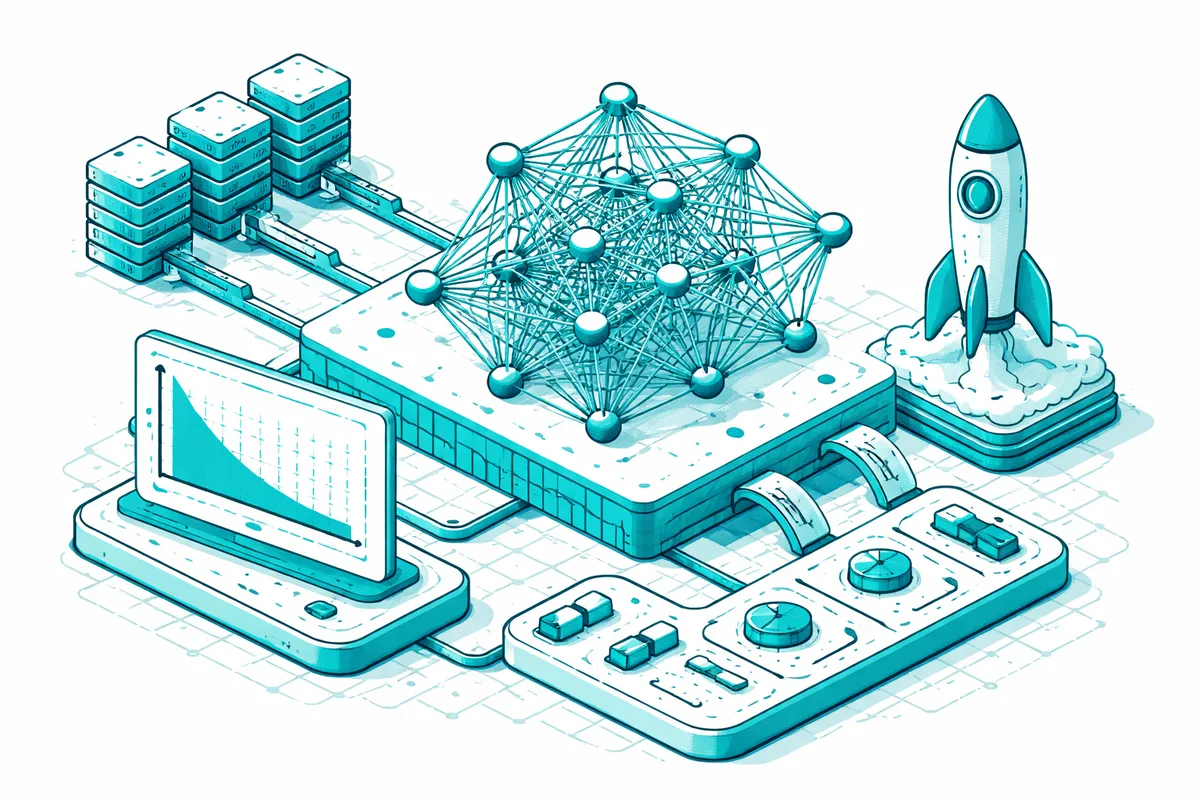
How We Build AI Model Training for Edgewater
We begin with a training data assessment. Custom AI model training requires a meaningful volume of labeled examples in your specific domain. For a classification model that categorizes customer inquiries, that means a labeled dataset of several hundred to several thousand real customer inquiries from your Edgewater business. For a predictive model that forecasts daily demand at a restaurant, it means one to three years of daily transaction records, ideally with associated contextual factors. We assess your available training data before committing to a training project and identify what data preparation is needed before training can begin.
From the training data assessment, we design the model architecture and training approach. For most Edgewater small business applications, we use fine-tuning of an existing foundation model rather than training from scratch. Fine-tuning adapts a pre-trained model to your specific task using your specific data, producing a model that is calibrated to your context without requiring the massive compute resources that training from scratch would demand.
Data preparation is often the most labor-intensive phase. Raw business data is rarely clean enough for model training. Patient records need anonymization. Customer inquiries need labeling. Transaction records need validation and cleaning. We handle data preparation with appropriate attention to privacy requirements, particularly for healthcare practices subject to HIPAA.
We train the model, evaluate its performance against held-out validation data, and iterate on training parameters until the model meets the performance threshold defined in the project scope. We do not deploy a model to production until it has demonstrated performance that justifies replacing or supplementing the general AI approach it is meant to improve.
Industries We Serve in Edgewater
Dental and medical practices on Bryn Mawr Avenue and along Broadway train custom AI models for patient inquiry classification, appointment demand prediction, and clinical documentation assistance. A dental practice with several years of scheduling records and patient communication history has the data foundation for models that outperform general alternatives on its specific operational tasks. Custom models for healthcare practices are designed within HIPAA-compliant data handling frameworks.
Ethnic restaurants and cafes on Clark Street and Broadway train custom AI models for demand forecasting, menu performance prediction, and customer inquiry classification. A restaurant with two or more years of daily transaction data has enough history to build a demand forecasting model that accounts for its specific cuisine's seasonal patterns and the neighborhood's event calendar, including lakefront summer traffic and proximity to Loyola University events.
Yoga and wellness studios near Berger Park and along Granville Avenue train custom AI models for membership retention prediction and class attendance forecasting. A studio with three or more years of member attendance records and renewal history has the data to build a retention model that identifies at-risk members specific to its member population, rather than relying on industry-average retention signals.
Real estate offices along Sheridan Road and near the Edgewater Beach Apartments train custom AI models for property valuation, lead scoring, and market trend analysis specific to the Edgewater and broader North Side market. A local office with years of transaction records and showing data has neighborhood-specific intelligence that general real estate AI models do not.
Specialty retailers and boutiques on Granville Avenue and Clark Street train custom AI models for inventory demand forecasting and product image classification. A boutique that has accumulated years of purchase history and customer preference data can train demand models calibrated to its specific product categories and customer demographics rather than using generic retail demand forecasting.
Professional services firms serving Edgewater clients train custom AI models for document classification, client intent prediction, and work scope estimation. A law office or accounting practice with a substantial archive of prior work products has the training data foundation for models that classify and route documents more accurately than general alternatives.
What to Expect Working With Us
1. Training data assessment and project scoping. We assess your available training data, identify the performance gap a custom model would address, and scope the training project based on data volume, model complexity, and expected performance improvement. We are direct about whether your data situation justifies custom training or whether a configuration-based approach to an existing model would produce similar results at lower cost.
2. Data preparation and labeling. We prepare your training data for model training: cleaning, formatting, labeling where needed, and applying appropriate privacy protections for sensitive business data. Data preparation quality directly determines model performance, and we treat it as the most important phase of the project.
3. Model training and evaluation. We train the model using the prepared data, evaluate performance against validation data, and iterate on training parameters to optimize performance on your specific task. We report training results transparently and compare performance to the baseline approach the custom model is intended to improve.
4. Deployment and performance monitoring. We deploy the trained model to your Edgewater business's operational environment, integrate it with the systems it serves, and monitor performance in production over the first operating period. Custom models require periodic retraining as business data accumulates and conditions change.