How We Build AI Integration Services for Edgewater
We begin with an integration assessment. We document your Edgewater business's existing technology stack, assess the integration capabilities of each system (API access, data export formats, webhook support), and identify the AI capabilities that would produce the most value when connected to your current infrastructure. The assessment produces a prioritized integration roadmap before any development work begins.
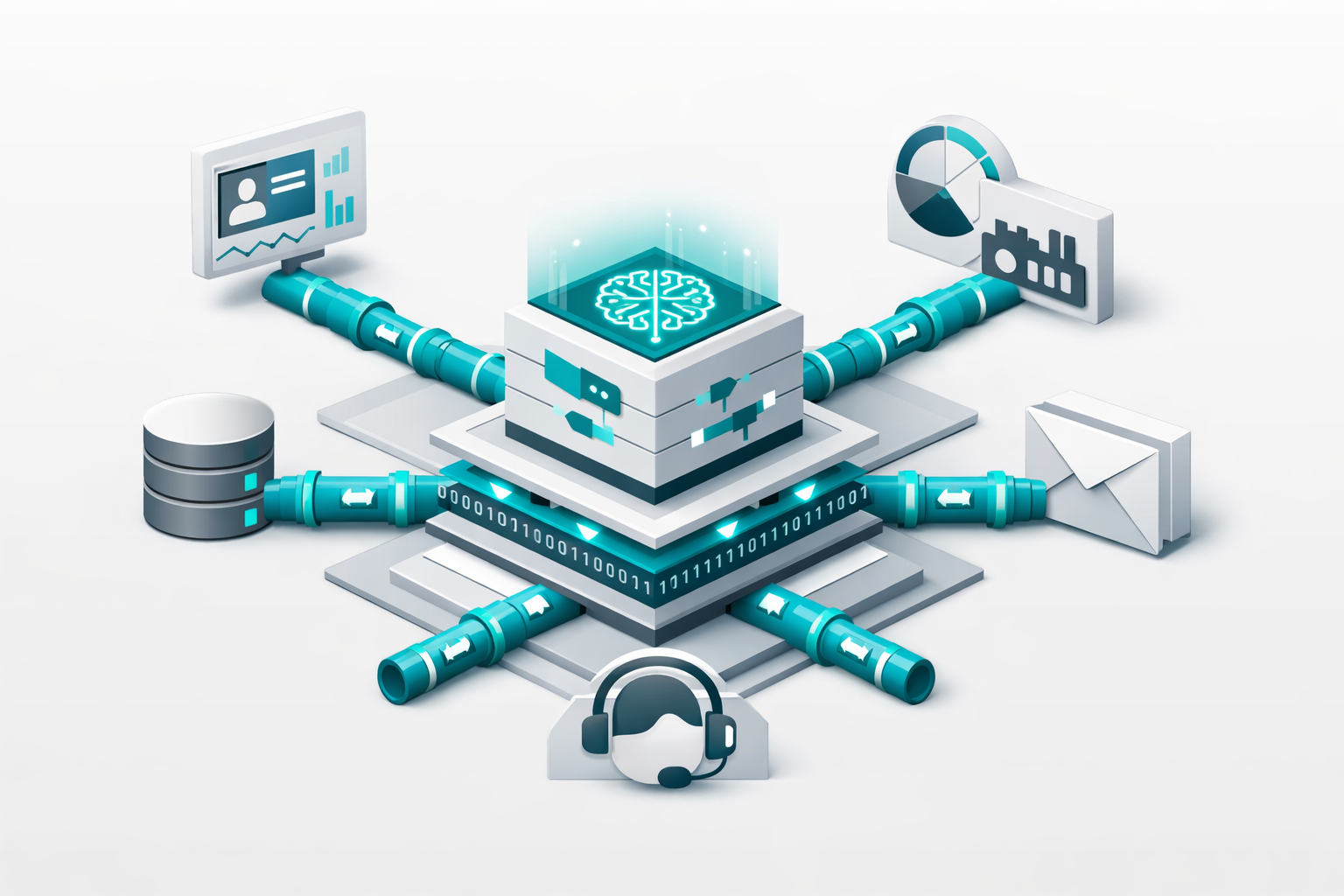
For each prioritized integration, we design the connection architecture: how data flows from your existing system to the AI service, how AI outputs are delivered back to your system or to your staff, and how the integration handles errors or service interruptions. For a dental practice, this might mean designing how patient scheduling data flows to an AI demand prediction service and how the service's output appears in the scheduling interface. For a restaurant, it might mean designing how daily sales data flows to an AI inventory analysis service and how recommendations appear in the inventory management workflow.
We build the integrations using the API capabilities of both your existing systems and the AI services being connected. For systems with robust APIs, we build direct integrations that pass data in real time. For systems with limited API access, we build scheduled integration flows that process regular data exports. We test every integration against real data and in conditions that simulate normal business operation before moving to production.
We document each integration so your Edgewater business can understand what is connected, how it works, and what to do when something goes wrong. Integration documentation reduces dependence on our team for ongoing support and enables your staff to troubleshoot basic issues independently.
Industries We Serve in Edgewater
Dental and medical practices on Bryn Mawr Avenue and along Broadway use AI integration services to connect existing practice management software with AI-powered patient communication, demand prediction, and clinical documentation tools. A practice that connects its scheduling system to an AI demand prediction service can fill cancellation slots more efficiently without replacing the scheduling software its front desk staff has used for years.
Ethnic restaurants and cafes on Clark Street and Broadway use AI integration services to connect existing point-of-sale systems with AI demand forecasting, menu performance analysis, and customer re-engagement tools. A restaurant that connects its POS data to an AI analysis service gets weekly insights about which menu items are driving foot traffic and which are consuming kitchen capacity without proportional revenue.
Yoga and wellness studios near Berger Park and along Granville Avenue use AI integration services to connect member management software with AI retention prediction, personalized communication tools, and class attendance forecasting. A studio that connects its member data to an AI retention model identifies at-risk members two to three months before their renewal date, giving the studio time to re-engage before cancellation occurs.
Real estate offices along Sheridan Road and near the Edgewater Beach Apartments use AI integration services to connect CRM and listing systems with AI lead scoring, market analysis, and automated follow-up tools. Agents who receive AI-scored lead lists prioritize their outreach more effectively than those working through all leads without intelligence about which are most likely to convert.
Specialty retailers and boutiques on Granville Avenue and Clark Street use AI integration services to connect point-of-sale and inventory systems with AI demand forecasting and customer behavior analysis. A gift shop near Granville Avenue that connects its inventory data to a demand forecasting service carries less overstock and fewer out-of-stock situations during high-demand periods like the holiday season.
Professional services firms serving Edgewater clients use AI integration services to connect CRM, billing, and project management systems with AI-powered workflow automation, document generation, and client communication tools. Firms that connect their existing practice management software to AI workflow automation reduce administrative time per client without replacing the systems their staff depends on.
What to Expect Working With Us
1. Integration assessment and opportunity prioritization. We document your existing technology stack, assess integration capabilities, and identify the AI integration opportunities most likely to produce measurable value for your Edgewater business. This phase produces a prioritized integration roadmap with realistic effort and timeline estimates.
2. Integration architecture and design. For each prioritized integration, we design the data flow architecture, specify the error handling and monitoring approach, and review the design with your team before development begins. Design review ensures that the integration will work within your operational environment before we build it.
3. Development and testing. We build the integration connections, configure AI service parameters, and test against real data from your Edgewater business systems. Integration testing validates both data accuracy and operational reliability across normal and edge case conditions.
4. Deployment and monitoring. We deploy integrations to production, configure monitoring alerts for integration failures, and monitor performance through the first weeks of operation. We document each integration and train your team on how to identify and report issues.