How We Build AI Document Processing for Edgewater
We begin with a document workflow audit. We identify the document types your Edgewater business processes, the volume of each type, the current manual steps involved in handling each document type, and the systems that each document needs to populate or interact with. For a dental practice, the audit typically covers intake forms, insurance cards, explanation of benefits documents, and clinical records. For a law office, it covers incoming client documents, court filings, and internal correspondence.
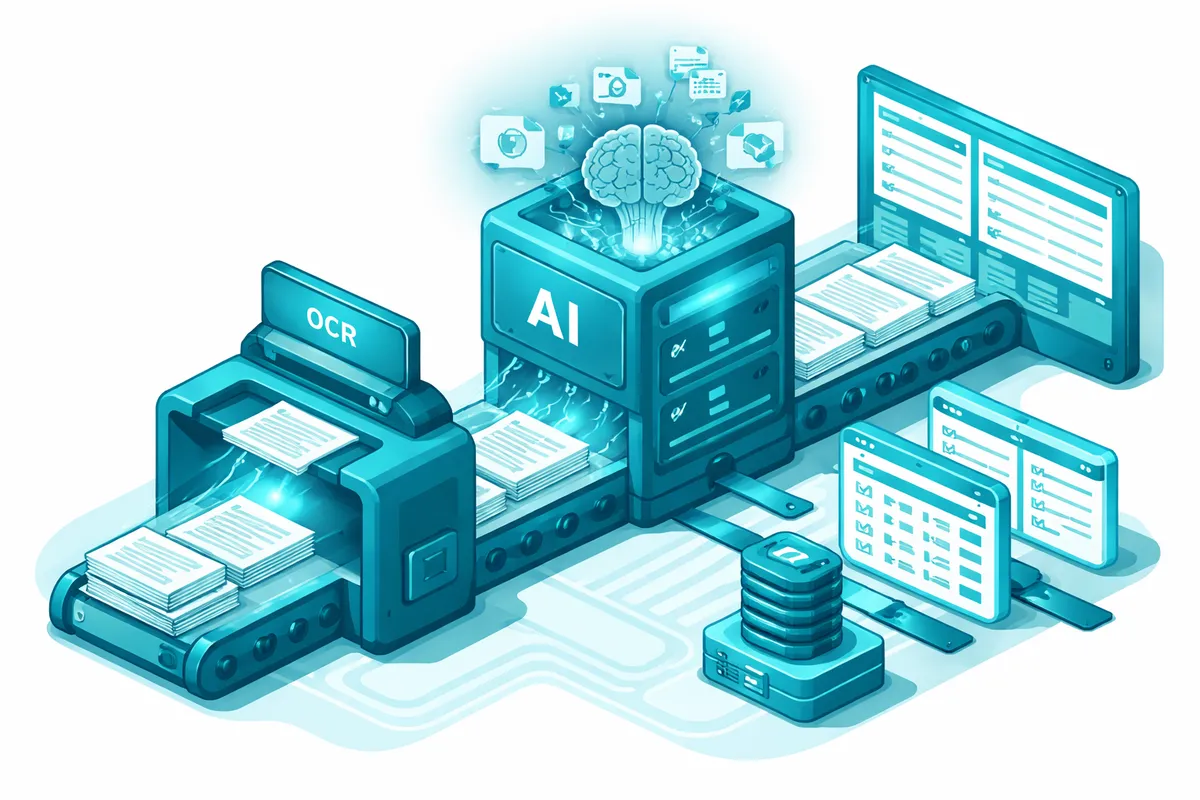
From the workflow audit, we design the AI document processing architecture. For each document type, we specify the extraction logic: which fields need to be captured, what validation rules apply, how ambiguous or missing data should be handled, and where extracted data needs to flow. We design for the actual document quality your Edgewater business receives, which often includes handwritten forms, scanned paper documents, and inconsistently formatted electronic documents.
We build and test the extraction logic against representative document samples from your actual document corpus. Document processing accuracy depends on the quality of the training data and the specificity of the extraction rules. We test against a representative sample of at least fifty to one hundred documents per type before declaring an extractor production-ready.
We integrate the document processing output with your existing business systems. For a dental practice, that means populating the practice management system with extracted patient data. For a law office, that means filing extracted documents in the practice management system and making them searchable by matter, date, and document type.
Industries We Serve in Edgewater
Dental and medical practices on Bryn Mawr Avenue and along Broadway use AI document processing to automate new patient intake, insurance verification preparation, and clinical document management. Practices that automate intake processing recover staff hours that can be redirected to patient care and schedule management. Practices with high new patient volume see the largest time savings.
Law offices and legal services firms near the Sheridan Road corridor use AI document processing to manage incoming client documents, court filings, and correspondence. AI document classification and routing ensures that each incoming document reaches the right matter file immediately rather than sitting in a general inbox waiting for manual filing. Searchable document archives reduce the time attorneys spend locating specific documents across large matter files.
Property management companies near the Edgewater Beach Apartments and along the lakefront corridor use AI document processing to handle lease agreements, maintenance request documentation, inspection reports, and tenant correspondence at scale. Automated lease data extraction populates property management systems with accurate tenant and lease term information without manual re-entry.
Real estate offices along Sheridan Road use AI document processing to manage transaction documents, purchase contracts, disclosure forms, and closing documentation. AI extraction of key transaction terms into a deal management system gives agents and administrators a clear view of transaction status without requiring manual review of each document.
Professional services and accounting firms serving Edgewater clients use AI document processing to handle client financial documents, tax forms, and correspondence. Automated extraction of key financial data from client-supplied documents reduces the manual data entry that consumes staff time during high-volume periods like tax season.
Nonprofit and social service organizations in Edgewater use AI document processing to manage grant documentation, client intake forms, program enrollment records, and compliance documentation. For organizations serving Edgewater's diverse communities, AI document processing that handles multilingual documents reduces the administrative burden of serving clients who submit documentation in multiple languages.
What to Expect Working With Us
1. Document workflow audit and prioritization. We inventory the document types your Edgewater business processes, measure the manual work involved in handling each type, and identify the document workflows where automation will produce the highest time savings and accuracy improvements. This phase takes two to three weeks and produces a clear prioritized implementation plan.
2. Extraction logic development and testing. We build the AI extraction rules for each prioritized document type, test against representative samples from your actual document corpus, and validate accuracy before moving to integration. We are transparent about extraction accuracy rates and realistic about the document types where AI processing is most and least reliable.
3. System integration and workflow configuration. We integrate the document processing output with your existing business systems, configure the routing and filing logic for each document type, and build the exception handling workflows for documents the AI cannot process with sufficient confidence.
4. Production deployment and accuracy monitoring. We deploy the document processing system, monitor extraction accuracy through the first weeks of production operation, and refine the extraction logic as new document variations are encountered. Document processing accuracy typically improves over the first sixty to ninety days of production operation as the system encounters and learns from more document samples.