How We Build Workflow Automation for East Garfield Park
We start with the constraint that matters most on the West Side: lean teams doing complex work. Our first question is always which manual processes consume the most time from the fewest people. For food businesses at Hatchery Chicago, that is usually order management and supplier coordination. For nonprofits, it is grant reporting and participant intake. For service businesses on Madison Street, it is appointment management and customer follow-up. We build the automation that recovers the most hours first, so the value is visible before the full system is deployed.
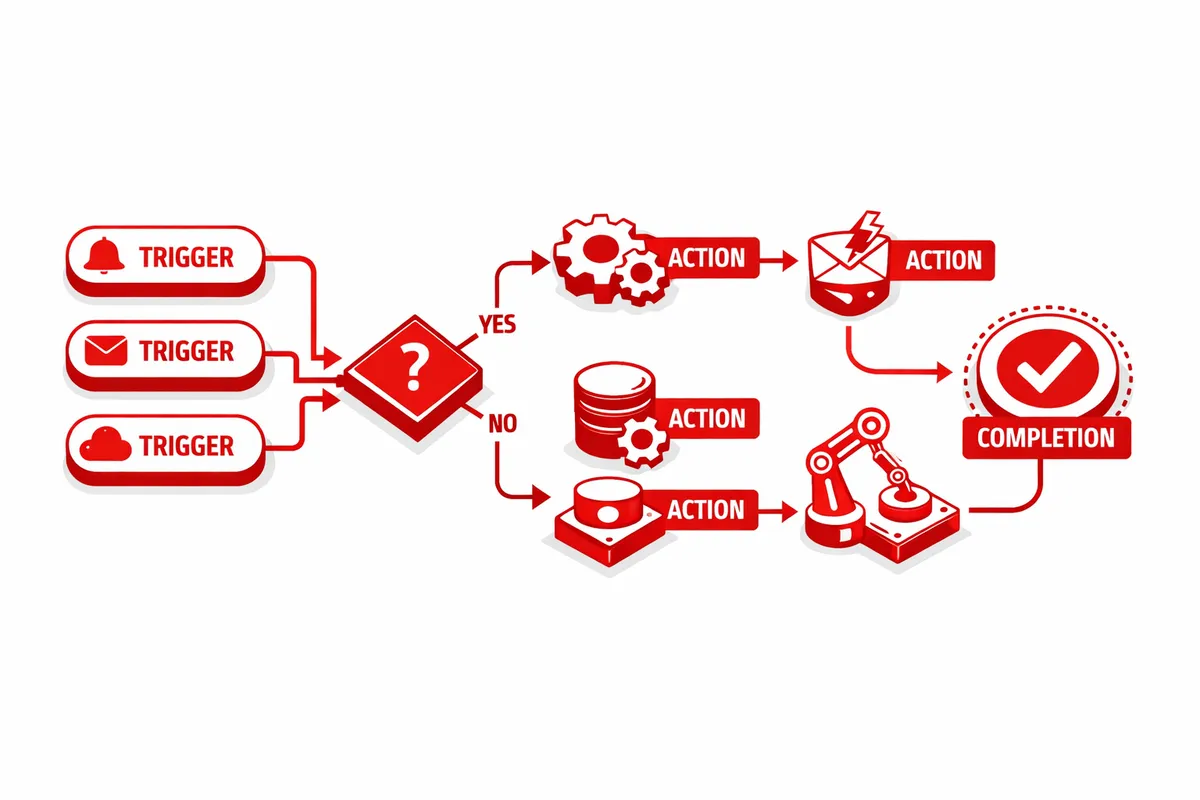
Most East Garfield Park organizations operate with a mix of free and low-cost tools: Google Workspace, Square or another POS, a basic scheduling tool, QuickBooks for accounting. We connect these existing platforms rather than replacing them. The Hatchery food business that takes orders via an order form, processes payments through Square, and tracks inventory in a spreadsheet already has three automation connection points that we can wire together without buying any new software. The automation reads the order form submission, records the sale in the accounting system, deducts from the inventory tracker, and sends the supplier alert if stock falls below the reorder threshold. That chain of events currently requires four manual steps. Automation handles all of them.
For community nonprofits, we build intake workflows that capture participant data once and populate every downstream system: the case management database, the funder-specific tracking sheet, the outcome measurement tool, and the calendar for follow-up appointments. When a new participant enters through any channel, the same workflow fires regardless of which program staff member handles the initial contact. Consistency replaces the variation that creates gaps in documentation.
Industries We Serve in East Garfield Park
Food entrepreneurs at Hatchery Chicago on Lake Street automate order intake, production scheduling, supplier reorder alerts, customer communication, and farmers market logistics. When a wholesale order arrives, the workflow logs it, updates the production calendar, sends the customer confirmation, and flags if ingredient inventory is below the level needed to fulfill the order. The founder spends time making food rather than managing information flow.
Community nonprofits and after-school programs throughout East Garfield Park automate participant intake, attendance tracking, funder reporting, volunteer coordination, and event logistics. When a student enrolls in an after-school program, the automation creates the participant record, assigns the staff contact, adds the student to the appropriate cohort roster, and queues the eligibility documentation checklist. Reporting happens from the same data rather than from a reconciliation of separate records.
Barbershops and personal care businesses along Madison Street and Washington Boulevard automate appointment confirmation, day-of reminders, post-visit review requests, and reactivation messages for clients who have gone quiet. These automations run in the background and keep the client pipeline full without requiring the owner or staff to dedicate time to manual outreach between appointments.
Community health organizations serving East Garfield Park residents automate patient scheduling, intake documentation, referral routing, and follow-up communication. When a patient completes an intake form, the workflow creates the record, notifies the provider, schedules the appointment, and sends the patient a confirmation with preparation instructions. When a referral is made to a specialist or community resource, the automation tracks the referral status and follows up if no response is received within a set window.
Churches and faith-based community organizations near the Garfield Park Fieldhouse and throughout the neighborhood automate volunteer scheduling, event registration, donation acknowledgment, food pantry coordination, and bulletin distribution. Weekly operational communications that currently require manual drafting and distribution go out automatically from templates that staff update once and the system sends on schedule.
Small manufacturers and contractors operating in East Garfield Park's light industrial corridors automate job intake, material ordering, client status updates, and invoice generation. When a job is accepted, the workflow creates the project record, generates the material list, sends the client an acknowledgment, and schedules the work. When the job closes, the invoice generates from the project record and goes to the client without requiring manual assembly.
What to Expect Working With Us
1. Process audit and prioritization. We document every manual task your team performs on a repeatable schedule, estimate the weekly time cost, and rank by automation ROI. For a food business or nonprofit in East Garfield Park, we typically identify 15 to 35 automatable processes in the first session. We prioritize the processes that consume the most time from the people whose time is scarcest.
2. Platform connection and data mapping. We connect your existing tools and resolve the inconsistencies in how data moves between them. For many East Garfield Park organizations, this phase reveals that the same information is being entered manually into three different places because no connection exists between the tools. Once the connections are established, redundant entry disappears.
3. Core workflow deployment. First automations go live within two weeks. These handle the highest-frequency, most predictable tasks: order confirmations, appointment reminders, intake routing, and scheduled notifications. Your team sees tangible time recovery from the first week.
4. Advanced buildout and ongoing support. Multi-step workflows with conditional logic and exception handling deploy in weeks three through six. After launch, we monitor performance and add automations as your operations grow. The Green Line's Conservatory stop connects East Garfield Park to the broader West Side, and as your organization or business scales its reach, the automation infrastructure scales with it.